Page One: “Mother! (2017)”
Written by Darren Aronofsky
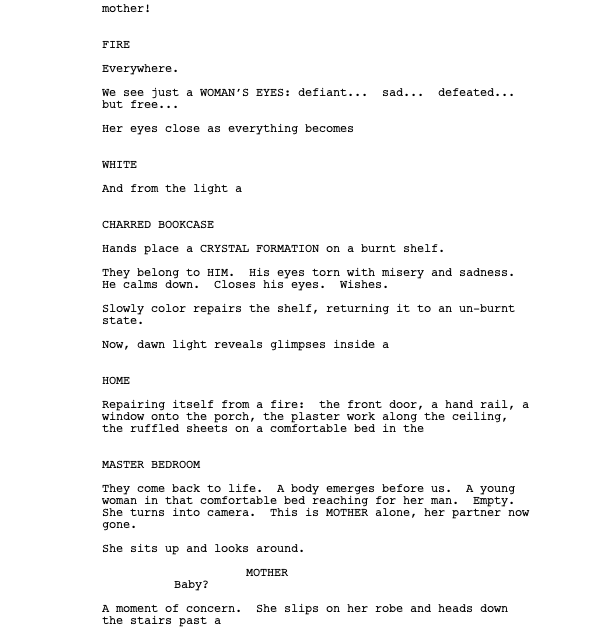
Written by Darren Aronofsky
The movie version of the opening scene:
Aronofsky does a couple of things which align with what may be the front edge of a trend in screenwriting.
First, there are actual Scene Headings (Primary Sluglines) in the script. That is scenes which begin with:
INT. or EXT. / LOCATION / DAY or NIGHT
Instead, every scene begins with a Shot. Further, with each scene, Aronofsky uses Shots to relocate the action or focus on an important visual element. As with Page One:
FIRE
WHITE
CHARRED BOOKCASE
HOME
MASTER BEDROOM
The second thing: Aronofsky includes actual images in the script. Here are a few examples:
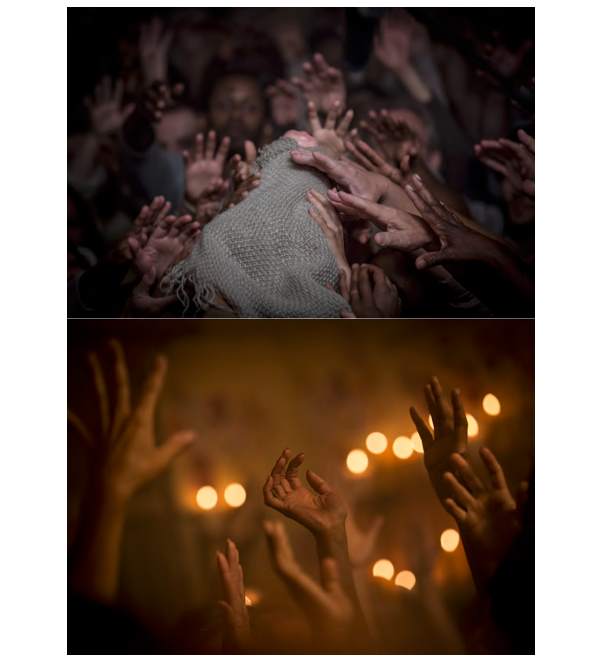
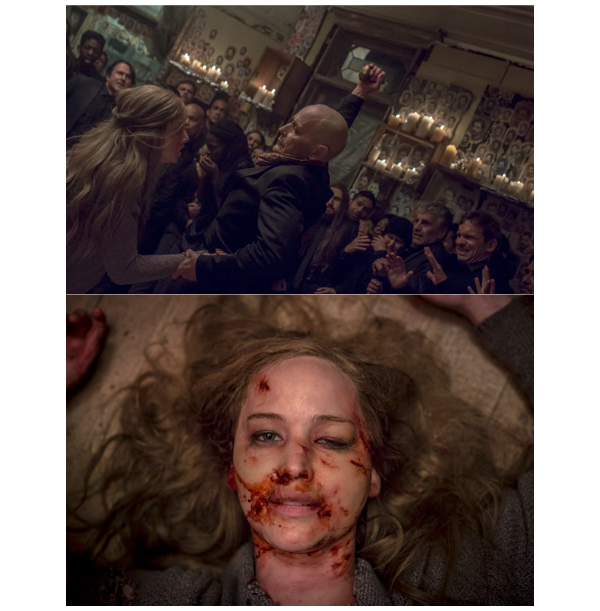

These are images from actual production, so it’s not quite accurate to call this draft a selling script. It’s also hard to imagine this functioning as a shooting script. As a production draft, the crew would need specific information such as if a scene takes place Interior or Exterior, Night or Day.
But when it comes to the selling script (aka writer’s draft), we are beginning to see the extensive or sole use of Shots creep into use, as well as images.

The use of Shots instead of Scene Headings reflects the ongoing evolution of screenplay format into a more literary style (that’s what I call it). Whereas a shooting script is more about the screenplay as a blueprint to make a movie, a selling script focuses on telling a story in the most entertaining way possible. The use of Shots can give a script a cleaner feel, easier on the eyes, instead of technical jargon such as INT. or EXT., DAY or NIGHT. If the location and time of day is clear to the reader given the context of a given scene, why not use a Shot instead of a Scene Heading?
The use of images reflects writers attempting to make a selling script as visual as possible. This, too, is about entertaining the reader. While some purists may reject this approach as gimmicky, even denigrating the power of words to elicit images in the imagination of a reader, I don’t think this trend is going to go away. In fact, I’m willing to bet that in ten years time, screenwriters will routinely include images in screenplays.
The point is this: Screenplays have always been in a state of evolution. That’s why all the rhetoric about screenwriting “rules” is so dumb. Why try to codify something that is constantly changing?
Anyhow, you should give the script mother! a read. See if you like the use of Shots and inclusion of images in the screenplay. You may read the script here.
FOR EDUCATIONAL PURPOSES ONLY!
Page One is a daily Go Into The Story series featuring the first page of notable movie scripts from the classic era to contemporary times. Comparing them is an excellent way to study a variety of writing styles and see how professional writers start a story.
For more Page One posts, go here.