No Pixar Movie Gets Made Without This Ingredient
A 7-minute video featuring… me.
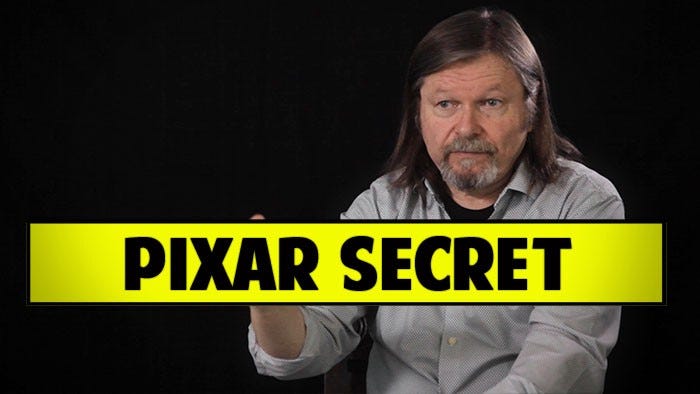
A 7-minute video featuring… me.
I pack a lot into this video excerpt of an interview I did back in August with the fine folks at Film Courage — Karen Worden and David Branin. In just seven minutes, I talk about:
- The importance of a screenplay creating an emotional connection between the script reader and the story’s Protagonist
- How Pixar does not green light any movie project unless they know what the story’s specific points of universal human connection are
- How even anti-hero Protagonists like Travis Bickle in Taxi Driver have life experiences and personal issues with which the audience can relate
- Why it’s critical for the writer to zero in on what their own points of emotional resonance are with the story they are writing
- Audiences go to movies in order to feel something
- Rick Blaine, the Protagonist in Casablanca, and his transformation from cynic to idealist
- How Ilsa just happening to show up in Casablanca is an example Story Fate in order to spark Rick’s psychological journey
- The Primary Character Archetypes as represented by key characters in Casablanca
As a bonus, you get to hear my impersonation of Humphrey Bogart and Claude Reins.
If there’s one takeaway I would hope you embrace from this video, it’s this: Lean into the emotional core of the story you are writing. How to do that? Zero in on your Protagonist’s journey. What is the state of their psyche at the beginning of the story? What is the state of their psyche at the end of the story? Consider those two points, then think about the nature of that transformation arc and — again — what does the journey mean to the Protagonist on an emotional level.
Perhaps the single most important task we have in the first 10–15 pages of a screenplay is to give the script reader some compelling reasons to care for the Protagonist. If you can hone in on what lies at the emotional core of the character’s being… and that is something a reader can resonate with on a personal level… you are well on your way in achieving this critical goal.
Make the reader care about the Protagonist and their journey!
There’s more of the interview to come over the next few weeks, so check out the video clips at Film Courage. Let me know if you agree, disagree, or if you learned anything from the conversation.
Twitter: @filmcourage