Narrative Voice
What if you were to think of scene description as Narrative Voice’s dialogue?

What if you were to think of scene description as Narrative Voice’s dialogue?
Here’s the thing.
The scene description I read in most scripts suffers by comparison to the dialogue.
By contrast, when I read a great script, there is a balance between the dialogue and scene description.
This subject came up in a conversation I had with a writer in a recent Screenwriting Master Class course when we talked about the “seamlessness” between spoken word and action in good scripts. Here is an excerpt of my response:
That “seamlessness” of which you wrote, I get what you’re saying. When you read a great script, there is a flow to… everything. Scene to scene. And, as you suggest, even line to line. Dialogue informs action. Action informs dialogue.
And this leads to another point critical to our discussion of scene description: If a writer is great with dialogue, a reader picks up on that. The characters’ words leap up off the page. If, however, the writer just lays out the scene description pro forma, those words pale by comparison.
That is the antithesis of seamlessness. The seams spring wide open every time the narrative shifts from dialogue to scene description, the disjunctive quality causing us to fall in and out of the story.
This is yet another reason to embrace the concept of Narrative Voice. If we approach NV as our script’s invisible character, then scene description is in effect that character’s dialogue! If we can imbue scene description with that vitality and unique personality, we are much more likely to achieve a balance between dialogue and scene description.
No matter what, it pays to devote at least as much energy to scene description as to dialogue, especially since scene description does not carry with it the benefit of a character’s personality like dialogue does…
UNLESS WE APPROACH SCENE DESCRIPTION AS A REFLECTION OF NARRATIVE VOICE!
I have a nifty formula: Genre + Style = Narrative Voice.
That’s the starting point, but it’s much more. Embrace the idea that Narrative Voice is your script’s invisible character.
If you can wrap your head around that concept, consider these questions:
- What is their Personality?
- What is their Perspective about what transpires in each scene?
- What is their Proximity to the events which occur?
You are writing the story. Narrative Voice is telling the story.
In effect, you end up giving scene description as much if not more care and attention as you do with dialogue. And that can go a long way toward achieving a balance between scene description and dialogue.
Compare the first page of the following scripts:
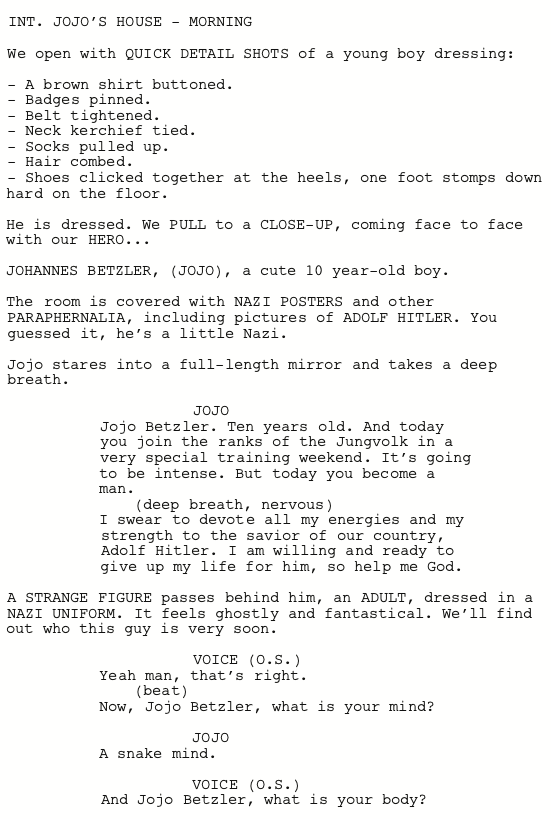
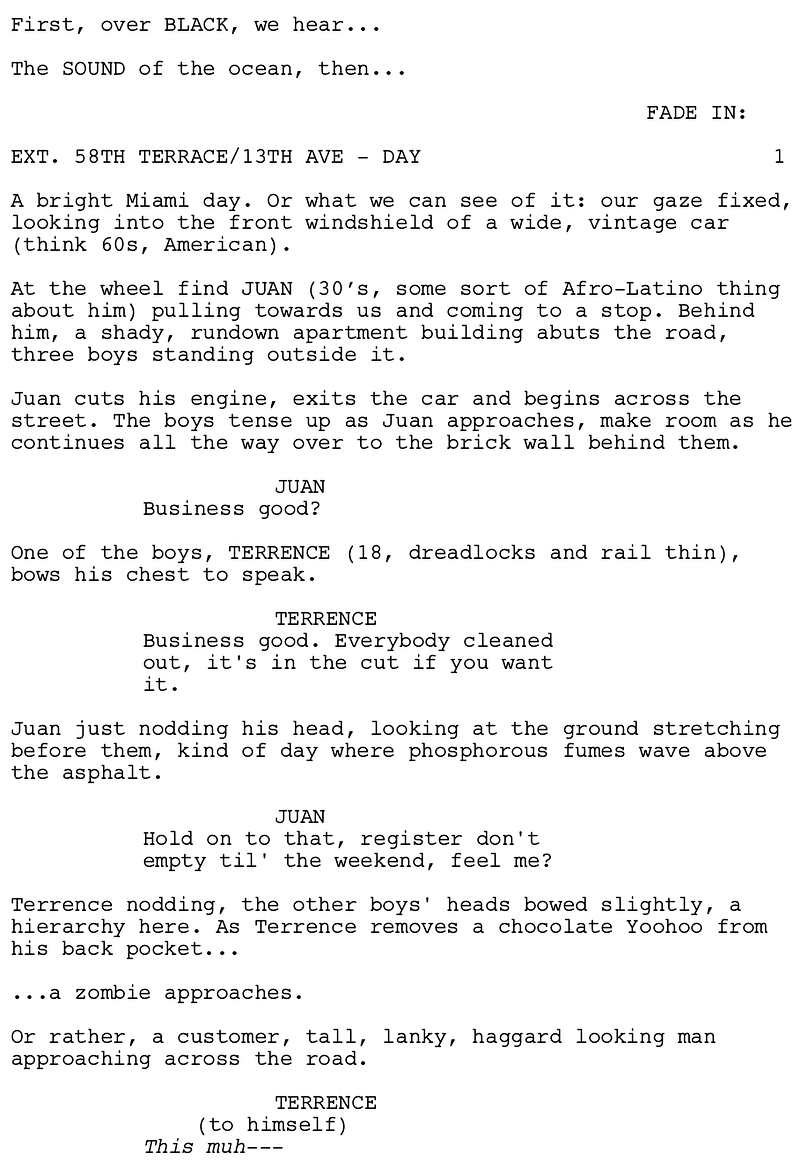
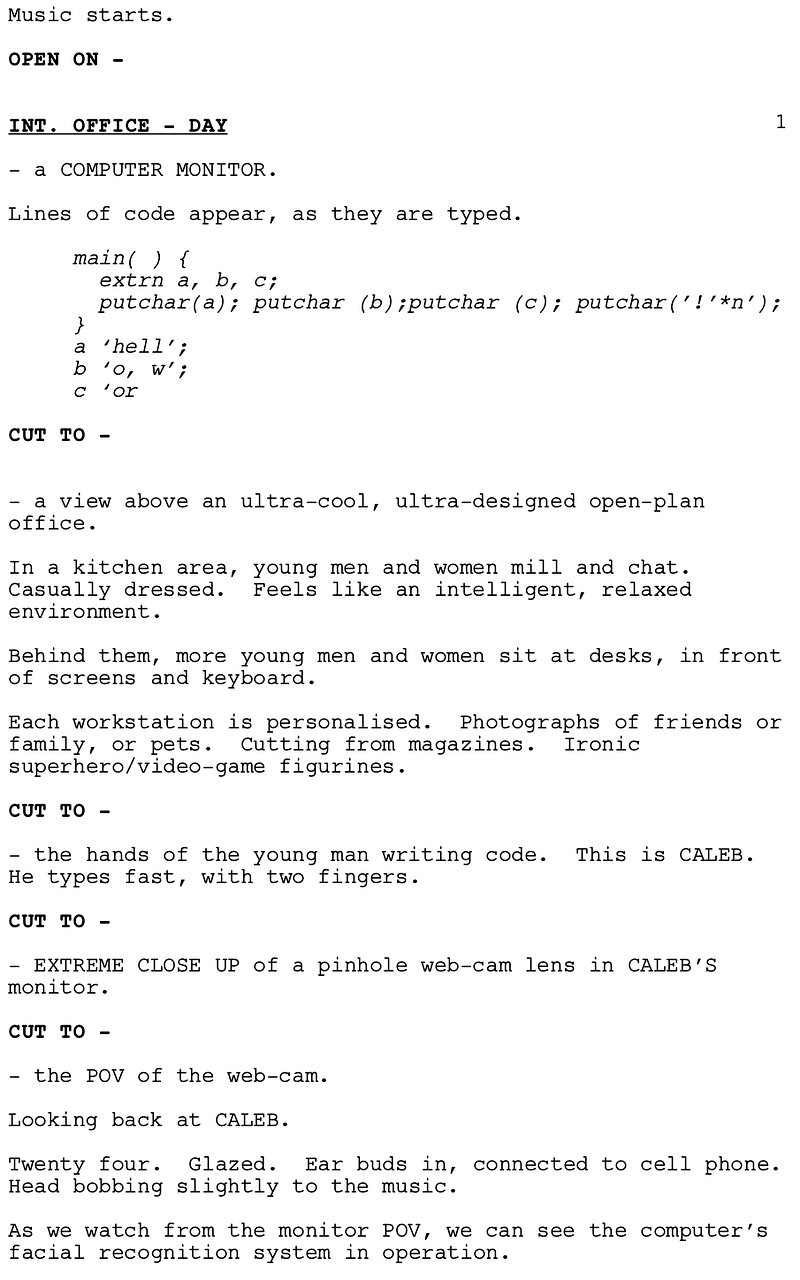
Notice the different styles and how they match each story’s genre.
An easy way to get a sense of Narrative Voice is to read the first 10 pages of several scripts by different writers in different genres. You will see the styles all differ from one another, a reflection of their distinctive narrative voices. You can get a taste of that in my Scene Description Spotlight series. A few examples:
Butch Cassidy and the Sundance Kid
Takeaway: Read scripts. Pay particular attention to the way professional screenwriters handle scene description. Bring that same level of care to your own writing. One way to do that: Embrace the concept of Narrative Voice. Be proactive in matching Style to Genre. Then go one step further: Lean into the idea that Narrative Voice is the invisible character in your story. They have a particular Personality, Perspective, and Proximity to the unfolding events.
You are writing the story. Narrative Voice is telling it.