Movie Script Scene-by-Scene Breakdown: “Annette”
Here is my take on this exercise from a previous series of posts — How To Read A Screenplay:
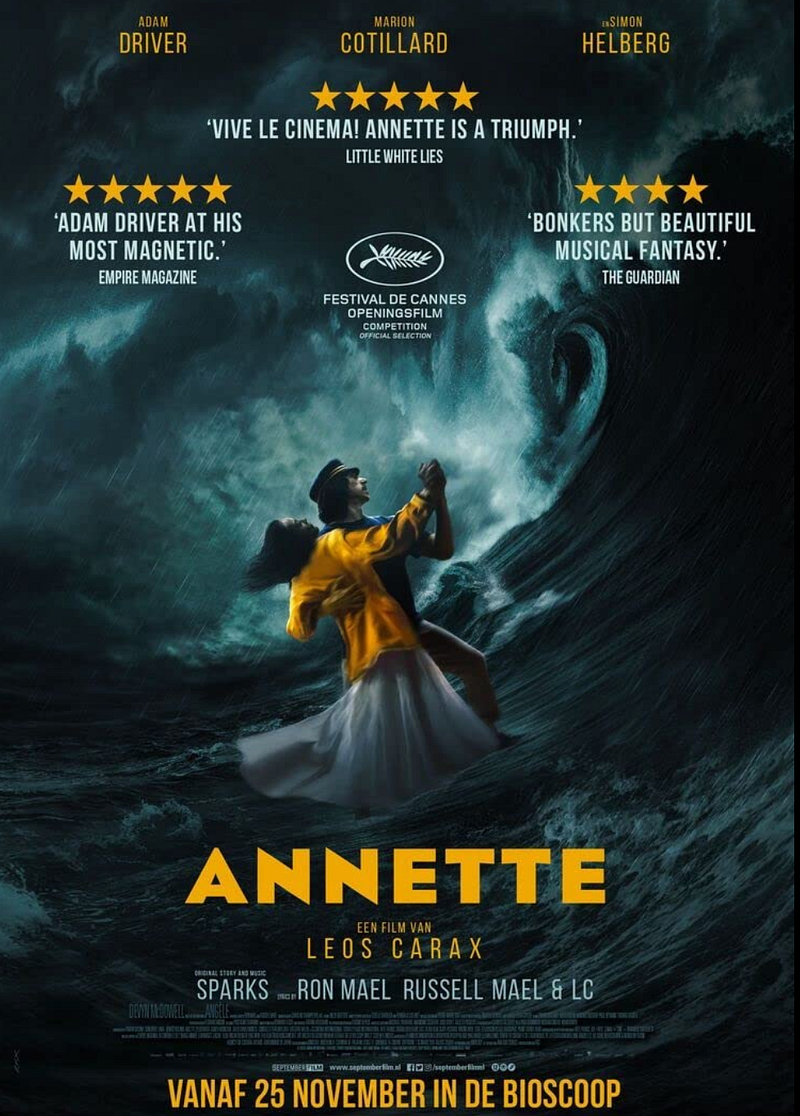
Script Analysis: “Annette” — Scene-By-Scene Breakdown
Here is my take on this exercise from a previous series of posts — How To Read A Screenplay:
After a first pass, it’s time to crack open the script for a deeper analysis and you can do that by creating a scene-by-scene breakdown. It is precisely what it sounds like: A list of all the scenes in the script accompanied by a brief description of the events that transpire.
For purposes of this exercise, I have a slightly different take on scene. Here I am looking not just for individual scenes per se, but a scene or set of scenes that comprise one event or a continuous piece of action. Admittedly this is subjective and there is no right or wrong, the point is simply to break down the script into a series of parts which you then can use dig into the script’s structure and themes.
The value of this exercise:
- We pare down the story to its most constituent parts: Scenes.
- By doing this, we consciously explore the structure of the narrative.
- A scene-by-scene breakdown creates a foundation for even deeper analysis of the story.
Today: Annette (2021). You may download the screenplay here.
Annette is a unique film. Inspired by a story created by Ron Mael and Russell Mael of the Sparks band fame.
Plot summary: A stand-up comedian and his opera singer wife have a two-year-old daughter with a surprising gift. A trailer for the movie:
Here is a scene-by-scene breakdown of the screenplay.
Annette
Scene by Scene Breakdown
By Karen Liu
GoIntoTheStory.com
Original Story by Ron Mael and Russell Mael
Pages 1–9: The stage is set from inside the Village Music Studio in Los Angeles. Close-up of vu-meters on a mixing console: the needles react to off-screen sounds —
instruments tuning up, feed-back, amplifiers and mikes being plugged in and tested, random sound studio action. The director, Leos Carax asks, “So may we start?” and this cues the band Sparks, the writers, and the actual cast members, to sing the opening number, “So May We Start?” as they leave the studio and head out into the street, with the credits rolling to introduce the players. The scene ends with Henry riding off on his powerful motorbike, and Ann seated into the back of a chic car, driving off. The sound of an Announcer’s Voice asks the audience to take their seats, to turn off all electronic devices, to give their complete attention, and to hold their breath until the end of the show.
Page 10: We now see the performers as their characters, in full hair, make up, and costume. First, we follow Henry McHenry’s’s nighttime motorbike journey through Los Angeles, to the old Hollywood Art Deco Pantages Theatre where he will perform his one-man comedy show. We then follow Ann DelGreco being driven in her car to the opera house, where it is clear she is the star soprano. The Chorus sings the foreboding “True Love Always Finds A Way.”
Pages 11–12: Backstage of Henry’s Theater, Henry paces the corridor, sparring the wall like a boxer in a green toweling robe. He smokes a cigarette while he eats a banana, with flashes of aggressive anger passing him as he goes through this pre-show ritual. We hear distant impatient cheering and clapping, growing… Then an Announcer’s voice in a mike, introducing him, “And now, a mildly offensive evening with… The Ape of God! Mr Henry McHenry!”
Pages 12–14: Henry walks through the dense and smoky semi darkness of the stage in his bathrobe. At first we can only hear his voice — coughing, angry, as he mumbles to himself, “This smoke… shit… I’m not a fan…” His bitter narration continues as he complains, “Think I’m getting allergic to it. And what is this fucking smoke supposed to mean anyway? Wish they’d use laughing gas instead, would make my life easier. Or, better yet, cyanide gas.” The smoke dissipates as he turns and face his rapt audience, and he begins to softly rap into the mike, “Why Am I A Comedian?” The rap swells with intensity as Henry rants about his job of making people laugh as the audience responds ecstatically. He promises that he is contractually bound to not make them laugh to death.
Page 14: We briefly cut to the Opera House, where we see Ann commence her pre-show ritual of lying on the floor of her dressing room in a strange position, doing strange breathing exercises, making strange guttural sounds.
Pages 14–17: We’re back with Henry, and he continues his verbal spar with the audience as he challenges them about his purpose as a comedian. They sing to him if it’s about the money, the fame, or the fear of death, but he rebuffs them with stinging explanations on how they’re wrong. When the audience asks if it’s about the women, Henry stops singing, and explains that he’s met someone. There’s a tonal shift in his performance, like he’s dropped his defensive armor, and his angry energy has turned into a shy insecurity. Henry then drops the confession that he’s engaged to the opera star, Ann DelGreco. The audience is shocked into silence, unsure how to process that, until a Lone Woman shouts, “Oh no!” Henry slips back into his bitter anger, pointing out all the ways Ann is too good for him, as the audience enthusiastically agrees.
Page 17: We are confronted with the contrasting vision of Ann’s way of engaging her audience, as the curtain starts to open on her stage.
Pages 17–19: Henry’s pacing the stage, more introspective now. “ Yes, Ann the soprano has changed me, I have changed How? I’m still not sure. Time will tell. What I see in her is obvious. What she sees in me — that’s a little more puzzling. But sometimes it’s best to not ask too many questions.” The audience breaks into applause, breaking the confessional spell, and he returns to his bitter rapping,
“Wish that she could be here now
But she’s at the opera tonight
Opera, where everything is… Sacred
First she dies and dies and dies
And then she bows and bows and bows
She’ll be bowing now ’til dawn
Anna, dear, I love you so
But all that bowing’s got to go
Take a last bow — enough!
Make it seem more off the cuff”
The audience yells back at him that he still hasn’t answered the question of why he became a comedian, and their chorus swells in demand. The music stops, and everyone falls silent. Henry explains, “… I’ll tell you why: to disarm people. Make them laugh — it’s the only way I know to tell the truth without getting killed.” Suddenly, LOUD GUNSHOTS ring out, and we see Henry stagger and fall down. A dead silence grips the crowd, then sighs of relief when Henry gets back to his feet, announcing it’s the end of his show and asks them to clap for him, as the lights, music, and Chorus Girls sing him off the stage.
Page 19: We cut to a very different end of a show and audience reception than the one we just saw. Ann “bows and bows and bows” to her very refined and controlled audience showing their massive approval of her.
Pages 19–21: Outside the Opera House, Henry looms up on his motorbike, passing members of Ann’s exiting audience, and heads over to the sortie des artistes. He parks at a distance, wearing his helmet, and watches Ann, surrounded by admirers and photographers, signing autographs. She notices him, and is visibly moved. He gets off the bike, and she moves through the crowd towards him. The Photographers sing at the shy and awkward lovers, hungrily snapping at the pair. Henry is a very different being around Ann — tender and vulnerable. As flashbulbs erupt around them, Ann asks about Henry’s show. He’s very proud. “I killed them… destroyed them… murdered them.” He in turn asks about “her gig” to which she responds, “I….I Saved Them.” Henry tells her, “Well, you die so magnificently…
Honey, you’re always dying!” before taking the bouquets of flowers from her arms and tossing them at the photogs like a smokescreen. He covers her face with a helmet, ending the photoshoot, and they take off on his bike.
Pages 21–23: Our young lovers enjoy the beauty and silence of the bright sunshine deep in a forest outside L.A. Henry pauses to light a cigarette, and then rushes to catch up, his large hands reaching out in a way that can be interpreted as both sensual and menacing towards her back and shoulders. Content in each other’s presence, but both looking in different directions, they start singing their song, “We Love Each Other So Much.” The song continues into an evening scene of the two wrapped in each other on Henry’s motorbike, speeding back to the city and into Ann’s house, where the two continue to sing and make love as they reach its climax.
Page 23: Henry emerges from the bathroom, and stalks towards the reclining Ann like a vampire. A post-coital semi-darkness envelopes them. Ann knows what’s coming, and playfully hides under the sheets, while Henry descends on her in a tickle fight as she laughs and protests about him playing with her throat and her feet.
Pages 23–24: We see the bright and buzzy Show Biz News TV clip, where anchor Connie O’Conner announces that “the elegant, refined soprano star, and the provocative and often offensive comedian were married after a whirlwind romance.” while the Chorus sings, “Tied the knot… Tied the knot… Tied the knot…”
Page 24: At the Opera House, the audience waits impatiently for the show to start and for Ann DelGreco to appear.
Her long-time piano accompanist (The Accompanist) is in the orchestra: while the instrumentalists tune their instruments, he sings of his desire and devotion to her, and of his goal to be a conductor someday. He’s a gentle man, but an ambitious one.
Pages 24–26: The orchestra starts to play the dramatic intro to Ann’s famous “Aria,” and the images overlap with the action on Ann’s stage with Henry’s pre-show ritual of eating a banana, as he smokes and spars with himself before he walks out onto his smoke-filled stage. Ann’s music over colours Henry’s familiar show sequence with a tragic dimension. Back at the Opera House, we see the curtain slowly rising, revealing a forest at night set, with abstract and stylized trees. Ann appears, beautiful and spectral, as she sings her Aria. As she moves through the fake set, it morphs into a real forest at night. She sings of fear as she searches for the starlight, the trees looming frighteningly around her, her lyrics ominous. Is she singing about Henry or something else? As she turns back towards the audience, she exits the real forest, and back in the staged and fake forest.
Pages 26–27: Henry races on his motorbike towards the Opera House, the images matching eerily to Ann’s lyrics. Holding his bike helmet, he strides down a long corridor backstage of Ann’s Opera House. The music rises in its drama as it gets closer to the end of the opera. Henry grows more and more tense, as if he is approaching with dread the scene of a terrible crime. Out of complete darkness, Ann appears from the back of the stage, staggering towards the front of the stage — her nightgown is soaked with blood. She’s dying, singing her final lines — on high, heartrending notes.
The Accompanist (playing the piano), who was watching Ann, notices Henry’s arrival, and watches Henry watching Ann. It’s hard to know what strong feelings Henry’s experiencing as he watches his wife perform her famous death scene. A few seconds of silence. Then, thunderous applause. Henry looks at the public: so different from his public, so much more chic and controlled. For a few seconds, he imagines, over this image of well-dressed people, clapping with restrained manners, the sound of his own public: loud, laughing, whistling, no restraint. The moment is broken when Ann stands up, and bows… bows… bows.
Page 27: Another Show Biz News clip, with Connie O’Conner this time announcing the coming of Ann and Henry’s baby girl, while the Chorus sings, “Newborn girl… Newborn girl… Newborn girl…”
Pages 27–28: Months pass as Ann grows more and more pregnant, and Henry grows more and more anxious. While she slumbers peacefully, her prominent belly seems to trigger nightmarish visions in Henry. He sees a very pregnant Ann in her blood soaked gown, taking an encore at the Opera House, followed by a nurse handing him his newborn baby with its face made up like a clown. He wakes up, but all he can see is Ann’s dark hair and the swell of her pregnant stomach.
Pages 28–30: Ann’s in labor on the delivery bed, with Henry by her side. The Doctors and Nurses that surround them sing, “She’s Out Of This World!” while they coach her to breathe and push. Ann navigates the birthing process calmly, while Henry sweats profusely, his insecurity evident, and the only one not singing. He asks, “Doctor, am I doing… everything right?” which triggers a fit of laughter in Ann, and in turn, stronger contractions. The Nurses and Doctor encourage her laughter, and Henry, feeling reassured he has been useful, sparks another wisecrack, “Shit, Ann… she seems completely naked!” This provokes a howl of laughter from Ann, and the Doctor and Nurse present to the pair an extraordinary and otherworldly baby.
Ann and Henry sing together as we fade to black:
She’s out of this world!
Welcome to the world, Annette!
She’s out of this world!
Welcome to the world, Annette!
Page 31: It’s the 2nd Act. We’re told a few months have passed. Henry seems changed — he’s drinking more, eating junk food, and there’s a new anger emanating from him. He vaguely sings:
Tonight, while she’s dying & bowing
I’m baaaaaaby–sitting!
But suddenly anxious, he looks around… Where is the baby?
And then, terrified, he realizes: he’s been sitting on the baby!
The Chorus sings the song Calm Before The Storm, the haunting lyrics setting the mood:
Something’s about to break, but is isn’t clear
Is it something we should cheer?
Is it something we should fear?
Page 31: Tableau of our sleeping lovers, with the baby in-between them. Annette is awake and calm — looking at one parent, then the other.
Page 32: Henry, bare-chested, alone with the sleeping baby. He’s playing with her, gently moving her into different positions: on his forearm, in the palms of his hands, etc. He smells her nice scent, kisses her on the head. He looks at himself, at both of them together, in a mirror. The baby opens her eyes. They look at each other: Henry’s expression is pensive. He smiles at the baby — loving but solemn. With the baby resting still on one of his forearms, he pours himself a glass of whiskey — drinks it. Then pours another.
Page 32–34: Ann’s car is stuck in a traffic jam — a barely moving 405 Freeway. She asks her driver to please lower the (classical) music playing on the car radio as she wants to take a nap. As Ann leans back on her seat, she notices the news playing on the small TV monitor mounted into the headrest facing her. Ann tries to relax, but the classical music on the radio slowly turns into the song: Six Women Have Come Forward. Her Driver and the Drivers around her sing with the Six Women on the TV screen facing Ann, their lines alternating:
Six women have come forward /
Each of us have come forward
Each with a similar story /
All with a similar story
Subjected to Henry McHenry’s torments/
Subjected to his torments,
Witnesses to his dark mind and his anger /
Why now?
Why now?
Pages 34–35: The Accompanist, watching the news at home, calls Ann on his cell phone and sings:
Ann, are you alone now?
There’s something you need to know now
That six women have come forward
And all with similar stories
That Henry was abusive, that Henry was violent and angry
I tried to warn you
I worry about you, Ann
But we see that Ann is still asleep in the back of the car. Is this a dream? The Women on the TV Screen continue to sing:
WOMAN 1
I, I feel for Ann
WOMAN 2 & 3
She must be warned
WOMAN 4 & 5
McHenry is not, not what he seems
WOMAN 6
So charming that I, a woman with sense
I quickly became, a moth to a flame
THE 6 WOMEN
A moth to a flame!
We see Ann awake, as the song continues, the car driving down the freeway making good speed and time. Suddenly, Henry steers his powerful motorbike at top speed towards Ann’s car as the song ends. Collision seems inescapable.
Page 35: Ann really wakes up this time, distraught. The car is running smoothly, as she rolls down the window for some fresh air.
Page 36: We see Henry speeding on his motorbike towards his show in Las Vegas. We intercut in slow motion Henry’s visions of Ann on stage, dying, again and again:
— strangled by Othello (as Desdemona in Othello)
— dying of tuberculosis in the arms of Alfredo (as Violetta in La Traviata)
— stabbed by José (as Carmen in Carmen)
— cutting her own throat with a knife (as Cio-Cio San in Madame Butterfly)
— leaping into the flames (as Norma in Norma)
Pages 37–41: We’ve seen Henry’s pre-show ritual before, but this time there’s a haunted quality to him. He takes the Vegas stage with his signature haze of smoke and self-deprecating commentary, but it’s failing to land as many laughs as before. There’s even a few boos. Henry reacts to an audience member shouting, “That was not funny!” by going on a tirade on how tired he is. He makes a number of excuses to explain why he’s not able to make sad people laugh anymore. It seems like he has broken down when he says, “Ok, the truth is… I’m sick… Being in love makes me sick… Sick…”
He then interrupts himself, moves closer to the audience, and tells them in a very low voice, “This morning, I… I killed… My wife — I killed my wife.” This elicits a few laughs, but also a murmur of dread. The Audience doesn’t find it funny, and it’s questioning if it is even a joke. He mimes for the audience the tickle fights he and Ann have, mimicking and alternating between himself and his wife. We, the audience, hear Ann’s voice laughing and protesting throughout this one person tickle torture. The audience is stunned into a dreaded silence, watching this morbid display. Henry/Ann’s laughter gets louder… faster… the note higher and higher… until it strikes a last long high (soprano) note — “the supreme spasm” — and abruptly ends. Henry/Ann drops motionless on the floor. Henry playing as himself pantomimes leaning over his wife, and trying to wake her up, screaming her name, then lies down emotionless, embracing the invisible body. He drags himself up again, devastated, and announces, “I had tickled her to death.” He shares that he tried to kill himself in the same way, by tickling his own feet, then ends his act by stating, “This is how I killed my wife.” The Audience responds with singing,
That was sick!
You’re sick!
Poor Ann!
Poor Annette!
Henry tries to salvage the performance by returning back to the tried and true jokes from his successful shows, but the audience remains hostile. He exits the stage as the Chorus sings the familiar refrain of his past shows:
We promised that you’d laugh, laugh, laugh
Coz he’s Henry, he’s Henry, he’s Henry, The Henry
He didn’t make you choke, choke, choke
Kick the bucket, kick the bucket, kick the bucket, kick the bucket
Page 42: Backstage, an enraged Henry navigates the labyrinthine corridors as he heads towards his dressing room, singing, You Used To Laugh, a song where he tries to understand why his audience has stopped laughing. Mid-song, he turns around, and heads back towards the stage, clearly finding the fault in the Audience.
Pages 42–43: Returning to the Stage, Henry is confronted with the still angry and booing Audience, who chant:
Get off, get off, get off, get off, get off, get off, get off
Get off, get off, get off the stage!
Get off, get off, get off the stage!
Henry sings while pacing the stage with rage, and fights back:
Do you think I care?
You think I care what losers think of me now?
You think I care?
You think I care what losers yell at me now?
The Stage has become a battlefield between Henry and The Audience, both accusing one another as being the problem as they tear each other apart with their lyrics.
Page 44–45: Ann sits alone in her room, in front of mirror, pensive, distraught, whispering:
Henry, I’m worried about you.
I’m worried…
She starts to pace and sing The Girl From Topeka, where she considers her many gifts and blessings, her love and devotion to Henry and Annette, her successes and praise, but can sense there is something deeply wrong. She is distracted by a little noise coming from the door. Ann turns and sees baby Annette in the doorway, smiling, and taking her first steps.
Ann goes over to her, shaking off her sad mood, moved. She stretches her arms towards Annette, proclaiming, “That’s it, Annette!” and sings her encouragement, “ One leg then the o-ther; One leg then the o-ther”
Pages 45–46: Ann joyfully dances with baby Annette in her arms around her beautifully lit pool, filled with big floating toys, singing “Lalalala.” We intercut this idyllic scene with Henry racing fast on his motorbike, cutting into the night. Ann spins with Annette like a Whirling Dervish dancer… until they fall to the ground, laughing. But their attention is snagged by a loud and menacing sound: the engine of Henry’s bike slowing down as it approaches the house. The powerful lights of the machine shine on Ann and the baby. Ann sees Henry parking the bike, and then heads towards the house. She wonders if he is drunk.
Page 46: Henry enters his home, heading towards the bedroom, singing:
What goes up
Must come down
My star’s in decline
He looks out the window and sees Ann with their baby in the pool area, looking back at him.
Henry then sings:
Once profound
For a clown
My star’s in decline
Pages 46–47: The song continues from inside Ann’s Opera House, where we see Henry suspended in the air, sitting on some piece of machinery high above Ann, who’s singing her Aria. He’s like a gargoyle, singing while he smokes a cigarette and watches Ann and her audience. The piece of machinery which supports him swings a little, adding to the feeling of vertigo and drunkenness. He sings about the bitterness of his failure while his wife’s success is soaring, and avoiding recognition when he seeks to drown his sorrows in a bar.
Pages 47–48: Another Show Biz News Clip, where Connie O’Connor gossips that “Ann, Henry, and baby Annette will travel on their yacht this week, evidently in the hope of saving the couple’s marriage. Could the problems be due in large part to the growing discrepancy between their respective success?” Meanwhile, the Chorus echoes the phrase, “Respective success… Respective success… Respective success…”
Page 48: It’s nighttime and we see a slender yacht caught in a turbulent sea. A storm is approaching. The Chorus chants menacingly, “A storm is rolling in.”
Pages 48–49: Inside the yacht, Ann is in a sleeping cabin with Annette, trying to calm her and put her to sleep with a song. While she sings softly, she tries not to show the baby her own growing anxiety. Ann feels the boat sway, and sees through the porthole the waves getting big, hitting the yacht harder and harder. There’s a difference between the calming lyrics of the lullaby she sings to Annette and in her demeanor. She peeks through the porthole, seemingly searching for something, as she sings how she will dispel the danger she feels with magic. Annette at last falls asleep.
Pages 49–52: Ann emerges from the cabin, frantically searching for Henry, singing, “Henry, where are you? Where are you?” She goes up on the deck in the pitch black, pouring rain. She’s suddenly grabbed by two arms, from behind: it’s Henry, drunk, and soaked. He calls out to her tenderly, but Ann is repulsed by his drunkenness. He invites her to waltz with him, but she refuses, claiming she will kill her voice out in the cold and wet conditions. Henry forces her to waltz with him, and she doesn’t dare resist. She pleads with him, singing, “Henry, a storm is rolling in.” He sings back to her, “I’m well aware of that my dear… Let’s waltz in the storm.” The Chorus chants:
A storm is rolling in…
A storm is rolling in…
A storm is rolling in…
A storm is rolling in…
It’s too much for Ann, and she tries to pull away from him. They sing their argument with one another in the song “There’s So Little I Can Do” where she accuses him of being drunk, and he keeps claiming that he is not. When Ann sings, “Henry, you’re not the man I know,” Henry grabs Ann again, forcing her to waltz with him again. She pleads with him to allow her to get out of the storm, and to save her voice. Their fight intensifies, as Ann sings, “My voice, Henry… my voice!
Is nothing sacred to you?” Henry flings back to her:
Oh, God knows everything is — to you!
Always proclaiming… values… The Sacred Values!
And then dying, dying, dying!
And then bowing, bowing, bowing!
Henry, holding Ann firmly against him, accelerates their waltz and refuses to stop. Ann pleads again:
Henry, stop it now!
We could fall in
We could drown
Henry, don’t fool around
Ah!… Once a clown…
We then hear the sound of a splash.
Pages 52–53: We see Henry alone on the boat, in a daze, when he hears Ann’s voice coming from the waves, begging him to help her, and pull her out. All Henry can do is repeat, “There’s so little I can do.”
Page 53: The sea is now totally calm, and the rain has stopped. Henry and Annette are in a little lifeboat. Henry, still dazed, is rowing — Annette is wearing a life jacket, and awake on his lap.
Pages 53–54: Father and daughter have washed up on the shore of an island. As Henry puts a thermal foil blanket around Annette and tries to warm her body, he starts singing the song, We’ve Washed Ashore, where he explains her mother is gone, and he will take care of her. As the moon comes out from behind a cloud and shines down on Annette, the baby starts to sing in a beautiful crystalline voice, a wordless version of the “Aria” made famous by her mother.
Pages 54–55: Henry is dazed and fatigued. Laughing, he is convinced he just hallucinated his baby daughter was singing just like her mother, when he is shadowed by the Spirit of Ann, who appears standing above him, singing to him in an uncharacteristically angry tone:
I will haunt you, Henry
For the rest of your life
Through Annette I’ll haunt you
Her voice will be my ghost
I am no longer Love.
I am now Revenge!
I will haunt you, Henry
I’ll die day after day, after day, after day
I will haunt you, Henry
Night after night, after night, after night
Pages 57–58: Henry appears before the police for questioning, in the song We’re The Police. The room is quite dark. Each time the policemen finish asking a question, they turn a crude light on Henry while he answers. They turn it off when it’s time for another question — then back on again, etc. When Henry is questioned whether he could have saved Ann, he sings:
The sea was rough and I was with Annette — could I save her?
The storm was very strong there was no way to save her
And anyway, I had Annette, I had to save her
I had Annette!
The police brings up his comedy routine where he discussed killing Ann. Henry’s defensive, as he responds with “Everybody knows my act’s filled with provocation.” The Police release him, declaring Ann’s death as an Act of God.
Pages 58–59: As Henry exits the police station, he tries to avoid being noticed by wearing a hat and dark glasses and avoiding the glances of passers-by. He sings as he questions if he is a good father, and ponders whether he will one day talk to Annette about what happened to her mother, as he enters a toy shop.
Pages 59–60: Henry returns home, carrying a colorfully wrapped package for Annette, as he continues singing about being a good father. He approaches Annette’s bed, and unwraps for her a magic lamp, that he plugs in and projects projected images of planets and stars start spinning across the walls and ceiling. And as the light shines on the baby, she starts singing her mother’s “Aria” again. When Henry turns off the lamp, the baby stops singing. He’s amazed. He sings:
Unbelievable…..amazing….it’s really happening…
She sings just like an angel
When the light shines on her…
Astounding….unbelievable…..amazing
It’s really happening, it’s really happening… to me!
Henry ponders about being both a good mother and father to Annette, then falls asleep with his baby on the bed.
Pages 60–61: In the song, This Is A Baby, Henry’s rehearsing a speech to himself before several mirrors in Ann’s home, trying to figure out how to financially exploit his daughter’s precious vocal gift.
Pages 61–62: Inside a Concert Hall, Ann’s former Accompanist has achieved his aim and is now The Conductor of a large metropolitan symphony orchestra. While conducting, he takes advantage of the musical piece’s slow sections to sing a song to us, explaining that Henry has reached out to him for a meeting. He’s suspicious about the nature of Ann’s death and believes there’s more to the story. The Conductor confesses, “My love for Ann has never died,” and then details the history of his own love affair with Ann before Henry appeared and swept her away. The Conductor holds back tears as he sings about how much he misses Ann’s warmth, voice, and presence.
Pages 62–65: Henry welcomes The Conductor into Ann’s house, and brings him to Annette’s room, singing he has something incredible to show him. The Conductor is wary, afraid that Henry wants to murder him. Henry turns the magic lamp on Annette, and she starts to sing her mother’s Aria. The Conductor is astounded. Henry turns the lamp off, and proposes in song that the three of them go on tour and show off Annette’s amazing gift. The Conductor protests, claiming that it’s exploitation. Henry sings:
It’s not really exploitation
Let me emphasize that fact
You know what my future looks like
From a money point of view
With the income from performance
She could have a future too
The Conductor ends the discussion as he sings:
Give me a few days
To think it through
For Annette’s sake only
Only for Annette
Page 66–67: Months have passed, and Henry has cleaned up his look with a haircut, and a well-trimmed beard. It’s Annette’s first show, and a large audience has gathered. Much like in Henry’s stand up performances, an Announcer revs up the crowd to get the show started. Henry then takes the stage and welcomes everyone, proclaiming “Annette is a miracle. Miracles do exist” before introducing his tiny daughter with a kiss on her forehead. The spotlight slowly moves toward the baby, and she starts singing “Aria,” accompanied by The Conductor. The audience sits in stunned silence. She seems tiny on stage at first, but then grows to appear as a huge hologram, as if she was bending over the whole audience.
Page 68: As Annette continues to sing her Aria, we see a montage of different performances, in different concert halls, TV shows, etc., as Baby Annette gains lightning attention. The image deteriorates and morphs, as her audience grows wider and wider, from live performance to TV and computers, to mobile devices and web pages, from domestic broadcast to international as we see multilingual logos and banners indicating foreign channels and fans. By the end of the “Aria”, the image has become so poor that Baby Annette seems like an abstraction, a ghost of white pixels glowing in the dark. It’s clear the whole world is enthralled and can’t get enough of her. We end with a CLOSE-UP ON the final webpage, with the view count of the video showing as 37 563 201, indicating that Baby Annette has gone viral.
Pages 68–69: We see Henry riding carefully on his motorbike through the night, with Annette in a kangaroo sling against his torso. He’s singing the song, Every Night The Same Dream, where he is haunted in his dreams with images from the night Ann died. He prepares for bed, singing:
Adrift on an angry sea
And in a moment of rage and stupidity
I kill the one I love
Ann, forgive me
Ann, I beg you
Ann, forgive me
We see him asleep, lying on half of the bed. On the empty half of the bed, ocean waves appear.
Pages 69–70: Henry continues the song, clearly haunted and questioning his role in Ann’s death. He sings:
Did I kill the one I loved?
There’s no forgiveness
Ann, I beg you
There’s no forgiveness
As Henry sleeps, we see images of Henry’s memories of Ann sleeping beside him projected on the other half of the bed. The Spirit of Ann then rises from the bed, walks around the bed where Henry is still sleeping, and sings:
I will haunt you, Henry
For the rest of your life
I will haunt you, Henry
I’ll die day after day, after day, after day
Night after night, after night, after night
I am no longer Love
I am now Revenge!
Pages 71–73: “We Love Annette” sings the public in London, Paris, Madrid, Tokyo, Moscow, Bahrain, etc. as Henry, Annette, and the Conductor fly and perform around the world. Henry’s Chorus has returned, but now they sing about his daughter:
We’re traveling ‘round the world,
We’re traveling ‘round the world,
We’re traveling ‘round the world,
We’re traveling ‘round the world
While Annette’s fans sing:
Bon voyage!
Bon voyage!
Bon voyage!
Bon voyage!
Bon voyage!
Bon voyage!
Page 73: In every city Annette performs in, The Conductor watches over Annette at the hotel, while Henry stays out most nights, drinking and fooling around with women.
Pages 73–74: In Rio De Janeiro, Henry knocks at The Conductor’s door, and asks him to look after Annette while he goes out and lets off a little bit of steam. The Conductor very agreeably consents. The Conductor then tries to put Baby Annette to sleep, rocking her gently in his arms. We sense his strong attachment to the baby. The Conductor goes to the piano, puts Annette on his lap, and starts playing the tune to “We Love Each Other So Much,” murmuring the lyrics:
We love each other so much
We love each other so much
So hard to explain it
So hard to explain
We love each other so much
The baby listens intensely and watches the Conductor’s fingers moving over the keyboard.
Pages 74–75: We see Henry singing “All The Girls” in different clubs and bars, with different women (Japanese, Russian, Brazilian, etc.) from the different countries the tour is traveling through. We know he is still gripped by his great insecurity, as he sings:
All the girls I see
Look so great to me
But… will I ever be
Lovable again?
Pages 75–77: Henry returns to Ann’s home after being out on another bender. He tries to park his bike, but it falls over. Leaving it on the ground, he drunkenly makes his way back into the house, where he is greeted by The Conductor who has been taking care of Annette. Henry affectionately approaches the little girl, who is playing on a toy piano. Instead of the usual Aria, this time, Annette plays We Love Each Other So Much, triggering in Henry an unwelcome deluge of memories of he and Ann together. He turns on The Conductor, singing with restrained fury, You Had No Right. He then hauls the Conductor into another room, where he can really unleash his anger now that his daughter is no longer present to witness this side of her father:
You had no right, you had no right to teach her that!
You had no right, you had no right at all!
That song was our song, Ann’s and my song, that was our song!
That song was our song, Ann’s and mine, our song!
That was our song! That was our song!
The Conductor remains calm, then unleashes his own bombshell when he sings, “No, Henry, I wrote that song — for Ann, for Ann.” He then tells Henry that he and Ann had been involved before Henry’s arrival, and that there is a strong possibility that Annette is actually his child. Henry sings to himself:
Could this be true?
No one must know this, or I’ll lose Annette
No one must know this, or I’ll lose Annette
Then turns to the Conductor, calmly singing, “My conductor friend, let’s put Annette to bed, and then go by the pool to talk this over, shall we?”
Pages 77–78: The two men put Annette to bed, making a strange sight for us to behold.
Pages 78–80: What was once an magical outdoor pool, has fallen into a dilapidated state. Leaves pollute it, some of the underwater lights don’t work anymore, and the pool toys are half deflated. Henry puts an arm around The Conductor’s shoulders as the two men walk around the pool. He starts the discussion, then “jokingly’ pretends to push the Conductor into the pool. The Conductor is protesting, afraid. Once again, Henry pretends to push the Conductor into the pool — more brutally this time. The Conductor is afraid to provoke Henry further, but wants to finish their discussion, his demeanor eerily evocative of Ann. As The Conductor goes to sit in a chair, Henry pulls it out from under him. The Conductor falls down, then quickly and nervously tries to get up. But Henry violently drags his body towards the pool’s edge and throws The Conductor into the pool. When The Conductor tries to come out, Henry steps on his hands and head. Like Ann, The Conductor sings, “Henry, help me!
Henry, pull me out!” Henry refuses, and The Conductor figures out that this was what had happened to poor Ann. Henry sits down near the pool’s edge, dazed, and sings, like he did to Ann, “There’s so little I can do, There’s so little I can do.” The Conductor laments with the last of his breath:
If only…… I’d gotten Ann to love me more
If only…… if only…
As The Conductor stops moving, Henry looks up at Annette’s bedroom window, but sees nothing.
Page 80: Soaked, Henry goes back to Annette’s room. The baby is in bed, in the dark. As Henry comes closer, he sees she’s awake, looking at him with eyes that are moist. He turns away, realizing that she could have seen the pool from her window. He sings to himself, “How much of this did she hear? How much of the last time did she hear?” and faces Annette again. They stare at each other through the darkness, in silence. Then, calmly, silently, the baby pushes the magic lamp off her bedside table, and it breaks on the floor. Henry, distraught, kneels down and unplugs the lamp, singing, “Everything will be alright now, sleep my Annette.”
Page 80: Henry returns to his room, singing, “I have the same dream every night/Every night the same dream…” as he throws out the broken and strips off his wet clothes.
Page 81: Connie O’Connor from Show Biz News announces that Henry McHenry is ending Baby Annette’s singing career, and her last performance will be at the Superbowl Halftime Show. “The baby will never perform again after that.”
Pages 81–82: We see in slow motion, documentary-style shots of the players fighting for the ball, the public, the majorettes, all the things that make the Superbowl one of the grand, celebrated American events of the year. The Chorus and the Announcer hype and prepare the crowd for Baby Annette’s entrance, emphasizing the historic significance of this ultimate performance. Rapturous applause from the crowd. The orchestra intro to “Aria” begins, and a huge spotlight slowly moves on Annette. But when it’s time for her to sing, she stays silent. The Announcer tries again, explaining that this is the largest crowd she has ever performed before. Unfortunately, Baby Annette stays quiet. The Announcer then pleads, “Ladies and gentlemen… please…We ask for your patience. Baby Annette is a baby after all… Please, once again… Baby Annette.” The orchestra intros “Aria,” the huge spotlight slowly moves on Annette, but she does not sing. This time, she whispers her first words ever:
Daddy killed mommy.
And we fade to black.
Page 83: While we hear the CHORUS sing “True love always finds a way”, we see time going by on Henry’s body and face. Henry sits at the desk of the interrogation room, in semi-darkness. Then the crude light of the desk-lamp hits his face, as in during his previous interrogation scene with the police, “We’re the police,” but we can see that he’s changed — his face is older, and puffed.
Pages 83–84: The song continues as we see a handcuffed Henry in the back of the police van, on his way to the courthouse. An angry crowd sings in front of the courthouse He Is A Murderer. Flanked by police officers, Henry walks towards the courthouse, as the crowd sings the lyrics:
You are a murderer, you are a murderer
You killed the one that we all loved
Near religiously, nearly religiously,
No more will she die for us
Who will now die for us, who will now die for us?
No one can take her place, but -
You who despises us, you who despises us,
We will now tame, break and destroy
As Henry steps inside the old courthouse, he’s surrounded once again by cameramen, photographers, and flashes. He mumbles, “Lights! Camera! Justice!”
Pages 84–85: The courtroom itself has the appearance of a theatre or opera house, and is ready to showcase this drama.
The atmosphere is solemn as Henry takes the stand and is sworn in. When he is asked to tell the truth, the comic in him cannot resist. “The truth? Yes.” He turns to the clerk, “You look terrible.” While a murmur of disapproval ripples through the audience, there are a few laughs. The Judge reprimands Henry, and the Clerk repeats the swearing in process. This time, Henry answers with, “No. You’ll kill me if I do.” Again, a murmur of disapproval in the audience.
Pages 85–86: The light in the courtroom slowly fades into darkness, as the murmur from the audience subsides. Only Henry is still lit; everyone else in the courtroom is in darkness and completely motionless — as if time had stopped, except for Henry. Like his one man stage show, he stands up and walks around the frozen judges, lawyers, police officers, and audience members, and starts singing the song, Stepping Back in Time. He sings about how he would have done things differently, like praise Ann and being happy for her success. We hear Ann’s voice joining his, when he sings, “I’m a small boy,” she sings, “You’re a small boy.” Is he imagining this? Bewildered, he goes on singing while his eyes search for Ann through the darkness of the courtroom. He continues to sing:
Teary-eyed, she’ll say “I’m ashamed, you see
That we both can’t be, where we ought to be”
Again, Ann’s voice has joined Henry’s as he sings, “I’m ashamed, you see.” Henry’s search for Ann becomes more frantic, until he finally spots her, high above him — standing alone at the balcony, looking at him tenderly. Henry hasn’t seen her for so long. She’s moving around the oval balcony; so he moves too so not to lose sight of her, and he continues to sing of his regrets and what he should have done. At last, Ann and Henry sing in harmony:
Now there’s no more time, what a shame to see
That we both can’t be, where we ought to be
Stepping back in time, that would be sublime
But there’s no more time, to step back in time
They are interrupted by Ann’s voice, but from behind Henry. He turns, and is confronted with the angry Spirit of Ann standing on the dais right by the motionless Judge. The Spirit of Ann sings of her judgment, “Henry. She won’t be the one keeping you company in jail. I will! Day after day after night after night.”
Pages 87–92: A few years have passed. A huge Prison Guard escorts the older Annette through the prison corridors, on their way to see Henry. Baby Annette is 5 or 6 now, her hair longer, and her face seems astonishingly mature. Her eyes are full of sorrow, conscience, knowledge — almost like the eyes of an old woman. Henry, in his prisoner’s clothes, waits for Annette’s visit in the visiting room. He has aged quite a bit, and now sports a Dostoyevskian beard. The guard enters the room and takes Annette to a chair, facing Henry. At first, father and daughter sit there, mute and distressed. They don’t touch each other. Henry is the first to break the silence. He sings, “Annette… you’ve changed… so much…” Annette’s voice is that of a little girl, but her words penetrate like an adolescent:
So have you.
But at least, you’re safe here, yes?
You can’t drink, and you can’t smoke — can you?
Henry tries to smile, “No, my Annette, no.” Annette responds, “And… you can’t kill here, can you?” Father and daughter smile at each other, as Annette encourages him by saying that it was a joke. Henry responds with “Ha, you are my daughter after all!” But a silent embarrassment descends on them. Then, Annette breaks it, with “But now, you have nothing to love.” Henry is hurt. “Can’t I love you?” Annette is ruthless. “Not really…” Henry knows he doesn’t have much time left with her, so he sings the slow song, Sympathy For The Abyss, hoping that she could understand the darkness that had raged in him. Instead of empathy, it stirs a toughness in his young daughter, as she sings:
I’ll never sing again!
Shunning all lights at night
I’ll never sing again!
Crashing every lamp I see
I’ll never sing again!
Living in full darkness
I’ll never sing again!
A vampire forever!
For the first time, Henry sees his daughter not as a cute puppet but as a real person, a real little girl of flesh and blood. Father and daughter sing a duet, he pleading for understanding, she questioning whether she could forgive him for killing her mother, and her mother for cursing her with her voice. Annette also challenges her father with the fact that both her parents used and exploited her. Henry begs her not to blame Ann, and to not give in to the Abyss as he has done. Ann wonders whether it would be best to just forget the two of them, when the Guard steps in, telling them, “Time’s up.” Henry grabs the child, hugs her. She doesn’t resist his embrace, but doesn’t commit to it either. The Guard tries to separate them, telling them, “No contact,” while Henry implores his daughter to allow him to love her. She sings to him:
No, not really daddy. It’s sad but it’s true:
Now you have nothing to love.
Henry lets go of her, and the Guard picks Annette up, and carries her away. He appeals to her, one last time, “Annette, my Annette… Never cast your eyes down the abyss!” and then sings “Goodbye” to her. As Annette and the Guard move further and further away from him, growing smaller in his sight, he sees his daughter waving goodbye.
Page 93: The end credits start rolling. Then, towards the end, the authors & cast members reappear as themselves, just as in the beginning, walking side by side in the night, singing:
It’s The End
It’s the end, so we bid you goodnight
Safe journey home, watch out for strangers
If you liked what you saw — tell a friend
If you’ve got no friends, then tell a stranger
— tonight
Good night, one and all
Good night, one and all
Good night, one and all
Writing Exercise: I encourage you to read the script, but short of that, if you’ve seen the movie, go through this scene-by-scene breakdown. What stands out to you about it from a structural standpoint?
You may download a PDF of the breakdown here.
Major kudos to Karen Liu for preparing this scene-by-scene breakdown.
For over 100 more movie script scene-by-scene breakdowns, go here.