Mickey Fisher on Writing, Selling, and Producing a TV Pilot Spec Script — Part 5
7-part series on going from original TV pilot script to network series.
7-part series on going from original TV pilot script to network series.
On May 24, 2013, I posted about a TV pilot spec script which had Hollywood all abuzz:
Amidst the hustle and bustle of the Hollywood development world — movies and TV — nothing shifts the tectonic plates of The Biz more than a spec script that gets people salivating over it. It’s also a time when writers can learn an awful lot about the buying pulse of Hollywood.
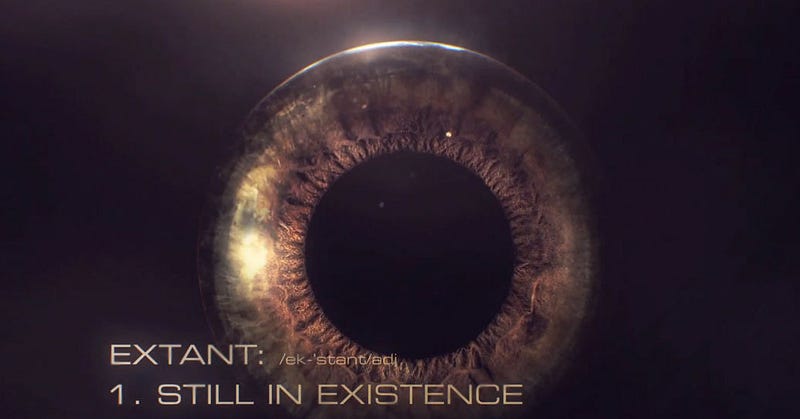
Such is the case right now as Hollywood froths over a 56-page spec TV pilot “Extant” written by newcomer Mickey Fisher. Background from TheWrap [emphasis added]:
Mickey Fisher, an unknown and unsigned writer until recently, has film studios drooling over his script “Extant” for weeks. There’s just one twist: it’s not a film script.
Fisher wrote “Extant” as a TV pilot. It’s a one-hour sci-fi drama about John and Molly Watts and their son, a human-like robot named Ethan. Molly, the space-traveling wife, is also pregnant with a baby that is part human and part alien. The family intrigue deepens in subsequent episodes.
Multiple agencies sought to sign the writer after reading the script, and WME won out. WME and manager Brooklyn Weaver, who discovered Fisher, sent the script around to the studios who are hot to trot for a high-concept script mixing sci-fi and familial drama.
“Everyone is freaking out about it,” an agent at a rival firm said. “It’s ‘A.I.’ as a TV series.”
— —
Warner Bros. still made an offer to acquire the project and turn it into a movie, according to multiple individuals inside and outside the studio, but now the studio is talking with Fisher about acquiring a different pitch. The studio declined to comment.
WME and Weaver always harbored dreams of turning “Extant” into a TV series with Steven Spielberg producing. They are halfway there: Amblin TV, which produced “ER” and “The Americans,” is developing and packaging it. It remains unclear if Spielberg will take a credit, though his involvement would make it even more attractive to networks.
Here is Mickey Fisher. Apparently he is a Hollywood outsider. He writes a spec TV pilot script. It turns the town on its head. Now he has interest from movie studios. TV networks. Perhaps “acquiring a different pitch.” Steven Freaking Spielberg.
That script turned into a CBS series which ran for two seasons.
In 2016, Mickey Fisher — a long-time fan of the blog — posted this:
It’s a tremendous read with lots of information and insights into the craft, so I reached out to Mickey and he agreed to let me serialize his entire missive. It’s a great story and I’ll use the opportunity to spotlight the many takeaways Mickey touches on in his observations.
Today in Part 5, Mickey describes the pitching process.
DELIVERING THE PITCH
By late July we were ready to take out the pitch. WME worked the phones (I assume) and set up meetings at nine different places over a week or so: NBC, ABC, CBS, Fox, FX, SyFy, HBO, Showtime and Netflix. Sometimes we did two and once we did three in one day.
A lot of people ask if their spec pilot script should be in a format specifically tailored to each network. We didn’t do that. I originally wrote it with act breaks and that’s how we sent it out, even to the cable, premium and streaming folks. The assumption was that we would always conform it to the right format for whoever bought it. So I haven’t worried about that since then. With the pilot I just finished I wrote it how I felt best served the soul of the story.
We had a phone meeting with Amblin before the first meeting to loosely structure the pitch. The agent would kick it off, then hand it over to Amblin who would talk about how it came to them and what they (and Steven) were excited about, then they would hand it over to Greg. Greg would start the pitch and I was there to take the ball every now and then and run with it, pitching specific scenes or ideas I was excited about. Eventually there was a certain rhythm to the whole thing and by the end we were like an old vaudeville duo.
The first pitch was at NBC and I was as nervous as I’ve ever been. It was a room FULL of people, like a small army on each side of the conference table. The one thing that made it a easier was knowing that I was there was because people liked the script. But I still had that pit in my stomach… until about sixty seconds into Greg’s pitch. All of a sudden I realized that not only is he a phenomenal pitcher and it was easy to see why someone WOULD trust him with tens of millions of dollars of shareholder money, I also realized that it wasn’t as mysterious as I thought. (*although learning to pitch seems to be a long-term process and I’m still not there)
Here are some really smart things Greg did that I will always take with me:
1.) In his intro, he took what some people might have perceived as a weakness in the concept, the fact that there were TWO BIG SCI-FI BUY-INS, not just one, and made it a strength. He said that what he loved about the script was that it took two big science-fiction concepts and made it personal and grounded by rooting it in a family. That was its strength. The hope was that this would allay any fear people might have and hold off the instinct to pull it apart.
2.) He started with the big themes and how he personally connected to them. This was essentially a story about what it means to be a human and what this show was positing is that what makes us human is our connection to each other. We’re going to explore that in this story about a mother reconnecting with her husband and child on her return from space. We talked about how programming AI paralleled the experience of being a parent. From there he went to our main character and spent a good amount of time talking about where she is emotionally and psychologically at the beginning of the series, giving context, then hitting them with the first big turn in our story, which led us into the plot. We gave a general idea of what the end of the season would look like, which is that her unborn child and her Humanich (android) child were two speeding trains on a collision course that would decide the future of Earth, with her caught in the middle, and that by investing humanity into our AI, we might just save ourselves.
3.) As far as future seasons go, we pitched the idea that this wasn’t meant to be a closed ended mystery — it’s designed to evolve as the world changes, as the alien presence spreads on Earth and this AI gets more and more powerful. We could tell stories in this world for a long time.
After we pitched there was always a question and answer session and what I learned from this is that you can tell right away the kind of show the buyer really wants to make from the questions they ask. You can see what they are interested in and focused on. One place was really interested in the husband and wife and wanted to dig into the conflict in that relationship. Another was interested in the very heady concepts about how we were evolving as a species. Another was interested in how someone juggles being an astronaut with a secret pregnancy and still keeping up appearances as a mother. Rather than try and conform the pitch to each place, we explored each version by playing the same sort of “what if” game. It was surprising to me that there were a number of versions of this show that I would have watched. Each would have looked and felt very different.
Takeaways:
- WME worked the phones (I assume) and set up meetings at nine different places over a week or so: NBC, ABC, CBS, Fox, FX, SyFy, HBO, Showtime and Netflix. Sometimes we did two and once we did three in one day: If you develop a movie or TV pitch which your agents and/or managers feel has some real potential, they will cast a wide net of buyers in as compressed a time frame as possible to generate heat and hopefully competition in order to create a bidding war.
- A lot of people ask if their spec pilot script should be in a format specifically tailored to each network. We didn’t do that: Just write the story the way that best serves the narrative. Whatever you’ve written will have to be rewritten per the buyer’s notes. You can rework to that network’s particular need for act breaks at that time.
- We had a phone meeting with Amblin before the first meeting to loosely structure the pitch: In a pitch like this where you go in with a number of attachments, it requires a certain amount of orchestration.
- The first pitch was at NBC and I was as nervous as I’ve ever been: You will be nervous. No way around that. Try not to throw up on the execs, always good advice.
- In his intro, he [Greg] took what some people might have perceived as a weakness in the concept, the fact that there were TWO BIG SCI-FI BUY-INS, not just one, and made it a strength: You want to frame the messaging from the start, not them, so if your story has some tricky aspects to it in terms of its conceptual and commercial viability, find a way to convey those so they come across as assets, not weaknesses.
- He [Greg] started with the big themes and how he personally connected to them: This is important for two reasons. First, identifying the central themes of the story demonstrates to buyers the project is about something, not just a series of events. This is especially critical for TV series where the hope is it will run multiple seasons. There as to be enough ‘there’ there to sustain the series. Second, the buyers want to know the writer is passionate about the project. Getting anything produced in Hollywood is akin to Sisyphus pushing the proverbial rock up an incline. Projects require people with passion to keep moving that rock. With a TV series, this has a unique degree of importance because the network is committing to the project itself and the show runner to deliver 10, 13, 22 or however much the episode order is.
- From there he went to our main character and spent a good amount of time talking about where she is emotionally and psychologically at the beginning of the series, giving context, then hitting them with the first big turn in our story, which led us into the plot: Start with character and get the potential buyer emotionally invested in their circumstances, then move into plot. This extends to movie pitches as well.
- As far as future seasons go, we pitched the idea that this wasn’t meant to be a closed ended mystery — it’s designed to evolve as the world changes: More seasons means more episodes. More episodes means a more valuable franchise. So for a TV pitch, push out the event horizon (cancellation) as far as possible. For movies, consider ways to shape the material to make it open for sequels or even a franchise.
- After we pitched there was always a question and answer session and what I learned from this is that you can tell right away the kind of show the buyer really wants to make from the questions they ask: You can anticipate some questions and thus prepare for them, but understand that invariably there will be unknown unknowns, subjects and ideas which arise that you cannot figure out in advance. So here’s one thing I’ve learned: When you are in the pitch follow-up discussion, take whatever suggestions they have and ideas they offer, then play around with them in your conversation. By doing this, you start to make the execs participants in the creative process which in turn can help them take some degree of ownership of the project. In other words, if an exec says, “What if you did this,” and you go, “That’s a really interesting idea because you could do this and that,” you have ushered the exec in as part of the project’s creative team. In that case, the exec is much more likely to go to bat for the project with The Powers That Be, the suits who can actually acquire and green light a series or movie.
Tomorrow in Part 6, Mickey talks about what happened after he pitched “Extant” to 9 potential buyers.
For Part 1 of this series, go here.
Part 2, here.
Part 3, here.
Part 4, here.
Mickey is repped by WME and Energy Entertainment.
Twitter: @MickeyFisher73.