Make Words Your Friend
When you bust it all down, writing is about choosing words. A writer can choose them well … or not.
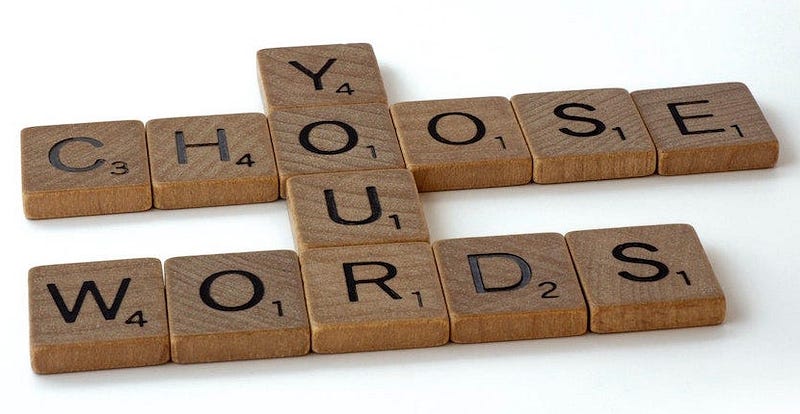
When you bust it all down, writing is about choosing words. A writer can choose them well … or not.
From one of my favorite websites LettersOfNote:
When copywriter Robert Pirosh landed in Hollywood in 1934, eager to become a screenwriter, he wrote and sent the following letter to all the directors, producers, and studio executives he could think of. The approach worked, and after securing three interviews he took a job as a junior writer with MGM.
Pirosh went on to write for the Marx Brothers, and in 1949 won an Academy Award for his Battleground script.
Here is the letter:
Dear Sir:
I like words. I like fat buttery words, such as ooze, turpitude, glutinous, toady. I like solemn, angular, creaky words, such as straitlaced, cantankerous, pecunious, valedictory. I like spurious, black-is-white words, such as mortician, liquidate, tonsorial, demi-monde. I like suave “V” words, such as Svengali, svelte, bravura, verve. I like crunchy, brittle, crackly words, such as splinter, grapple, jostle, crusty. I like sullen, crabbed, scowling words, such as skulk, glower, scabby, churl. I like Oh-Heavens, my-gracious, land’s-sake words, such as tricksy, tucker, genteel, horrid. I like elegant, flowery words, such as estivate, peregrinate, elysium, halcyon. I like wormy, squirmy, mealy words, such as crawl, blubber, squeal, drip. I like sniggly, chuckling words, such as cowlick, gurgle, bubble and burp.
I like the word screenwriter better than copywriter, so I decided to quit my job in a New York advertising agency and try my luck in Hollywood, but before taking the plunge I went to Europe for a year of study, contemplation and horsing around.
I have just returned and I still like words.
May I have a few with you?
Robert Pirosh
385 Madison Avenue
Room 610
New York
Eldorado 5–6024
That may be the single greatest letter of inquiry ever written. Utterly in the spirit of one of my writing mantras: “Make words your friend.”
“In the beginning was the word.” So begins the Gospel of John. Setting aside theological implications, this is where writing begins as well — with words. The most recent screenplay I wrote has 18,864 words. Each of those 18,864 words represents a conscious choice on my part to best reflect on the page the movie I see in my mind. Which means that those 18,864 words are my allies, my troops, my warriors going to battle on my behalf to win the war of imagination with anybody who will read my script.
There is a famous anecdote involving Irving Thalberg, a successful producer and studio executive in the 20s-30s, known for his ability to select the right scripts and make profitable movies out of them. Here is a quote from a biography, “Thalberg: Life and Legend,” authored by Bob Thomas:
“At times Irving Thalberg seemed to hate his very dependence on writers and his frustration that he could not perform their functions. During one heated script session, he said almost contemptuously, ‘What’s all this business about being a writer? It’s just putting one word after another.’ Lenore Coffee (a screenwriter) corrected him: ‘Pardon me, Mr. Thalberg; it’s putting one right word after another.’”
“Putting one right word after another” — that is so right. When you bust it all down, writing is about choosing words. A writer can choose them well, or not.
Words are our allies, our little warriors, our soldiers of good fortune. Get to know them. Nurture them. Pay attention to them. Here are a few ways to do just that:
- Know their definitions. I can’t tell you how often I read scripts in which a writer uses the wrong word, obviously because they don’t know the meaning. Words are messengers, they transmit meanings. I keep a dictionary on my computer desktop, so I can click on it just like that.
- Know their synonyms. The average person uses 2,000 different words in the course of a week’s worth of conversation. The Oxford English Dictionary contains 290,000 entries with some 615,000 different word forms. Wow! Why write, “He looks at her,” when you can substitute ogles, eyeballs, gapes, peeps, or rubbernecks? That’s why I keep a thesaurus beside my dictionary on my computer desktop.
- Know their beauty. You can get definitions and synonyms, but you also need to develop your aesthetic sensibilities. My advice: Revel daily in the world of word-imagination. Read screenplays, short stories, novels, poetry. A great web resource is The Writer’s Almanac. It is produced by Minnesota Public Radio. Every day on The Writer’s Almanac honors and discusses writers, past and present, then reads a poem. It is a wonderful way to enliven your writerly mind.
In other words… Make words your friend.
Be nice to them — and they will be nice to you.
For more of the LettersOfNote post, go here.