Is My Screenplay Big Enough to Be a Movie, Part 8: The Middle
This is a fundamental question screenwriters must ask themselves at all stages of a screenplay’s development and writing. Why? Because it’s…
This is a fundamental question screenwriters must ask themselves at all stages of a screenplay’s development and writing. Why? Because it’s a question movie studio execs will ask as one of the key determining factors whether to say ‘yes’ or ‘no’ to buy your script.
“Is my screenplay big enough to be a movie?”
This is a fundamental question screenwriters must ask themselves at all stages of a screenplay’s development and writing. Why? Because it’s a question movie studio execs will ask as one of the key determining factors whether to say ‘yes’ or ‘no’ to buy your script.
For years, movies have been known as playing on “The Big Screen,” as opposed to TV (the “small” screen). Typically movies have big budgets, big marketing campaigns, and big stars. Their running times, clocking in at an average of two hours, are big. The film industry is our nation’s second biggest export business (behind airplane manufacturing). So much about movies is about being big.
Being ‘big enough’ pertains not only to huge blockbuster action-thrillers, but also to small character-driven scripts. While the plot may be ‘small’ in scope, what happens and what those events mean to the story’s characters must have a ‘big’ enough meaning and emotional resonance with a big enough potential audience to warrant a studio’s green light.
The central question here — Is my script big enough to be a movie — is a… well… big topic. What I’ve done is put together 10 questions you can ask in relation to any of your writing projects, current and future, to test if it’s big enough to be a movie. I’ll be posting these questions over the next few weeks.
PART 8: DOES MY SCREENPLAY HAVE A BIG ENOUGH MIDDLE?
Many writers have trouble with their script’s middle part. Either they get confused and lost to the point where they drop the project out of frustration, or if they do succeed in getting through, the pages come off as a string of episodic events with no coherency to them, no build-up to a big All Is Lost Act Two end.
This is a big reason why I’m such a proponent of the Protagonist metamorphosis arc (Disunity to Unity), a dynamic we see at work in movie after movie. I’ll speak more on that later, but in terms of the story’s middle, let’s consider Deconstruction and Reconstruction.
Broadly speaking, the Protagonist emerges from Act One in a state of full-blown Disunity. Typically they will have a Want (a conscious goal), but are either unconscious of a deeper need or aware of it and actively repressing it. In general, the way they have been living in their ‘ordinary world’ established in the story’s beginning is to stitch together a semblance of a viable existence through a variety of coping skills and defense mechanisms, but there is at the core of their being something real and powerful and authentic from which, for whatever reason, they are in essence disconnected. Hence, the term Disunity.
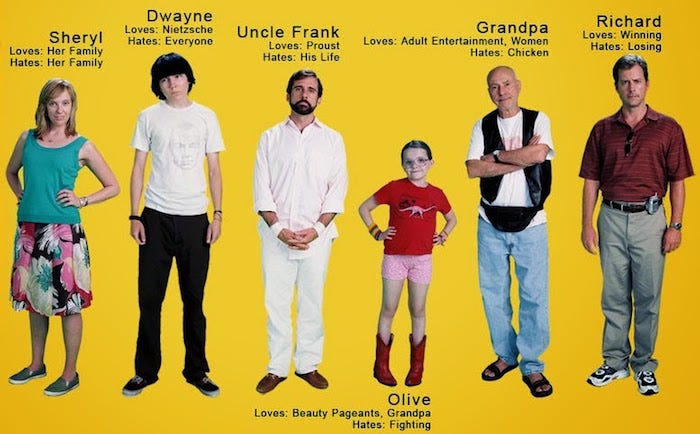
In the first half of Act II (Deconstruction), events occur which assault the Protagonist’s preexisting modes of behavior. Furthermore, as they move out of their ordinary world into the extraordinary world of adventure, the Protagonist is unsure of the rules and the new personalities they are meeting along the way, who they can or can’t trust. The challenges in the first part of the story’s middle, often involving attacks on the Protagonist’s physical self, are seemingly a ‘negative’, but in fact, the cumulative effect of the events is to batter the Protagonist’s status quo, forcing them to open up, allowing that authentic part of their self from which they had been disconnected to emerge into the light of day (consciousness). This is accompanied by a sense of growth and empowerment.
In the second part of the story’s middle (Reconstruction), the Protagonist moves from reactive to active, tapping into their newly found power, and in fits and starts using it to begin constructing a ‘new’ self. As they gain experience, they move toward joining their external (Want) and internal (Need) selves. The All Is Lost moment at the end of Act Two sets the Protagonist back on their heels, yanking them away from their goal, doubly upsetting because they had come so close to achieving ‘victory’.
Now look at these previous two paragraphs: Don’t they present a coherent plot? Don’t they build to a dramatic ending? Don’t they sound like a big middle of a story? And these are generic concepts, not the specifics of this or that Protagonist’s journey.
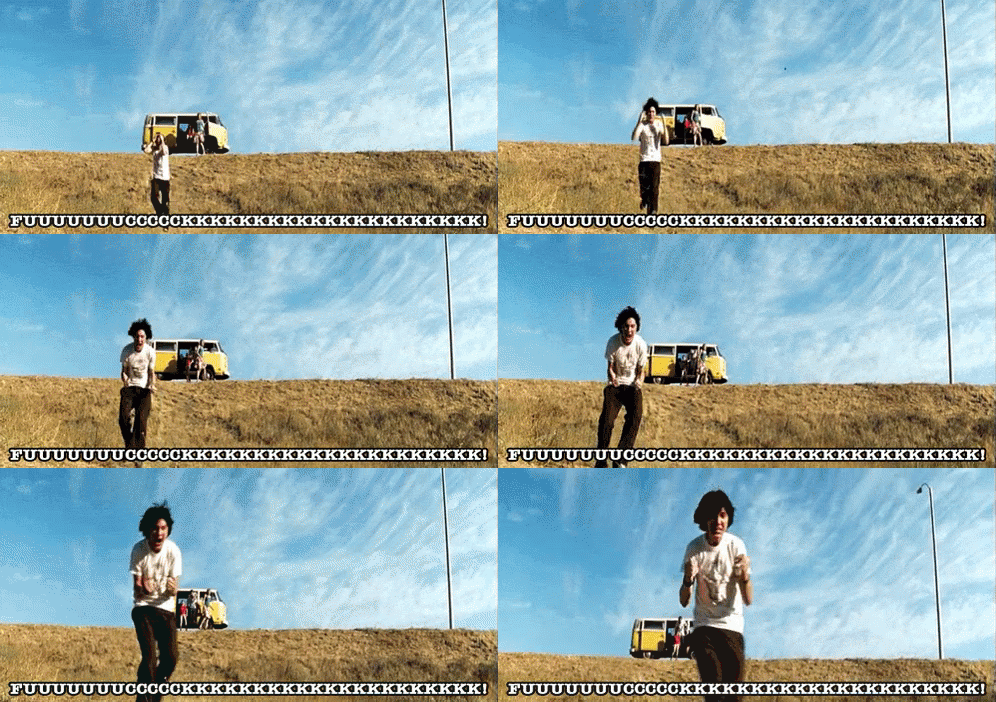
Not all stories follow this paradigm, but most do. If your story’s middle is more like a muddle, feeling either confused, inconsequential, or both, go deeper into your Protagonist and look for psychological elements there that can become the basis of their metamorphosis, where Act Two can be about Deconstruction and Reconstruction.
Next: Does my script have a big enough ending?
Part 1: Does my screenplay have a big enough story concept?
Part 2: Does my screenplay have big enough characters?
Part 3: Does my screenplay have big enough set pieces?
Part 4: Does my screenplay have big enough conflict?
Part 5: Does my screenplay have big enough stakes?
Part 6: Does my screenplay have big enough visual style?
Part 7: Does my screenplay have big enough beginning?