Is My Screenplay Big Enough to Be a Movie, Part 7: The Beginning
This is a fundamental question screenwriters must ask themselves at all stages of a screenplay’s development and writing. Why? Because it’s…
This is a fundamental question screenwriters must ask themselves at all stages of a screenplay’s development and writing. Why? Because it’s a question movie studio execs will ask as one of the key determining factors whether to say ‘yes’ or ‘no’ to buy your script.
“Is my screenplay big enough to be a movie?”
This is a fundamental question screenwriters must ask themselves at all stages of a screenplay’s development and writing. Why? Because it’s a question movie studio execs will ask as one of the key determining factors whether to say ‘yes’ or ‘no’ to buy your script.
For years, movies have been known as playing on “The Big Screen,” as opposed to TV (the “small” screen). Typically movies have big budgets, big marketing campaigns, and big stars. Their running times, clocking in at an average of two hours, are big. The film industry is our nation’s second biggest export business (behind airplane manufacturing). So much about movies is about being big.
Being ‘big enough’ pertains not only to huge blockbuster action-thrillers, but also to small character-driven scripts. While the plot may be ‘small’ in scope, what happens and what those events mean to the story’s characters must have a ‘big’ enough meaning and emotional resonance with a big enough potential audience to warrant a studio’s green light.
The central question here — Is my script big enough to be a movie — is a… well… big topic. What I’ve done is put together 10 questions you can ask in relation to any of your writing projects, current and future, to test if it’s big enough to be a movie. I’ll be posting these questions over the next few weeks.
PART 7: DOES MY SCREENPLAY HAVE A BIG ENOUGH BEGINNING?
By the end of Act One (The Beginning), a reader not only should know where the story is headed, they have to be gripped by it. The combination of the Plotline and the Themeline has to have enough going on to grab a reader’s imagination, excite their curiosity, and propel them into Act Two (The Middle).
Certainly, one way to do that is through a set of bombastic circumstances. Another is to establish sizable stakes at play in the story. But movies often fail when they don’t provide any emotional connection between the events that transpire and what the characters are experiencing. This is especially true with the Protagonist.
Often the Protagonist begins the story with an acknowledged goal, but over the course of Act One, a second goal emerges, usually related to what they need as opposed to what they want. For example, in The Silence of the Lambs, Clarice Starling begins with this Want: To rescue Catherine Martin, Buffalo Bill’s latest kidnap victim. However, once she meets Hannibal Lecter and experiences how he can see into her ‘soul’, she feels compelled to open up to him in order to explain the mystery of her recurring nightmares. And that transforms her goal. Yes, she wants to save Catherine, but she needs to kill Buffalo Bill, an act of redemption for her father’s death.

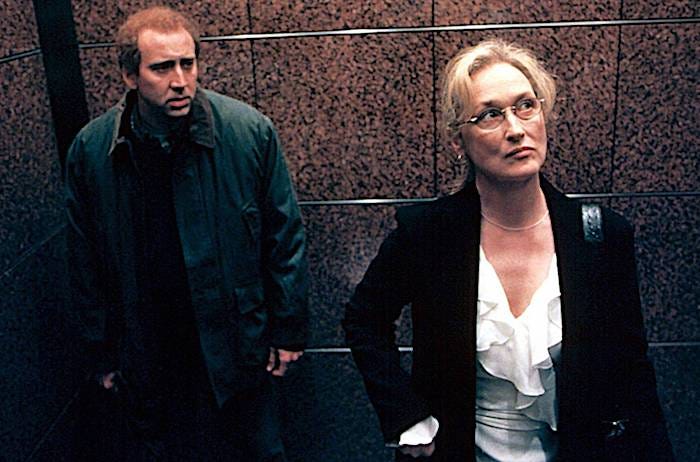
One way of looking at Adaptation is that at the start, Charlie wants to accomplish the goal of adapting “The Orchid Thief” into a screenplay. However, once he becomes consumed with Susan Orlean, he finds himself lured deeper and deeper into the author’s private life, needing to find the secret to the mystery of his own writer’s block (which is itself a metaphor of his own emotional blockage).
If your story’s Beginning feels too small, dig more deeply into your Protagonist and search for a deeper dimension tied to their goal, one that speaks to their Need.
Next: Does my script have a big enough Middle?
Part 1: Does my screenplay have a big enough story concept?
Part 2: Does my screenplay have big enough characters?
Part 3: Does my screenplay have big enough set pieces?
Part 4: Does my screenplay have big enough conflict?
Part 5: Does my screenplay have big enough stakes?
Part 6: Does my screenplay have big enough visual style?