Is My Screenplay Big Enough to Be a Movie, Part 6: Visual Style
This is a fundamental question screenwriters must ask themselves at all stages of a screenplay’s development and writing. Why? Because…
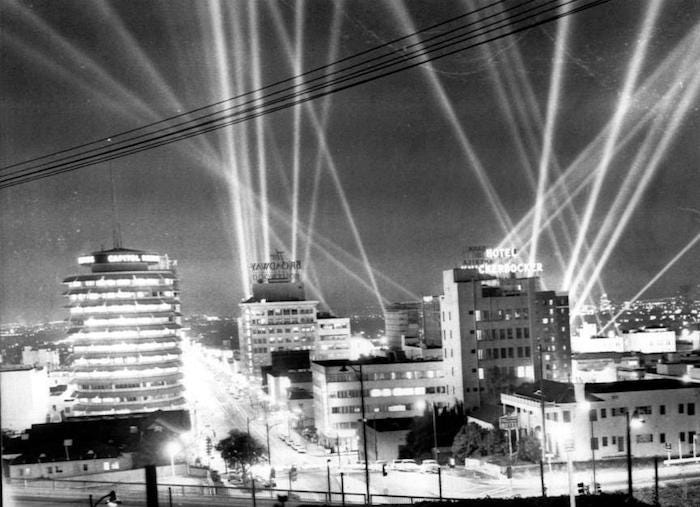
This is a fundamental question screenwriters must ask themselves at all stages of a screenplay’s development and writing. Why? Because it’s a question movie studio execs will ask as one of the key determining factors whether to say ‘yes’ or ‘no’ to buy your script.
“Is my screenplay big enough to be a movie?”
This is a fundamental question screenwriters must ask themselves at all stages of a screenplay’s development and writing. Why? Because it’s a question movie studio execs will ask as one of the key determining factors whether to say ‘yes’ or ‘no’ to buy your script.
For years, movies have been known as playing on “The Big Screen,” as opposed to TV (the “small” screen). Typically movies have big budgets, big marketing campaigns, and big stars. Their running times, clocking in at an average of two hours, are big. The film industry is our nation’s second biggest export business (behind airplane manufacturing). So much about movies is about being big.
Being ‘big enough’ pertains not only to huge blockbuster action-thrillers, but also to small character-driven scripts. While the plot may be ‘small’ in scope, what happens and what those events mean to the story’s characters must have a ‘big’ enough meaning and emotional resonance with a big enough potential audience to warrant a studio’s green light.
The central question here — Is my script big enough to be a movie — is a… well… big topic. What I’ve done is put together 10 questions you can ask in relation to any of your writing projects, current and future, to test if it’s big enough to be a movie. I’ll be posting these questions over the next few weeks.
PART 6: DOES MY SCREENPLAY HAVE BIG ENOUGH VISUAL STYLE?
At their core, movies are a visual medium. Until The Jazz Singer debuted in 1927, movies existed quite well for three decades without sound. Remember what they were first called: motion pictures. And, of course, one of the first mantras of screenwriting is “Show it, don’t say it.”
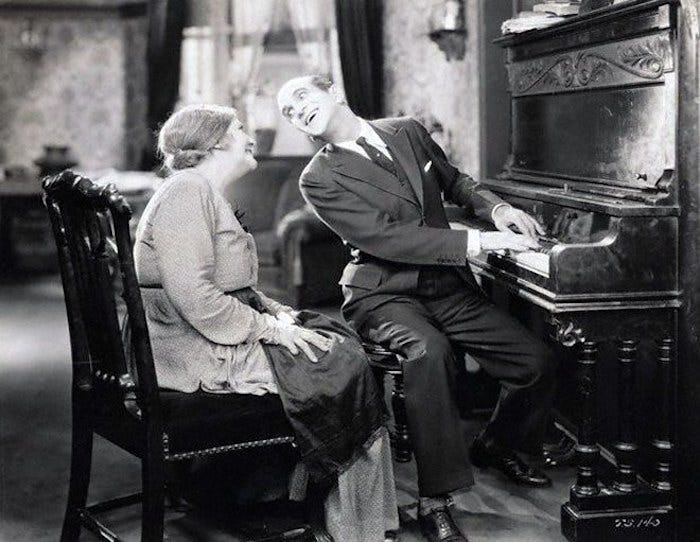
So at all times and in every scene, a screenwriter needs to be actively aware of their story’s visual potential. Some basic things you can do in this regard:
- Put the scene into motion. If you have a scene which has a lot of exposition, put the scene into motion: A careening car ride, pedestrians slaloming through foot traffic, two golf carts chasing each other, and so on. Almost anything is better than two talking heads.
- Inject a loose cannon. A nosy hot dog vendor intrudes on a couple’s argument. Thunder and lightning chase a mother and daughter across the beach and into a cave. In the midst of making love on a remote hillside, a couple is interrupted by the sudden arrival of the Goodyear blimp overhead. The visual can also be surprising.
- Use dreams, nightmares, memories, and imaginings. A screenwriter has the right to enter ‘into’ a character’s mind and convey those visuals on the page. Much better to see than hear the character describe through dialogue.
- Don’t forget contrast. Follow a day scene with a night scene. A dry scene with a rainy scene. A slow scene with a fast scene. An interior scene with an exterior scene. Contrast emphasizes visuality.
- Visual to visual transitions. In Tokyo, a character hangs up a phone / in Midland, Texas, another character clicks on his cellphone. In 1947, a boy throws a baseball / in 2009, an old man catches it. An Italian family dances away, crushing wine grapes / a glass of wine sipped with relish by another character. These type of transitions can enhance a script’s visuality and also create seamless segues from one scene to the next — like this remarkable match cut in 2001: A Space Odyssey.
I call it imagematic writing. Don’t concern yourself with looking up ‘imagematic’. I made it up. To me it means that every word of scene description a screenwriter uses in a script should work to conjure images in the mind of the reader. Use graphic descriptors (e.g., wind-swept, slump-shouldered, bovine), strong verbs (e.g., skitter, vault, careen) — hell, you can even make up words as long as they engender images (e.g., barrel-asses his way, skip-trips across the floor, shadow-slinks into the night).
Then there’s that word style. Style consists of many elements, but certainly how a writer approaches the visual dimension of a script contributes to it — and the more visual your script, the ‘bigger’ it can be.
Next: Does my script have a big enough beginning?
Part 1: Does my screenplay have a big enough story concept?
Part 2: Does my screenplay have big enough characters?
Part 3: Does my screenplay have big enough set pieces?
Part 4: Does my screenplay have big enough conflict?
Part 5: Does my screenplay have big enough stakes?