Interview (Written): Seth Reiss and Will Tracy
A conversation with the screenwriters of The Menu.
A conversation with the screenwriters of The Menu.
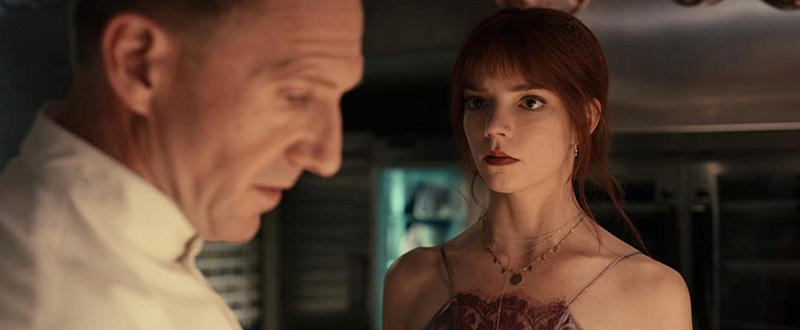
The Menu is generating a lot of buzz during award season already picking up 29 nominations and almost certain to get attention from the Academy come Oscar time. Here is an excerpt from an interview with the movie’s screenwriters Seth Reiss and Will Tracy.
Above the Line: I’ve seen The Menu twice now and it’s one of the most hysterical films of the year. What was the genesis behind the idea for it?
Will Tracy: I went to a restaurant in Norway on an island. It’s kind of like in the film. We took a boat out and it was just only, maybe, 12–15 customers. We were given a tour of the island. I’m a bit of a claustrophobic, nervous person and I’m in a foreign country, and it was dark on the boat ride, and on an island, what if something goes wrong? I immediately started to become a bit paranoid but also immediately sensed — sometimes when you are in a situation like that, you should pay attention to like, ‘oh, would this be something interesting to write about if it’s making you have these very extreme feelings?’ I did say to my wife that this would be a good, at least, precinct for a story. I kind of just told that basic idea to Seth. We’re old friends and writing partners. Seth kind of came back with all these ideas for people [who] could be that way. With the structure, we kind of went back and forth and kind of came up with a menu-structured film called The Menu.
— —
ATL: What would you say was the biggest surprise for each of you in writing this script and watching the film come together?
Tracy: I think, probably, the degree to which we became more interested in characters who maybe, at the outset, were sort of more broadly comedic characters, and then we became interested in them and gave them, I think, more of a life so that they became a bit more three-dimensional.
Reiss: Yeah, I think what we didn’t set out to do when we started writing, I feel like there’s a moment, hopefully — I mean, I think it’s in there but to each his own — but by the end of the film, you get the sense that all the customers, with the exception of Margot, have sort of bought into the chef’s argument of why what needs to happen needs to happen. I don’t think they don’t start at that place but they get to that place, and that arc came as the script got more and more sophisticated. I think this was always what we wanted to do but I think we had a lot more fun with the chef as an artist, as an egomaniac, as him wanting to say to himself that tonight is completely egoless, but if we take a step back, how could this monumental night that you want to be your masterpiece, how could it not be ego filled? I think those sorts of things grew.
— —
ATL: Having written for The Onion and late-night television shows, what’s the trick to writing biting satire?
Reiss: I think the trick is making sure that the world you’re satirizing is completely accurate so that the comedy — there’s straight line, punch line, straight line, punch line. The straight line is the reality of the world, and so then the punch line is almost, I guess, this version of that world for a quick second or something, or just how you keep on boring down into the reality of the world and how that world might be weird and crazy. It’s already kind of intense and weird and you just keep on heightening that and heightening that and heightening that.
Tracy: Yeah, comedy of specificity, and also realizing that as silly or crazy as you may find this world because it’s alien to you, there are people in that world who take it very, very seriously. It’s their entire world. You really want to do justice to their experience and also find the comedy [in] someone who finds this thing the most life or death important thing in the world.
Reiss: If we were to watch four people who love cycling and we were to just listen to them talk about cycling for 10 minutes, we would find it pretty funny. They would be talking in a language that you have never heard in your entire life, even though they’re speaking English. They have just this idea and knowledge of this culture that…
Tracy: It’s the most important thing in the world to them.
Reiss: It’s the most important thing in the world to them and all those terms end up sounding really funny because they’re so alien to you, so yeah, it’s making sure to get that as accurate as possible.
Tracy: When you care about something that much, it pulls out some pretty extreme behavior. I think that’s where we tend to find it and that is always better. The more specific, the more authentic you can get.
Here is a trailer for The Menu:
To read the rest of the Above The Line interview with Seth Reiss and Will Tracy, go here.
For 100s more interviews with screenwriters and filmmakers, go here.