Interview (Written): Scott Beck and Bryan Woods
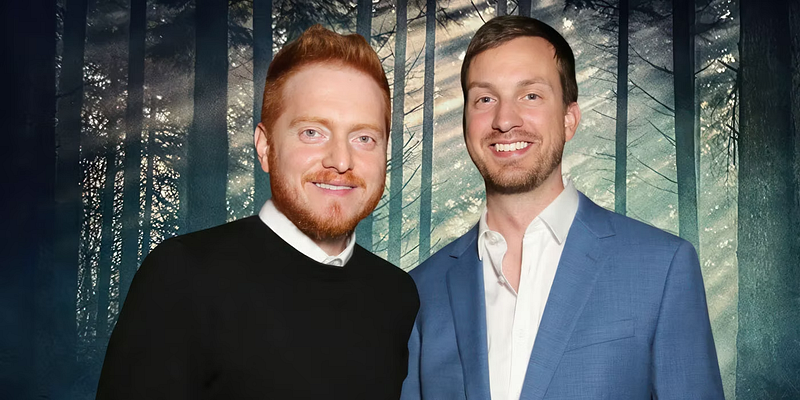
A Hollywood Reporter conversation with the filmmakers who wrote and directed the movie 65.
A Hollywood Reporter conversation with the filmmakers who wrote and directed the movie 65.
I’ve had the good fortune to know Bryan and Scott for several years, and they are just the best kind of people. Would that everyone working in Hollywood were as talented, personable, and down-to-earth as them.
There’s also this: They are advocates for making original movies. As Bryan says in the Hollywood Reporter interview: “And what about reinvesting in the culture of original films? We basically felt inspired and validated by A Quiet Place working as well as it did. We felt like, ‘Oh my gosh, there is an audience that’ll show up if they hadn’t heard of the property before.’” Such is the state in the film and TV business where decision-makers are addicted to preexisting content — prequels, sequels, reboots, remakes.
Where are the stand alone original films?
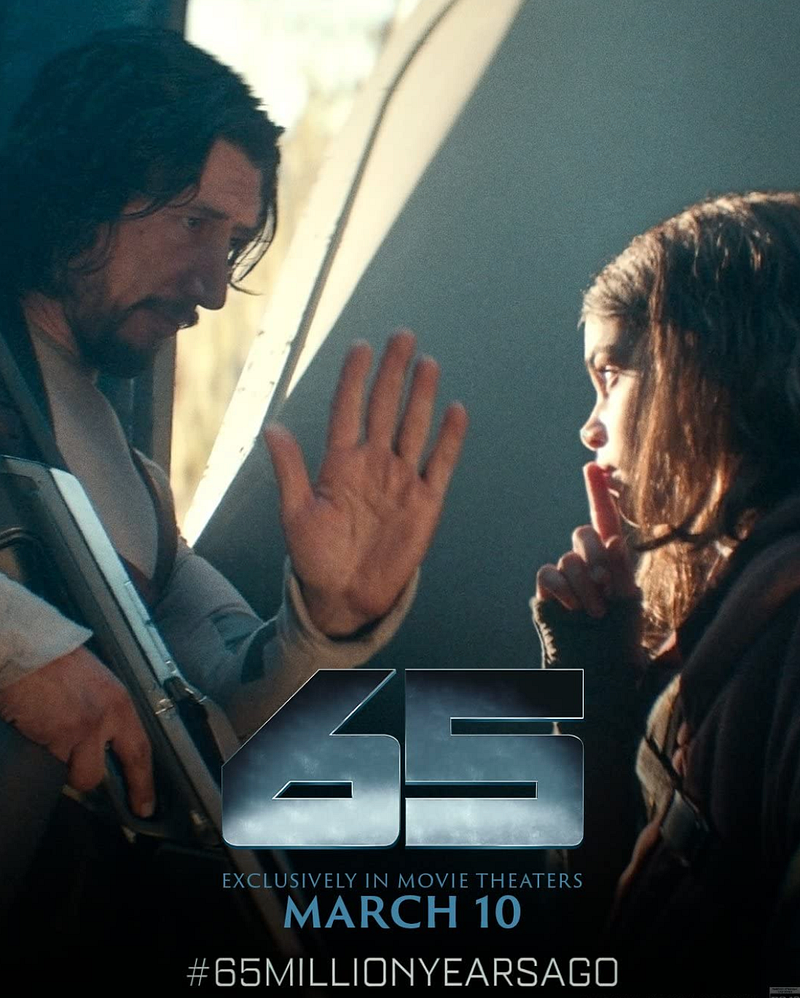
Enter the movie 65, the latest Beck and Wood project, a movie starring Adam Driver ... and dinosaurs.
Here are some excerpts from the Hollywood Reporter interview with Scott Beck and Bryan Woods.
Oftentimes, when a movie becomes a success, other studios try to come out with their own take on similar material. For example, when Knives Out hit, murder mysteries were all the rage again and they were green lit all over town. So why has no one really gone out of their way to get a piece of the Jurassic audience much sooner?
Woods: What you just said was the pitch we made. We wrote this script on spec. We knew we could pitch the movie and probably get it set up, but we wanted to write the script and make sure that whatever studio wanted to make the movie liked where we were going with it. But once we had the script, we went around and pitched every single studio in town. And there was a big moment in our pitch where we said, “Why does Steven Spielberg get to have all the fun? Why are you letting Universal have a monopoly on the dinosaur picture? Why are there not as many dinosaur movies every single year as there are superhero movies? It’s insane to us.” (Laughs.)
So we were asking ourselves the same question you just asked, and I don’t know what the answer is. Dinosaur movies are certainly expensive, and the concept alone of Jurassic Park was so brilliant that it probably scared everybody else off of the genre. And rightly so. But we’re grateful to be able to take a swing in this subgenre. It’s a subgenre that Hollywood used to make even before Jurassic Park, such as The Lost World (1960).
Beck: I remember watching this ’60s B-movie as a kid called Dinosaurs! They took a thawed dinosaur, and then all of a sudden, it’s running amidst humans. So that collision of genre — mixed with this more atmospheric, tonal filmmaking like Terrence Malick’s Days of Heaven — is what I think inspired any film that we do, but certainly 65.
There were some earnings calls recently among various media conglomerates, and a number of them made a point to emphasize franchise storytelling while spending less overall on film production. So does the state of the original movie worry you more than ever?
Woods: In order to sleep at night, we have to believe in a world where a great idea, if executed well, can still break out and get people talking about it. And I do believe that. I absolutely think that can still happen. Inevitably, there will be franchise fatigue. It’s just inevitable when you think about comic book movies, which we’re fans of. They’re done at such a scale that’s mind blowing, and they’re executed so well most of the time. They’ve had a stranglehold on the box office for 20 or 30 years, but there was 70 years of cinema where the only thing people would go see is the Western. The Western dominated 70 years of cinema, and then one day, people were like, “I’m done with the Western. I don’t want to see the Western ever again.” And now there’s only a couple that come out a year, so it’s all cyclical. Things will change, but I believe that there’s always room for a splashy concept that’s executed well.
Beck: We’re in a weird transitionary ecosystem right now, especially with how Covid accelerated, to a degree, the big questions of, “Is it day and date? Is it streaming? Is it theatrical?” And there’s a degree at which nothing’s really settled. And from a higher up standpoint at different studios and corporations, it seems that the franchises are a safe bet for the theatrical landscape right now. I don’t know that it’s always that way, but this is coming from two guys who are currently building a movie theater in Davenport, Iowa called The Last Picture House. Common sense might say that building a movie theater is maybe the worst financial decision, but we believe that there’s a community aspect and a love of not just modern movies, but cult movies, too. It’s the way that Tarantino runs the New Beverly, and it really creates a sense of importance for what films are and being portrayed on a big screen.
If you go back and read the landscape of Hollywood in the 1920s and you remove the date from the headline, it’s almost like you’re reading The Hollywood Reporter in 2023. Things evolve, and you can either be reactionary to it or you can forge ahead and carve your own path. And just the little that we can do as filmmakers, we’re always going to be interested in trying to carve our own path and make something new, and not necessarily stand on the shoulders of sequels or remakes.
Woods: One of my new hobbies is buying Hollywood yearbooks from the 50s, 60s, 70s, etc. They’re these hardbound books that have [excerpts] like, “Here’s what Hollywood Reporter thought was the best movie of the year,” and the exhibition’s point of view and Oscar nominations. And each of these books has the thing that the business was terrified of at that moment, and it’s always the same. It doesn’t matter if you pick up a book from 1958 or 1972, it’s the same worries and fears as ours today. It’s a business that’s built on imagination, and that imagination comes with anxieties and premonitions and fears. So it’s probably best to just enjoy the ride, and don’t worry about it so much.
For more background on Beck and Wood, here is an interview I conducted with them at DePaul University in 2018.
For a Go Into The Story interview with them, go here.
Bryan and Scott are not only talented screenwriters, they also have an affection for the craft and its history in Hollywood. For example, a couple of decades ago, an outfit called Newmarket Press had something called the Newmarket Shooting Script Series. They appear to have stopped doing that. So when Beck and Woods made their horror movie Haunt, they put out a book with the shooting script, production notes, and an interview which they kindly asked me to host. You may read more about their book here.
They also have The Boogeyman hitting theaters this summer, a movie based on a Stephen King story.
For the rest of the Hollywood Reporter interview, go here.
For 100s more interviews with screenwriters and filmmakers, go here.
Twitter and Instagram: @beckandwoods.