Interview (Written): Robert Eggers
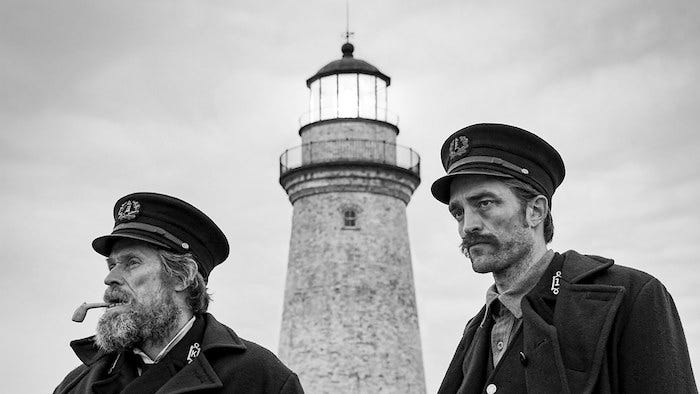
Conversation with the co-writer and director of The Lighthouse.
Conversation with the co-writer and director of The Lighthouse.
A Vox interview with Robert Eggers who made quite an impression with his feature film debut with The Witch. Here he talks about his new movie The Lighthouse co-written with his brother Max.
IMDb plot summary: Two lighthouse keepers try to maintain their sanity while living on a remote and mysterious New England island in the 1890s.
Alissa Wilkinson
This movie is hard to categorize, but to me it feels like a fable, and maybe a fable about damned souls trying to make themselves clean. Was any of that in your mind while you were writing it?
Robert Eggers
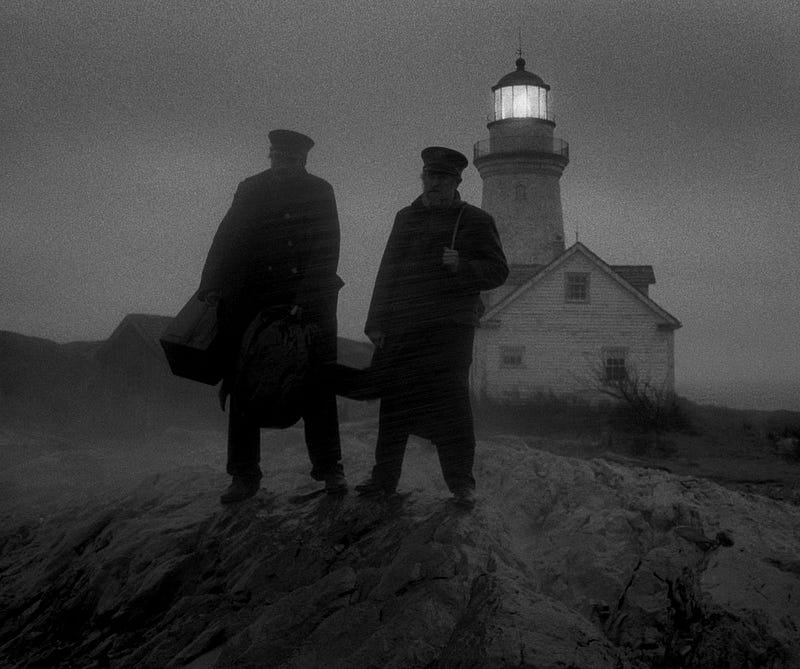
The idea of a fable or a myth is definitely at the forefront of our process. I start with atmosphere. My brother had an idea — a ghost running the lighthouse — that created a look and a feeling of a world in my head. Then we got the very basic strokes of a story based on a real story, about two lighthouse keepers, both named Thomas, who get stranded on their lighthouse station and one of them dies.
Alissa Wilkinson
A real story in that it really happened?
Robert Eggers
In that it really happened, in Wales, in the early part of the 19th century. The way the story is told and ends is like a folk tale, so how much truth there is to this “true” story, who knows. Very little of that story aside from the fact they’re both named Thomas came into The Lighthouse, but the idea that they were both named Thomas struck a chord. I was like, “Okay, this is a movie about identity, and can devolve into some weird, obscure places.”
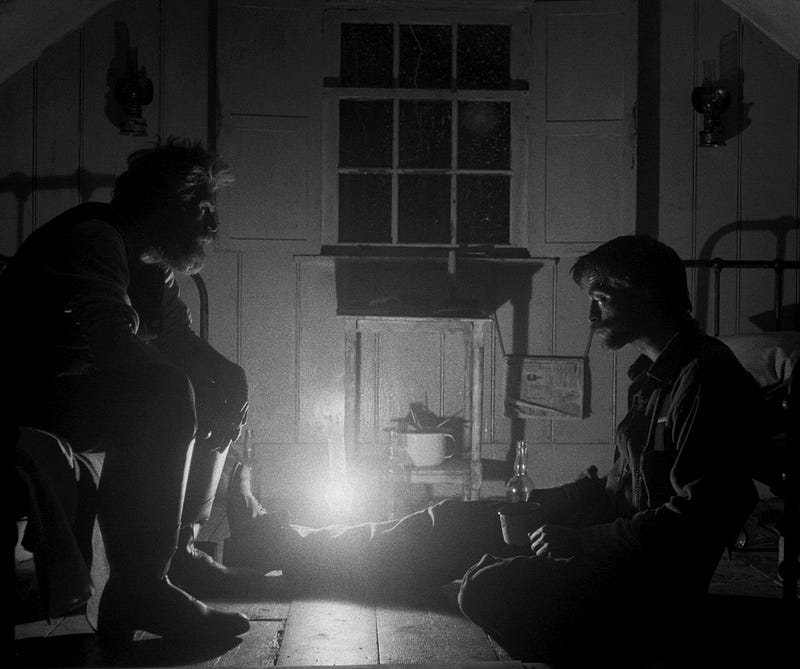
Then we started researching all about period lighthouses and the maritime community. What are these people eating? What are they wearing? And where are they living? And how are they living? Reading [Herman] Melville and [Robert Louis] Stevenson and other stuff — mostly, frankly, for learning how people talk.
Alissa Wilkinson
The Lighthouse is very much the opposite of a puzzle box movie, where the aim is to “figure it out.”
Robert Eggers
I personally think so. It’s so funny, because I feel like so many people felt like The Witch wasn’t satisfying. But now all of a sudden everyone’s saying “The Witch had such a satisfying ending, and now this is unsatisfying.” Okay, fine. But, though my brother and I have answers about Robert Pattinson’s character’s past, it’s important for us to leave the questions open to the audience.
Rob would ask me all the time to tell him the character’s backstory. And I’d say, “Look, any of those things work. You need to decide for yourself or you can’t play the scene.”
If we’ve succeeded in our efforts, the ambiguity should be keeping you engaged as an audience. We put in these big, stupid, over-obvious signposts to grab onto — “Bad luck to kill a seabird.” Alfred Hitchcock would say, “You shot that with too much clarity.” We get it. And that’s intentionally way over the top. But then there are other lines of exposition that are just as important that are said in passing. And the intention there is for the audience to be like, “Wait? What?” Hopefully we pulled it off.
Alissa Wilkinson
I’m interested in the fact that both The Witch and The Lighthouse are kind of about paganism, or pagan things, in an early American context.
Robert Eggers
That’s fair.
Alissa Wilkinson
Does that interest you?
Robert Eggers
Folklore, mythology, fairy tales, religion, at times the occult — these are the things that I’m the most interested in. So, yes. I developed and wrote three things that didn’t get greenlit that didn’t have anything to do with New England. This did get greenlit. But yes, both of these films are very much me deliberately trying to explore the folk culture of my region. And obviously, when I travel to other countries, it strikes me how much American society, as much as we are a melting pot, is Anglo-Protestant culturally.
But the thing is, certainly the Puritans brought with them many things that were superstitions and folklore that was pagan, even if they weren’t allowing themselves to see that. And of course, the sea being as powerful as she is, there’s a lot of lore and superstition around that. Part of all belief systems, from superstition to canonical religion, is trying to make sense of all this chaos, you know? So sailors have a lot of superstitions.
Some takeaways:
- My brother had an idea — a ghost running the lighthouse — that created a look and a feeling of a world in my head. Sometimes, a story can spring from a single visual. Look. Feel. And also here Location. Three key narrative dynamics from one image.
- This is a movie about identity, and can devolve into some weird, obscure places. In my view, all movies are about identity asking of key characters, especially the Protagonist, “Who are you?” Because the premise is two guys living in a remote, desolate environment, it definitely opens up the story to go to “some weird, obscure places”… psychological places, that is.
- What are these people eating? What are they wearing? And where are they living? And how are they living? I preach this all the time to my students and writer clients: The single biggest key to story development is character development. And the single biggest key to character development is curiosity. Get curious about who they are, why they are, how they are, where they are… and you can do that by asking questions.
- Though my brother and I have answers about Robert Pattinson’s character’s past, it’s important for us to leave the questions open to the audience. This is an interesting tactic to not tell Pattinson his character’s backstory, rather have him figure out something to help him play the scene. That said from a writer’s perspective, please note: Both Robert and Max Eggers had “the answers” about the character’s past. It reminds me of that Quentin Tarantino quote: “I need to know where these people [his story’s characters] come from. It’s a universe I’m creating, and I have to know my universe backward, forward, and sideways. The audience doesn’t need to know, but they need to know I know.”
Here is a trailer for The Lighthouse:
For the rest of the interview, go here.
For 100s more interview with screenwriters and filmmakers, go here.