Interview (Written): Richard Curtis
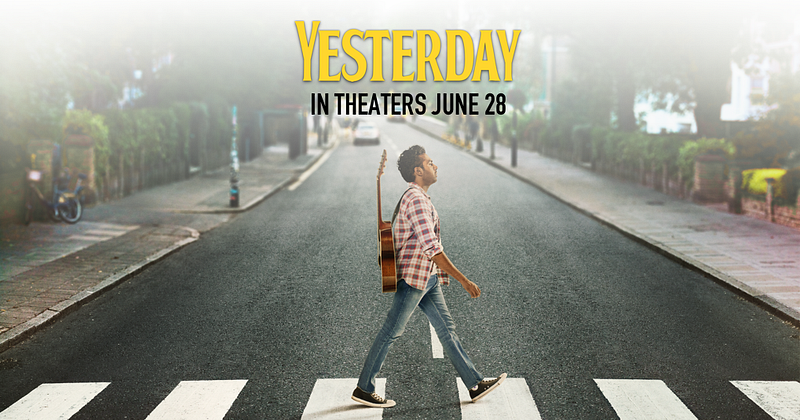
The noted screenwriter talks about his latest movie Yesterday.
The noted screenwriter talks about his latest movie Yesterday.
A /film interview with Richard Curtis whose screenwriting credits include Four Weddings and a Funeral, Notting Hill, Bridget Jones’ Diary. His latest, directed by Danny Boyle, looks wonderful and is a flat-out high concept: A struggling musician realizes he’s the only person on Earth who can remember The Beatles after waking up in an alternate timeline where they never existed.
You usually get an idea and let it marinate for a few years before committing to writing it. How’d the idea initially start and evolve for Yesterday?
Yesterday was an odd one actually because I didn’t think of the one lined thesis. Someone rang me and said, you know, would you be interested — and I think maybe even directing — the film with this one line plot: a musician who’s the only person to remember The Beatles. And so, what happened after that is I said well no, don’t tell me anymore. Let me just write my own film. And then I had as I always have [time to think about it] because for most days, I work for the UN. I had my normal 6 months off without being able to write it, and during that time I tried to work out what the movie might mean to me, what bits I’m interested in could be there. So, you know, I thought a lot about impostor syndrome that we all feel and particularly feel like an impostor as a father. And then also, I in a way returned some of the stuff I did in my film called About Time, which is just, what has value? How should you spend your time? And it often comes down to work versus family or work versus love, you know? Your sense of responsibility to the world and then your sense of responsibility to be happy. And that turned out really to be what this movie’s about for me.
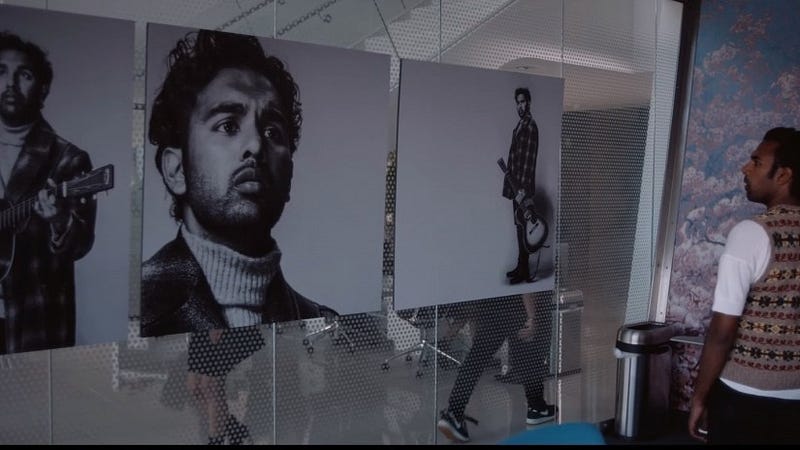
You’ve said before you like telling stories about the problems that remain even when life is going well. In this movie, the guy basically becomes a Beatle, but his problems don’t go away. When you look at Yesterday and your body of work, what other ideas do you think tie them together?
I think I’ve got two big subjects which in a way do come from The Beatles, which I really do think. I’ve always been trying to get that mixture of joy and love and slight melancholy that I think was sort of injected into me when I was young. It’s weird how you’re interested in something, like I clearly was obsessed by love. I first fell in love at 4, then 7, then 10. I remember when we auditioned for the little boy part in Love Actually and talking to the 10 year olds who came in, none of them had even thought about the idea of love, and yet that was all I thought about at the age of 10. And then I’m very interested in friendship because I think that’s what I’ve actually found work quite hard, you know? I find politics interesting but I don’t want to write about it. You know, friendship, love, time and how it treats you, and music would be the things that I care about most in life and that is therefore found their way into the films.
It’s a good interview with lots of takeaways. Here’s one: As writers, find those themes and personal dynamics which attract you to write them over and over. If they’re that resonant with you, then it’s likely you can explore them in different narrative frameworks and discover something new in every story.
For the rest of the /film interview with Richard Curtis, go here.
Here is a trailer for the movie Yesterday:
For 100s more interviews with screenwriters, filmmakers, and industry insiders, go here.