Interview (Written): Rian Johnson
A spoiler-filled Q&A with the writer-director of Glass Onion: A Knives Out Mystery.
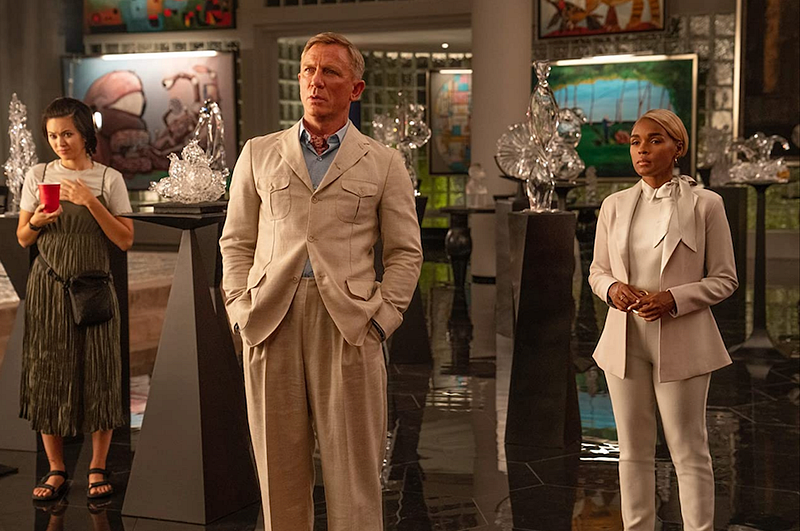
A spoiler-filled Q&A with the writer-director of Glass Onion: A Knives Out Mystery.
If you have not yet seen Glass Onion: A Knives Out Mystery, do not read this interview. If you have seen the movie and want to learn more about its plot twists and turns, here is an excerpt from The Wrap conversation with the filmmaker Rian Johnson.
You said the script unlocked for you when you came up with the structural idea of revealing that Andi is actually Helen and then flashing back. Practically, how do you approach that? Because you could fall into the trap of boring the audience by going backwards halfway through the movie and pausing the momentum of the story. How do you avoid the pitfalls of such a risky move?
I mean, that’s a challenge. I feel like the first question, OK, how do you pull this off? And I guess the primary thing was, it can’t just be seeing it from a different angle. It has to be enough of a basic perspective shift that there’s a new tension that’s introduced in the repeat of all the different scenes. This is what led to the idea of twins. By the process, I was dragged kicking and screaming to identical twins. I didn’t want to do it, it seemed like a horrible trope, and just, “Will the audience ever forgive me for this?” [laughs]. But I think we get away with it because it’s not like a reveal at the end of “Aha! It was a twin!” It’s a complication in the middle that leads to a deepening of the stakes and the story. So I think that’s why we get away with it.
So the big massive answer to your question is, introducing the emotional stakes of the entire movie at that midpoint. Is introducing a character who you like, and who you suddenly have this emotional investment in casting your mind back to the first half where you’ve kind of perceived them as something else, knowing in the back of your head we’re leading up to that scene where she’s gonna get shot, and then throwing her into this back half, but through her eyes. That, I think, is what I put my cards down on.
And in that way, the bigger risk actually becomes going that first half of the movie without it. It’s like if we played the first movie for half of it without introducing Marta. What was scarier to me is, is the audience gonna stick with this group of terrible people up to the point where we actually give you someone to care about when we introduce Helen? And then from that point on, it was kind of a trial and error calibration of how much do you repeat? How much will the audience stick with actually seeing stuff play out again? A lot of just pacing stuff, it’s just kind of the patient work that goes into any other movie, but the calculation is slightly different, because the fact that we’re going through the second time now also plays into the audience’s experience.
Here is a scene from the movie with an introduction by Johnson:
You may read the rest of The Wrap interview here.
For 100s more interviews with screenwriters and filmmakers, go here.