Interview (Written): Rian Johnson
A Q&A with the creator and executive producer of the hit Peacock TV series Poker Face starring Natasha Lyonne.
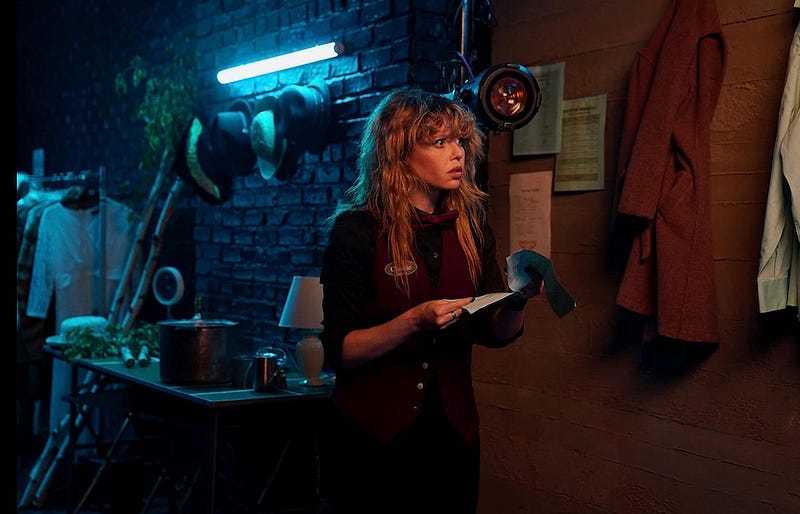
A Q&A with the creator and executive producer of the hit Peacock TV series Poker Face starring Natasha Lyonne.
Rian Johnson has an impressive set of credits as a writer-director of feature films including Brick, Looper, Star Wars: Episode VIII — The Last Jedi, Knives Out, and Glass Onion. His first foray into TV is the Peacock series Poker Face which currently has a 99% rating on Rotten Tomatoes. Here is how IMDb describes the series concept:
Charlie (Natasha Lyonne) has an extraordinary ability to determine when someone is lying. She hits the road with her Plymouth Barracuda and with every stop encounters a new cast of characters and strange crimes she can’t help but investigate and solve.
In this Vulture interview, Rian talks about the inspiration for the series and the challenges of writing an episodic mystery series.
Poker Face spends most of its season working in the Columbo mode you’ve been so careful to establish, but these last two episodes are clearly a shift — less Columbo, more network TV during sweeps week.
I love the sweeps-week reference. Yes, absolutely. Who’s going to die on this week’s Poker Face?
On the one hand, it was against what I had been adamantly pitching from the start, which was resisting the lure of serialized storytelling. On the other hand, though, not really. This goes back to the stuff I grew up watching as a kid. Even on Quantum Leap, they’d tease that he’s going to figure it out and get back home or do the episode with his wife. Those were always feints toward serialized storytelling, and in that way, we liked the notion of ending the season with something like that.
I don’t think I could have ended the season without giving it some big season ending. It felt really good to do something that broke the mold and felt like a cap in a satisfying way, which means calling back to the beginning.
— —
There are all of these different ways of shifting the detective figure — amateur or professional, with or against law enforcement. What does Charlie’s amateur status give her?
That fundamental decision to make her say in the pilot, “I’m not a cop,” was both a massive challenge for every episode in the writers’ room and also presented us a great opportunity to have this other layer to every episode. On a fundamental storytelling level, it means she needs skin in the game. She needs a reason to be invested in some element of the crime, where she has this Galahad-like thing in her brain where she can’t see someone she likes get screwed. That means that, every single episode, we had to figure out a different way for Charlie to have some genuine reason why she gives a shit and cares enough to put herself in genuine danger. It ended up being one of the great strengths of the character — it’s not her job. In fact, she’d be much better served by getting in her Barracuda and getting out of town every time. But she’s like De Niro at the end of Heat. She just can’t leave it alone.
I won’t lie, though. It was a very big challenge in the writers’ room: How can we do a different version of that every week that feels genuine and you actually buy?
Here is a trailer for the series:
Not a surprise the series has been renewed for a second season.
For the rest of the Vulture interview, go here.
For 100s more interviews with screenwriters and filmmakers, go here.