Interview (Written): Phil Lord and Chris Miller
Q&A with the screenwriter and producers of Spider-Man: Into the Spider-Verse.
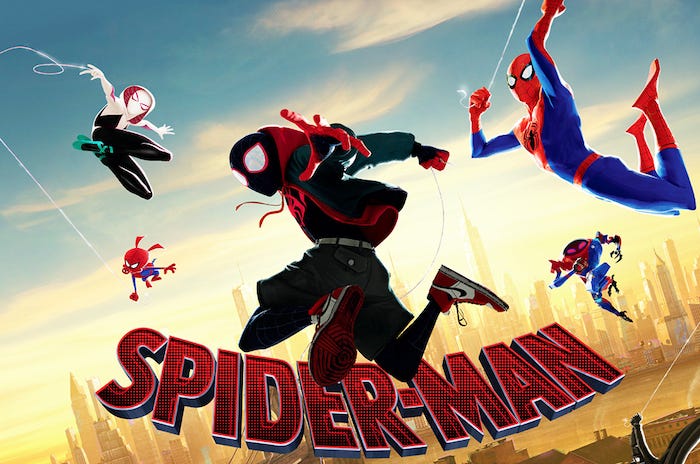
Q&A with the screenwriter and producers of Spider-Man: Into the Spider-Verse.
A Screen Rant interview with Phil Lord who wrote the screenplay for Spider-Man: Into the Spider-Verse as well as producing the movie along with his longtime creative partner Chris Miller. Their other movie credits include Cloudy with a Chance of Meatballs, The LEGO Movie, 21 Jump Street, and 22 Jump Street.
Screen Rant: One thing that I absolutely loved in this film too, is that you took all these different Spider-people and they were almost different genres of animation. Because you had Peni, the anime, obviously. You had Noir, this old timey kind of noir. What went into informing that decision? That you wanted to go in that direction?
Phil Lord: It was like the first call, was to the production designer going, “I think we could make a movie with multiple animation styles all living in the same frame at the same time.” He’s like, “No, you’re never going to get away with that.” And it was like, “I’m going to write it so that we have to do it that way.” [chuckles]
Chris Miller: Yeah. And so, it was right from the very beginning. That was the ambition of the movie, was to be able to, obviously to feel like you’re walking into a comic book and you’re surrounded by a world that feels like nothing you’ve ever seen before. And because sequential art is done in so many different styles, and you want to feel the hand of the artist and it, it just lent itself to saying like, “Oh, in different universes, they’re rendered in different styles.” And bringing them all together shows how different we all are. But then what we all have in common.
Phil Lord: And it’s right over the plate for us. We really liked the idea of like individual artists all coming together to create something new. Right? And it’s such a good metaphor for what’s happening in the movie. All these people from different walks of life, they all have their own style, and they all are interpreting this persona in a different way.
Screen Rant: Talking about something new, that art style blew me away. Obviously, I’ve never seen anything like that before. What went into that?
Phil Lord: That was the idea. Can we make something that no one’s seen before?
Screen Rant: Well you did it.
Phil Lord: It’s easy to say and hard to do. Right? And so, the whole time, for at least year, we just kept saying, “Nope, that’s too conservative.”
Chris Miller: You were like, “Look at this beautiful sort of impressionistic concept art painting. Let’s make it look, not just inspired by this, but look exactly like this, but moving.” And they’re like, “Yeah, let’s go for it.” But you’re not 100 percent sure how to do it. And it took a lot of smart people figuring out a process that involved both CG animation and hand drawn 2D animation. And a bunch of crazy new like texture renders for lighting. And backgrounds that had like halftone dots, hatch marks, line work, all sorts of crazy stuff, coming together to make every frame looked like it was a painting.
Phil Lord: And unwinding some of the stuff that is stock, that we’ve gotten used to doing in an animated production. So, we would go through early lighting passes and turn stuff off. Turn all of these studio lights off. Light it with that window and like a bounce card. And that’s it. Because we said like, “We want the movie to be at a heightened exaggeration.” But you know, because that’s what an illustration is. But we want it to be at a heightening of something that you can observe. That’s based in like looking at these people and what their lives are like. What Brooklyn looks like. What it’s like to be in a dark room with all the lights off. We don’t want to goose anything.
Chris Miller: And it was something that was just really, really slow. Because it took a week for an animator to animate one second of footage. Normally, they could do at least four plus seconds. Which was about four times as complicated and challenging to make this movie on every step of the way. It was four times harder.
— —
Screen Rant: How freeing was it, or how much freedom did you have with the Spider-Man characters? Were you guys able to do kind of what you wanted to do? And how far were you able to take it? Did the studio jump in and say, “Oh, well we don’t want to…?”
Phil Lord: I think the only limitations were the decisions that we put on ourselves. We wanted to get the story right. So, we didn’t want to mutate a lot of the details of the characters origins. But we did get to slam them together, in a way that they’ve never been slammed before. And having Spider-Ham in the same frame as Spider-Noir seemed like an opportunity only we could get a chance to do.
Chris Miller: And the only real limitation, it didn’t come from the studio, it came from the story itself, which wanted to be Miles’ story. Miles Morales is coming of age. Is turning into the person that he’s going to be. And so, whenever it got too a diffused with other characters and ideas, it lost our focus on the person that we were following. And so, at the end of the day, we always had to keep coming back to Miles. Because that’s what we really cared about. So, we fit as much as we possibly could in this story while still having it be Miles’ journey.
Here is a half-hour interview with Lord, Miller, and the movie’s co-directors.
Here is a scene from the movie:
For the rest of the Screen Rant interview, go here.
For 100s more interviews hosted here at Go Into The Story, go here.