Interview (Written): Paul Dano and Zoe Kazan
The couple discuss co-writing Wildlife which is Dano’s debut as movie director.
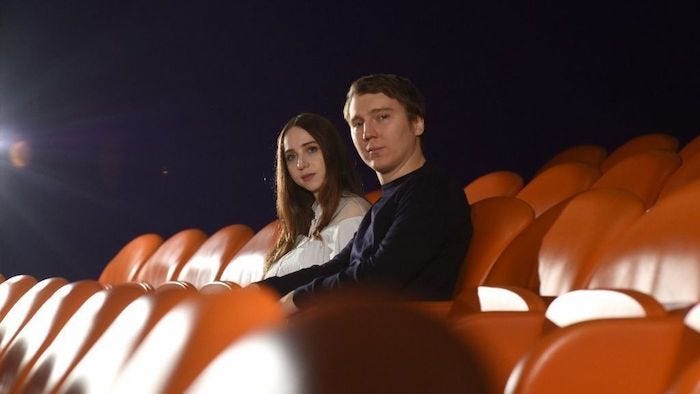
The couple discuss co-writing Wildlife which is Dano’s debut as movie director.
This week, the Los Angeles Times featured a conversation with Zoe Kazan and Paul Dano about their involvement co-writing a screenplay adaptation of the 1990 Richard Ford novel “Wildlife.” The movie marks Dano’s debut as a director. The movie stars Jake Gyllenhaal and Carey Mulligan.
Paul Dano: Reading the novel, I felt a deep personal attachment. I saw myself, my parents, my grandparents; I saw family as one of our greatest loves and, therefore, sometimes the source of great pain. I wondered if it could be the foundation of a film for me to direct. Eventually, Zoe and I decided to option the book ourselves, wanting to retain as much control as possible.
I thought I might hire a writer to adapt the book. But after daydreaming for a few months, an image came to me: a way to end the film, different from the novel’s ending. That scene, that image, made me think I should adapt the book myself. In early 2013, I took a swing at a first draft.
Kazan: When he shared it with me, I thought it resembled a treatment more than a script — there wasn’t much traditional structure or dialogue. As I gave him notes, we started to fight. After an hour, I suggested that it might be simpler — and better for our relationship — if I rewrote him instead. That kicked off a three-year process.
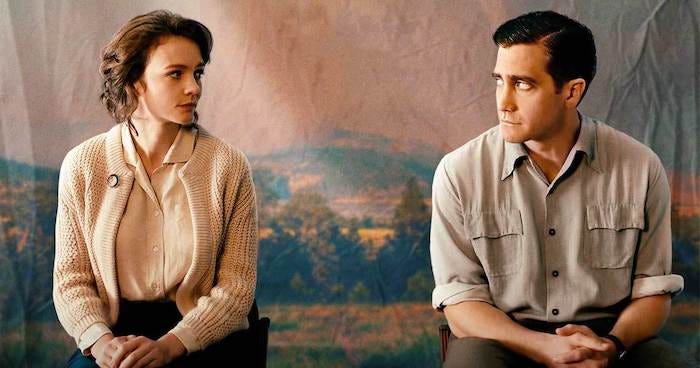
Kazan: Paul did most of the initial work, gleaning treasure from the novel, inventing action where there is only internal reflection in the book. He gave Joe a friend, so we could see him turn away from his childhood to try to fix his family. I came back through with an eye to structure and character arc. The first thing I did was cut up his draft and lay scenes out on our living room floor, to rearrange them.
Dano: After that, we traded drafts back and forth. We never wrote at the same time. Time was a friend. One of us would go off to act in something, the other would take the reins of the script. In his great book “On Writing,” Stephen King advises writers to put their first drafts away for six to eight weeks, and then edit again with fresh eyes. We had that pattern built into the natural structure of our lives.
When a writer adapts a book, they have to discover the movie inside the book. Sometimes, perhaps even oftentimes, the movie requires narrative elements outside the book, such as here with Wildlife: giving Joe a friend. Later in the L.A. Times article, Kazan says, “Also, in the book, Joe appears passive — his main action is to observe. We had to weaponize his watching and give him a more active journey toward independence.”
Every book adaptation is different, but the goal remains the same: Find the movie inside the book. That may include bringing in content from outside.
Here is a trailer for Wildlife:
For the rest of the interview with Paul Dano and Zoe Kazan, go here.
For links to 100s more interviews with screenwriters, TV writers and producers, filmmakers, and industry insiders, go here.