Interview (Written): Minhal Baig
Conversation with the writer-director of the movie Hala.
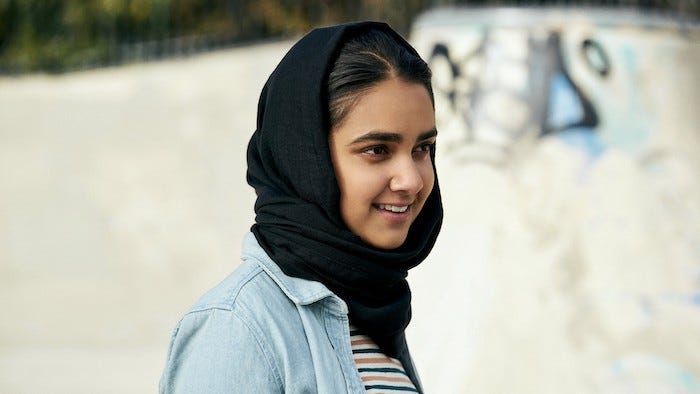
Conversation with the writer-director of the movie Hala.
I have known Minhal Baig since working with her in the first annual Black List Feature Writers Lab in 2013. Thus, when I attended the 2019 Sundance Film Festival, I was super excited to attend the premiere of her feature length film Hala which was the very first movie Apple picked up for distribution on their new streaming platform.
Here are excerpts from an interview Minhal did with The Film Stage discussing Hala and her experience working in the indie film space.
What was that process of getting Hala made into a feature and then picked up and distributed by Apple? From conception to making the concept short to where we are now.
You know, it was a long process. It was sort of sprung out of writing these vignettes from when I was a child and putting those together eventually became the foundation of the screenplay. I moved to Los Angeles in 2015 and I had a feature version, a very early draft of Hala that was written. And then I moved with the intention of making that movie but I knew that it was going to be difficult to get financing without some kind of proof of concept. So I wrote the short second. The focus was going to be on this one piece of the [feature] film and whatever could be contained within like fifteen minutes. The short was put together by recruiting AFI graduates and just friends in Los Angeles to help shoot. And we shot it in 2015 and we raised all this money on Kickstarter and we had a surprisingly a lot of success. We raised like thirty-thousand dollars. And I remember being on set and shooting the film and realizing that the feature in my head was still ever-present and I was making something that was going to convey why the story was important and the visual language of it.
Then we came out with the short in 2016. I submitted to a couple of festivals and we just didn’t get accepted anywhere so we put it on the internet and we found that it was very successful…A lot of people reached out to me saying that it really touched them and that it resonated with them. So with the short and the feature-length script I went out looking for a producer. It was then that Jada [Pinkett-Smith] got involved with the project. I went up to pitch her the feature after she had already seen the short and she was interested in putting her resources behind a filmmaker who otherwise would not get their film made. Specifically what she loved about this movie was that it was universal. Even though she doesn’t have the specific life experience of [the character] Hala, she felt that it was something all young women and even men could relate to. So she came on board and it was a very fast process from then.
We spent a year looking for financing and eventually found money in 2017. And the goal [became] to shoot in the fall. The script had gone through so many revisions by that point that it was an ever-changing document. Once we had the casting director come onboard the challenge was finding someone who could embody the highly internal conflict. And that’s when Geraldine [Viswanathan]’s tape came in. It was immediately clear that she was Hala, and she brought so many new dimensions to the character that I had not even previously written into the script. Once we had [Geraldine] the rest of the family was built out… it was a very fast process shooting the movie in Chicago. And a quick turnaround and edit! We were waiting for a long time to hear back from Sundance. I had started working on a TV show and in the middle of that we heard word that we had been accepted [to the film festival]. I think it was very early, maybe August.
Oh wow, nice.
Yeah it was really fast! And then it was the most painful experience waiting for months not being to tell anyone [that we got in to the fest]. But it was a long process. It was all born from me living in Chicago with my family and feeling like I really wanted to see a film with the dynamic my family had at home. And also explore the struggle of navigating multiple identities and being true to your faith and your culture while also remaining true to yourself as an individual. Those were all things I wanted to put in this film. A highly specific story of one person and it’s not an autobiography and there’s a lot of emotional truth in the movie that’s very grounded in the details of my life.
When you’re putting together a coming-of-age story like this–and like you said you had a lot of rewrites and making the short–are there any tropes or narrative stereotypes you are actively trying to avoid when you are making the feature? Any hurdles of not wanting to go down a familiar road?
So the cinematographer on this film, Carolina [Costa], and I watched a lot of coming-of-age films in preparation for shooting Hala. We were very aware of what else had been done in the genre and we were focused on making this story feel specific for this character. Because I have watched a lot of coming-of-age movies and they are a big influence on this film and, in some way, there are certain things that narratively made a lot of sense for Hala’s journey and felt familiar. But then there had to be somewhere else in the movie where it surprised people. Like we had to set something up, and then kind of knock it down.
We did that a couple of times in the story with Hala’s mom Eram (Purbi Joshi). We put her up as a character in the beginning [of the film] who is presented as an obstacle in Hala’s search for independence. In the end, we circle back to her and she becomes a more multi-dimensional person. And in the same way [Hala’s dad] Zahid (Azad Khan) is presented as Hala’s ally and they have a close relationship. That too is kind of knocked down and re-envisioned by the end of the movie. We wanted Hala’s story to have some familiar threads because those are the familiar threads of coming-of-age that everyone goes through. But then we wanted to have the specificity of her experience in that culture, in that faith and in this family. And that was going to be the thing that was new and different. How she recognizes that her parents are different people then she thought they were. The film is shedding a light of the limitations of her perspective too because we start the movie very much frustrated whenever Hala is getting blocked and then at the end we’re recognizing that she has a lot of work to do herself.
Here is the trailer for the movie Hala:
I interviewed Minhal in 2015 to support the production of the short film version of Hala. I also featured the short film in 2016. Here it is:
I highly recommend the movie Hala. It is rolling out in select theaters this month before moving to Apple Plus on December 6th.
Twitter: @minhalbaig.
For the rest of The Film Struck interview, go here.
For 100s more interviews with screenwriters and filmmakers, go here.