Interview (Written): Micah Fitzerman-Blue and Noah Harpster
The screenwriters of A Beautiful Day in the Neighborhood open up about how they adapted the life of one of TV’s most cherished figures.
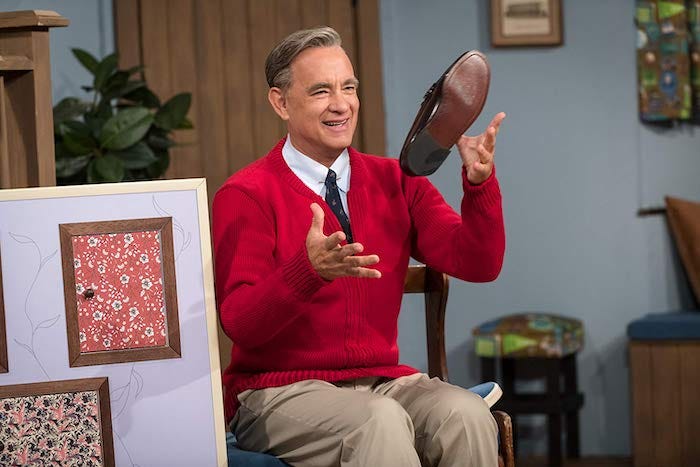
The screenwriters of A Beautiful Day in the Neighborhood open up about how they adapted the life of one of TV’s most cherished figures.
Excerpts from a MovieMaker magazine interview with Micah Fitzerman-Blue and Noah Harpster whose screenwriting credits include Maleficent: Mistress of Evil and the new movie A Beautiful Day in the Neighborhood.
Micah Fitzerman-Blue: We didn’t know much about him then, but he seemed fascinating, so you and I started researching him, reading anything we could get our hands on. But we quickly concluded that Fred Rogers wasn’t a good protagonist for a biopic by any reasonable definition, because he was unwaveringly awesome for 73 years and then died. There seemed to be no peaks and valleys in his story. He really did live an amazing life, almost intentionally. We knew that if we were going to write about him, we would have to find another way into the story and write a character with an arc. So, that led us to reading a bunch of stuff: Obviously, we read Tom Junod’s profile of Fred in Esquire, from which A Beautiful Day in the Neighborhood is adapted, and we read a book by Tim Madigan called I’m Proud of You that also served as initial inspiration. Luckily, we were invited to the Fred Rogers estate, but they said to us, “We really like you, we’re very honored to meet you, and we’d love to read anything you have. But there will never be a Mr. Rogers movie.” But eventually, after many additional meetings, they came around and decided to open up the archives to Fred’s life.
Noah Harpster: Because we didn’t go away.
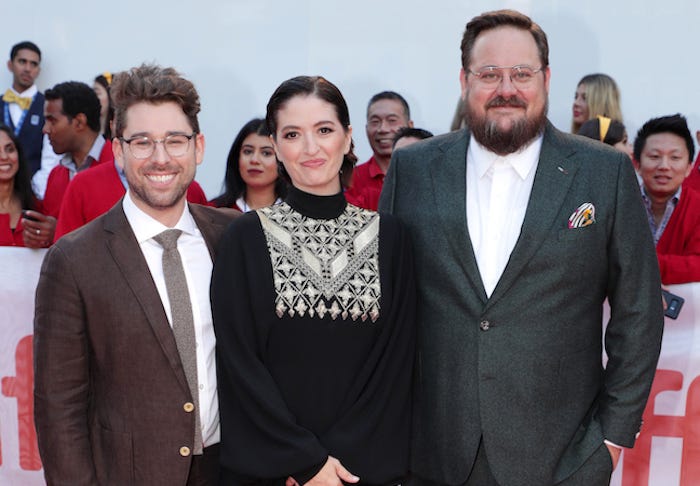
Micah Fitzerman-Blue: You and I have adapted quite a few pieces of source material. And I think for us, the other really important thing is: Are you able to convey the feeling that’s captured in that novel or article? Film is an emotional medium, so that should be your goal with any adaptation. There are no hard and fast truths about how you approach it. If you’re adapting Harry Potter, you’re responsible for getting the details right because everyone has read that book. If you’re adapting a novel that isn’t as well known, you might feel that your responsibility is simply to turn it into the best possible movie you can. Each situation presents something different, but for us, we needed to feel like we could capture the feeling of being with Fred Rogers. That was it.
Noah Harpster: Even if your script is not necessarily grounded in reality, the essence of your adaptation will be found somewhere in your own life. For us, writing A Beautiful Day in the Neighborhood meant writing about being new fathers and saying goodbye to our own fathers. Even as we were covering the totality of Fred Rogers and everything that his legacy means, we were also writing about the things in our lives we understood intimately. Whatever it is, you have to find that emotional entry point to the material from within yourself.
Some good writing takeaways from this interview:
- Persistence: Even in the face of being told, “There will never be a Mr. Rogers Movie,” the screenwriters “didn’t go away.” It usually takes an enormous amount of drive to get a movie made. As screenwriters, we have to bring that positive energy not only to our writing, but to the project itself.
- Personal Connection: “Whatever it is, you have to find that emotional entry point to the material from within yourself.” This is related to persistence because if you do have a personal connection to the story, you are much more likely to persist against the odds.
- Emotion: “Film is an emotional medium, so that should be your goal with any adaptation.” Audiences want to be entertained and a big part of that is to be emotionally engaged by the story. As screenwriter James DiLapo said in an interview I did with him, “Emotional authenticity is more important than historical. We can’t recreate a world, but we can recreate the emotions of it.”
This last point is echoed in another comment from the MovieMaker interview:
“When you’re approaching an adaptation, it’s a matter of picking moments that are especially exciting and perhaps afford some space for you to embellish a little bit.”
Don’t be afraid to go beyond what is literally and historically accurate in order to find the emotional truth of the characters.
Here is a trailer for A Beautiful Day in the Neighborhood:
For the rest of the MovieMaker magazine interview, go here.
For 100s more interviews with screenwriters and filmmakers, go here.