Interview (Written): Leigh Whannell
Conversation with the co-creator of the Saw movie series.
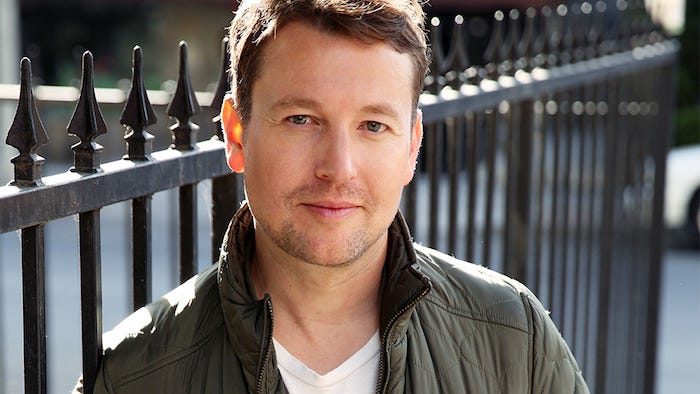
Conversation with the co-creator of the Saw movie series.
A Vulture interview with writer, director, actor, and producer Leigh Whannell. He co-created the Saw movie series as well as the Insidious trilogy. His latest movie, which he wrote and directed, is Upgrade. IMDb plot summary:
Set in the near-future, technology controls nearly all aspects of life. But when Grey, a self-identified technophobe, has his world turned upside down, his only hope for revenge is an experimental computer chip implant called Stem.
The movie stars Logan Marshall-Green and opens this weekend.
At a studio level, you and James Wan together have been a generation-defining presence in horror, and that began with Saw, which really imported extreme brutality American audiences. Going from that to Insidious, which is practically family-friendly, and now to Upgrade, which is kind of return to brute force visuals, where does violence fit in your life now, creatively?
What happens as you get older, in my experience, is as your life experience grows, your filmmaking breadth grows in tandem, so instead of just thinking about cool shots you’ve seen in other movies, you’re actually thinking about — I’m writing a scene about a married couple, and I’m thinking about my marriage and my relationship, and real life starts to creep in. So with Upgrade, there’s certainly a nostalgia there associated with ’80s sci-fi films that I grew up with, like Robocop and The Terminator. I love, and I’ve always loved, contained sci-fi films that utilize practical effects. I feel like the human eye can tell when something is actually in the frame and when it was inserted digitally later. And for me personally there can be a kind of detachment if something is inserted later. It’s like I check out of the movie. I check out of the stakes. So I was so keen to do this movie, but all of the sudden within a sci-fi story like this, I’m incorporating stuff from my own life.
So I feel like where the violence changes is that I’m no longer doing it just for effect. I felt the violence in Upgrade was necessary because I wanted to show what a computer was capable of. What is a sociopath capable of? A machine takes the path of least resistance, and so when I cut those scenes together I was like, “This is supposed to be here. It’s not gratuitous.” But it is interesting, in asking me that question, I think about the film that I’m writing now. I have a family now and I’ve been living in the U.S. for 12 years. I feel entrenched in the politics in a way, and I’ve made a decision. I really don’t want to present a gun as a problem-solving tool in a film, and I guess that’s an example of how my real-life relationship with violence and what’s happening in the U.S. is changing my writing. It’s so easy. It’s such a go-to instrument in a movie, isn’t it? And I don’t think you can hold up a picket sign with one hand and direct a scene involving guns as problem-solving tools with the other hand. And I’m kind of reconciling that. I’m thinking, “Okay, I’m writing a movie with a female protagonist who’s in danger. I’m not gonna use a gun.”
— —
A lot has changed since you and James both came on the scene with Saw. That was really the last wave of the monoculture, before theater chains were competing with TV and algorithm-driven digital-content platforms for viewers. Horror is already a specialty interest, so I wonder how that fracturing at an industry level changed your approach creatively?
It’s difficult, and it’s very nerve-racking! You know, I’ve been part of movies where there were lines around the block, and I’ve been part of movies that nobody cared about that have disappeared into the farthest reaches of iTunes. And let me tell you, the line around the block one is better! So you ask me, you know, which door do I want to take? I’ll take the lines around the block door every time. So I do feel like there’s a part of me that, having experienced that and had my feet in that pool, I’m aiming for it. But you are right. The media landscape has changed so much since that original Saw film. There are so many more platforms, and so much more competition for eyes. Back then it was like, there was TV and there were the movies, and gaming was happening. Now, between YouTube and streaming and gaming and VR, people are more interested in recording their own little Snapchat videos than they are in seeing a movie, and I feel like movies have had to move in a direction of events. They have to be more than a movie. They have to be this Zeitgeist-dominating sledgehammer that comes out, and people line up for those movies like it’s part of their civic duty.
That Saw success, I don’t know if it would happen today. It would be a niche movie. It might be a movie that goes straight to iTunes. So it makes me wonder about Upgrade, but it’s funny. You’re asking me about this before the movie has come out. It’s hard for me to — like, a fish cannot describe the ocean. I just don’t know! But maybe that fracturing is leading to almost a pressure off situation where you have to stop worrying about four quadrants and just focus on, “I’m gonna own this audience.” Perhaps that’s good, but I gotta tell you, having seen the lines around the block that is an addictive drug. I would love to see that again! Also, not to mention the fact that we’re releasing this movie in summer, so I feel like I’m David getting out of the boxing ring and I don’t even know that Goliath is standing behind me, suiting up. So how do you shout to be heard? I don’t know. I’m not the sixth film in a cinematic universe that people in Namibia can tweet about. I’m happy that you’re talking to me, let alone anybody knows what this movie is.
A trailer for the movie Upgrade:
For the rest of the interview, go here.