Interview (Written): David S. Goyer
And in-depth conversation with the writer producer whose movie credits include Dark City, Blade, Batman Begins, and Man of Steel.
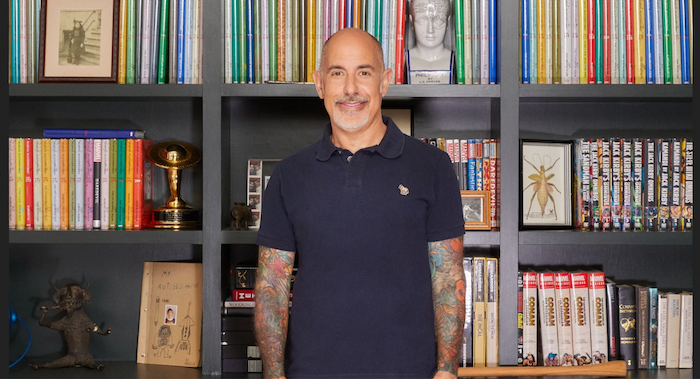
And in-depth conversation with the writer producer whose movie credits include Dark City, Blade, Batman Begins, and Man of Steel.
David S. Goyer’s writing, producing, and directing credits are manifold. Specializing in comic book adaptations and superhero stories, he is arguably what are the most influential Hollywood screenwriters in the last two decades. Here are some excerpts from a lengthy interview featured in The Hollywood Reporter (July 22, 2021).
You’ve been involved in a lot of projects where there were many big egos on board and a ton of studio pressure. How do you handle a situation where you believe strongly something is the right move and others believe differently?
I hope I’ve developed a reputation now for speaking with candor, for being honest. My go-to is always “what works for the story.” And if I’m adapting an IP, like a comic book, I don’t try to turn it into something it’s not. Because if you do, no matter what, even if you have the best of intentions, it will definitely not work out. So there were times when I’ve been involved in projects when I’ve actually advocated that the studio not make it. I’ve said, “It’s going to fail. It’s not worth the money.” I’ve talked myself out of movies and TV shows being made before.
— —
The Hulk has been considered a tough one to crack. What is a take on the character that you feel hasn’t really been done in recent years?
I love the Jekyll and Hyde aspects that [comic creators] Peter David and Bruce Jones have done. The current run right now, The Immortal Hulk, I think is fantastic. I think it’d be better on TV. I like leaning into the psychological horror and Hulk’s rage as an expression of Banner, his suppressed id.
Comics beta test all these ideas. When you have characters that have been around for 30, 40, 50 or 60 years, and you’ve seen certain storylines bubble to the top again and again — that should tell you something. I call it Story Darwinism. Those are ideas or themes that are sticky, that are consistent because for whatever reason, from decade to decade to decade, they keep working — even though some of the elements around them change. So anytime I adapt something, I always say, “Can we identify the 10 core elements that make Superman, Superman? Or make Blade, Blade?” Before we even come up with a story, let’s just sit down and come up what 10 things we can all agree on. Then let’s make sure that we don’t break those commandments.
— —
Your company is producing The Night House, which has earned very positive reviews. It feels like horror films are the last genre that can get a major studio to greenlight relatively easily without pre-existing IP or huge stars attached. Is that accurate? And what made that script special to you?
It is an accurate statement. We also made that film for $6 million. Since there’s not as much cash outlay, it didn’t have to be based on a pre-existing IP and you don’t have to go to one of the top 10 or 20 [actors] who are considered “box office guarantees” — even though that doesn’t really exist anymore. People can take more chances. I’ve got this company, Phantom Four, they’re producers on Foundation, but then there are these projects like Night House and Antlers — which is another film I have coming out. We like to develop — it’s a cliche to say “smart or elevated genre films,” but that’s what we do.
So I say to Keith Levine and my other employees, “When we take on a project, it’s gotta be something that’s good enough to merit me being late to dinner with my kids.” It has to have merit. The Night House was a really fantastic script that we developed with Ben Collins and Luke Piotrowski, and we got [director] David Bruckner on board, who is an amazing filmmaker.
As a writer, I worked with some fantastic producers, and I worked with a lot of producers who I felt were just phoning it in, or would do whatever note the studio gave and would just sell you down the river in a heartbeat. I was just determined that when we produce something that we really advocate for the filmmaker. So we were there with David every step of the way. And it’s a really uncompromising film. It’s a ghost story about grief. And it was all built around this incredible, show-stopper performance that Rebecca Hall gave. We took it to Sundance and had 10 different people bidding on it. I’m excited for people to see it because it’s a scary movie, but it’s also a movie that has something to say.
It’s gotta be something that’s good enough to merit me being late to dinner with my kids. That's a good way to think about that script you’re writing. Is it compelling and entertaining enough to make a Hollywood producer stay late in the office reading it even if he's missing dinner with his kids.
Here’s another quote from the article worth heeding:
When I started writing, I had a mentor named Nelson Gidding, who wrote a lot of films for [West Side Story director] Robert Wise. I was his teaching assistant in college. One of the things that he always said is that you need to treat writing like a job and not an art. You need to set hours, you need to set a schedule. You should write in a place that’s not your home, if you can help it, or at least not your bedroom, but a place you physically go to. He also said you should never call yourself a writer — you “write for a living.” Which is not to say that he didn’t believed in honing your craft, but he likened it to, like, being a woodworker. That works for me.
Treat your writing like a job. Years ago, I had Lisa Joy as a guest at a weekend writer’s workshop I was running in Westwood. She said that before ever sold anything as a writer, she treated it like a job. She set a schedule and wrote every day, even while working full-time as a lawyer. Yes, there is creativity and talent involved, but it’s also a job. Treat it as such.
For the rest of The Hollywood Reporter interview, go here.
For 100s more interviews with screenwriters and filmmakers, go here.