Interview (Written): Chinonye Chukwu
A conversation with the writer-director of the movie Clemency starring Alfre Woodard.
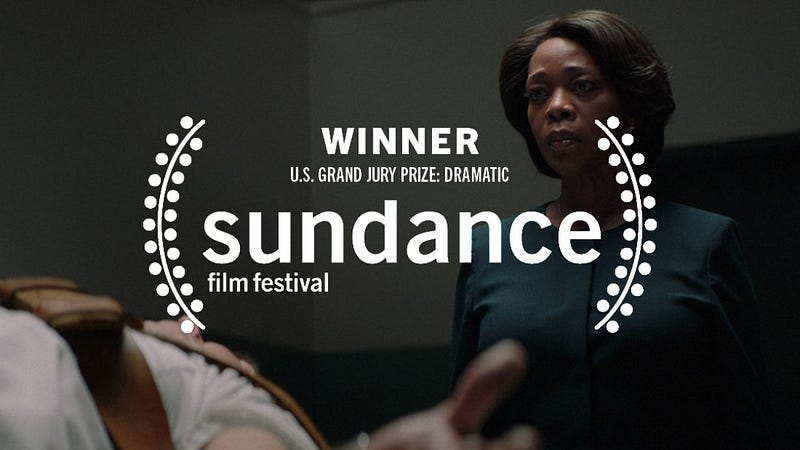
A conversation with the writer-director of the movie Clemency starring Alfre Woodard.
I saw Clemency at the 2019 Sundance Film Festival and was blown away by Alfre Woodard’s performance. I’d be shocked if she doesn’t get a Best Actress Oscar nomination. It’s a compelling drama and a must-see movie, a superb job by writer-director Chinonye Chukwu.
IMBd plot summary: Years of carrying out death row executions have taken a toll on prison warden Bernadine Williams. As she prepares to execute another inmate, Bernadine must confront the psychological and emotional demons her job creates, ultimately connecting her to the man she is sanctioned to kill.
Here is an excerpt from a Jezebel interview with Chukwu.
JEZEBEL: Was it particularly difficult to get this movie off the ground?
CHINONYE CHUKWU: It was. Everyone said no for like three-and-a-half years. It was a great response to the script, but the subject matter was tough and I was adamant. Alfre was attached two years before production, but even before she was attached, I was unwavering about the protagonist being a black woman. That added to the challenge of getting the movie financed and also, people investing in me as a filmmaker — as a black female filmmaker. There were all of those things, but we eventually found our financing partners through ACE Pictures, based in Malaysia.

Something that really stuck out to me is that Clemency contains no overt discussions about race — it’s subtextual. I wondered what went into that decision.
I don’t go into monologue myself about being a black woman. [Laughs] Especially when I’m in predominantly white spaces and I’m the person who is in charge. The ways that I live my life as a black woman, it just is, because I’m human. I thought about that with Bernadine. I saw her in my likeness. This is a human being who is navigating some emotional and psychological complexities that go so far beyond her race and gender. That’s really what I thought about. I really wanted to tell a story about the human consequences of mass incarceration, specifically capital punishment. I think that by having the protagonist as a black woman and Anthony as a black man, it doesn’t overburden the narrative with racial dynamics that the audience will bring to it.
You touched on another extraordinary thing about this movie: It’s an understated movie about capital punishment. Was it always your intention to make it that?
I really wanted to tell a story that almost exclusively existed in the gray because that’s life, that’s humanity. People can be a protagonist and an antagonist of the narrative. I didn’t want to make it easy on the audience, and I wanted the audience to continuously grapple throughout the movie.
But with all of that said, it does seem like you have a point of view. I know this movie was the product of extremely thorough research that began as a response to the execution of Troy Davis. Do you think of filmmaking as activism?
I think that filmmaking can be a form of activism, and that activism can come in different ways. My intention with the narrative was not to inundate it with my own personal political opinion. I’m clear where I stand politically, but I also knew that in order for me to get audiences to explore this subject matter, I can’t tell you what to think and what to feel. [But] by so focusing on the humanities that are at stake in this world, you are gonna feel something. I think that can be a form of activism. I think it can also be a form of activism that I was really intentional about making black women human beings. We don’t see enough of that on screen. Even Danielle Brooks’s character, who’s in that one powerful scene, she has this full world and a meaty scene to sink her teeth into. I don’t know if you would call that activism, but I think that’s intentionality.
When you talk about your character’s humanity, are you referring to the fact that Bernadine drinks and is not, perhaps, the Hollywood ideal of what an upstanding woman is?
One of the things I learned through my years of research and volunteering on clemency cases and advocating for people who have been incarcerated is that we cannot define people by their worst possible acts. I really took that and applied that to my directing. I’m not protective of my protagonist. I don’t define anybody in binary terms. I didn’t think about Bernadine as an upstanding human being. I asked myself, “Where is her pain?” Sometimes her pain causes her to do things or act in ways that hurt other people, and sometimes it causes her to help other people. But it all comes from a human place.
My biggest takeaway from this interview: In writing a character, find their humanity. Look at how many times Chukwu mentions some variation of that word in her interview. Implied in that sensibility is the complexity of what it means to be a human. “I don’t define anybody in binary terms.” Human beings are complicated creatures. Our story’s characters have the potential to be complex as well if… we immerse ourselves in their humanity.
Bernadine in Clemency is a fascinating character study and you can get a glimpse of that in the movie’s trailer:
For the rest of the Jezebel interview, go here.
For 100s more interviews with screenwriters and filmmakers, go here.