Interview: Waka Brown
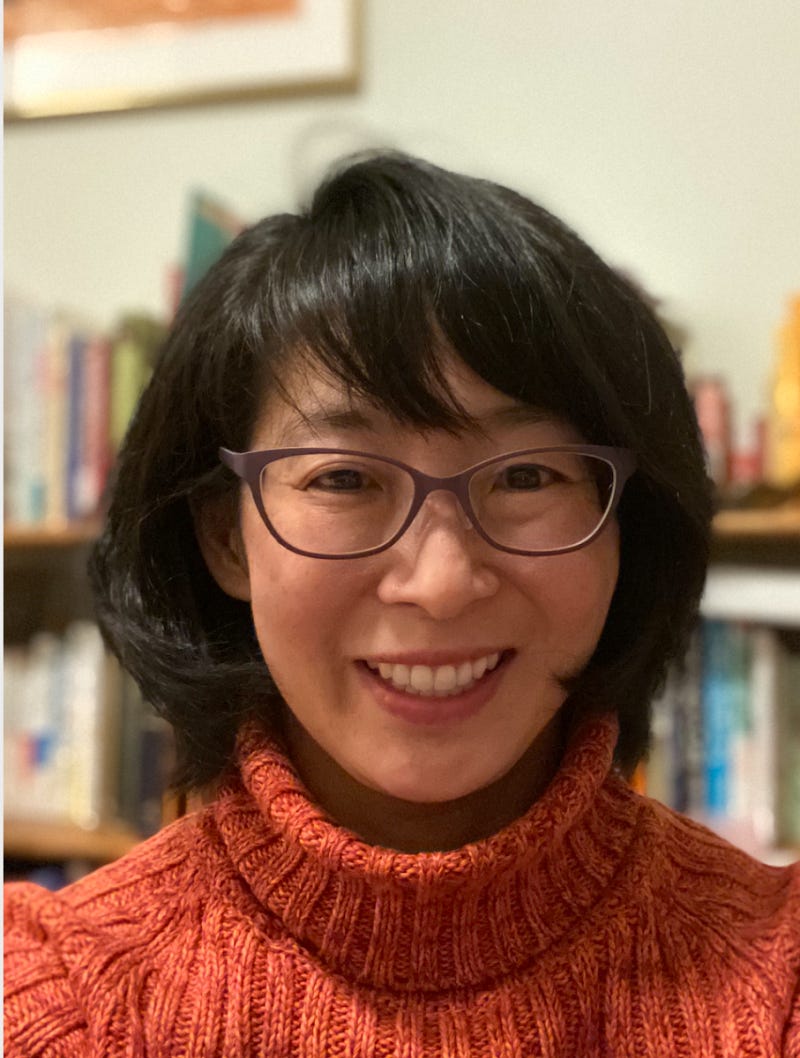
An exclusive Go Into The Story Q&A with YA novelist and The Quest alum.
An exclusive Go Into The Story Q&A with YA novelist and The Quest alum.
Way back in 2012 and 2013, I hosted something called The Quest Initiative. Based on a 24-week program I had created called The Quest, I selected six writers each year from hundreds of applicants and worked with them in that program … for free. One of those writers is Waka Brown. We have stayed in touch over the years and it’s been exciting to watch Waka emerge as a successful writer of young adult books.
Her third book The Very Unfortunate Wish of Melony Yoshimura is set to be published on July 18, 2023, so I reached out to Waka for an interview. I think you’ll find her story interesting, how she has transitioned from exclusively writing screenplays to novels.
Here is the interview in its entirety.
Waka, it’s been a decade since you and I first met when you were selected to participate in The Quest Initiative. Given your success as an award-winning author of three books, While I Was Away; Dream, Annie, Dream; and your newest one The Very Unfortunate Wish of Melony Yoshimura, I must say I feel like a proud papa. Congratulations!
Thank you so much, Scott! The Quest was such a rewarding experience. I made a lot of great connections from that group.
Were there any storytelling takeaways from us working together in The Quest you may have used in writing your books?
There’s a lot of overlap between screenwriting and novel writing. I remember one of the first lessons from The Quest was that it all starts with character. I think all of the best stories are the same way, books included, so I often came back to that lesson. I often think back to your advice: Watch Movies. Read Scripts. Write Pages. Study the Craft. Learn the Business. Minus the “watch movies” step, the prep for writing novels and selling them is pretty similar, so: Read books. Write pages. Study the Craft, Learn the Business. If novel writers are watching movies, it’s usually a procrastination tactic, in my opinion! Unless they’re trying to adapt their own material which I don’t know if I’d want to attempt.
How did you shift focus from screenwriting to writing novels?
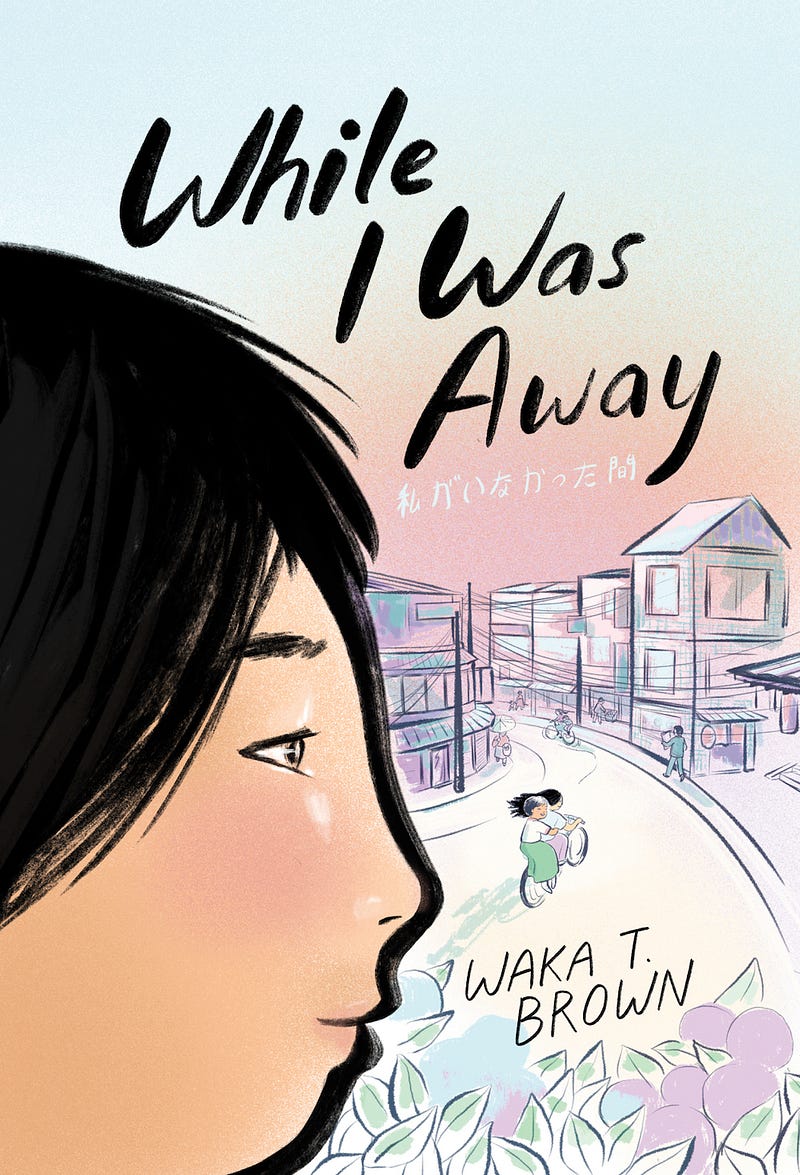
I had a story idea (the one that eventually became my debut, While I Was Away) that was decidedly NOT a film in my mind. Spanning two continents, in Japanese and English, a true story about the time I was twelve years old in the 1980s? From what I knew about my years of writing screenplays (and learning the business), I couldn’t imagine a pitch for it that would garner the attention of a film studio or manager. But, I still felt that I wanted to write this story, and that if screenwriting wasn’t the best medium for it, then what would be? Since it’s a true story about a 5-month period in my life, it’s a memoir. Also, because the main character (me) was 12 years old, it made sense to write for an audience that age, which is middle grade (8–12 years old). So, I decided this story would be a middle grade memoir, which isn’t that common. When I made this decision, I also realized that I had no idea how’d I go about writing something like this. So, I took a class (“Memoir Writing Book Camp” through a local writing organization). And like eager writers often do, I queried a lot of agents too early, received a lot of rejections, and wondered how I was going to fix the “voice,” which was feedback I received more than once. Luckily, I stumbled upon an online writing mentorship, worked closely with Rebecca Petruck (who is like the novel-writing version of you, Scott), and I completely revised my story from reading like a memoir to a style that reads like fiction to appeal to younger readers. While I Was Away was part of a two-book deal, so to build on my author brand, my second book was also for middle grade readers. Then, I wrote a proposal for a third middle grade book which also sold as part of a two-book deal, so I’ve been pretty busy!
What are some of the major differences in writing a novel versus a screenplay?
I still feel more comfortable writing screenplays than writing novels, so there’s one difference. With screenplays, while you don’t want to end up sounding formulaic, there is some comfort in having some “rules.” I know that word can be a loaded term in the writing community, but for instance, in novels, you can include a lot of what the character is thinking. In screenwriting (mine anyway), however, there’s not a whole lot of that because there’s that consideration of how thoughts can be conveyed effectively on screen. In general, scripts should be in the 100-page range. Sure, there are a lot that are shorter, some that are longer, but it better not be a 175-page behemoth if you’re trying to break into the business — would you say that’s fair, Scott? With novels, though, there’s a range for different reading levels. My picture book manuscripts are 1,000 words or less. My middle grade novel drafts start out at about 55,000 words (but once my editor and I worked through several drafts, the first two were quite a bit longer), but there are middle grade novels that are much shorter (20,000 words). There’s more of a range you can work with in novels I would say, and that flexibility is both freeing and unwieldy at the same time.
Are you still interested in screenwriting?
Yes and no. I’m currently being paid to write my books and thousands of people read them! Sadly, I can’t say the same about my screenwriting. I know how fortunate I am, though, and there’s a part of me that worries about when that luck will run out. So, I’m going to work my hardest for as long as I can to enjoy this part of my writing journey that I’ve worked so hard to reach.
I still love movies, but for me, the quickest path for something of mine to be made into a feature-length film is probably to write a cinematic book and to sell the film rights. My third book — which publishes on July 18 — is my most cinematic one, in my opinion. So, if there’s anyone out there interested in film rights, please let me know! I’m still chasing that dream.
Are there themes you find yourself drawn to explore in your books?
All of my work thus far features Asian American characters. There was just so little good representation when I was growing up, that I definitely feel a need to make up for that in my stories, so Asian Amerian kids can see themselves in my stories and everyone can learn about cultures that might be different from their own (but also similar in a lot of ways!) In addition, with my middle grade stories, all my main characters are exploring some aspect of their identity. With While I Was Away, I was connecting with the Japanese side of my identity. With Dream, Annie, Dream, Annie was figuring out how she could become who she wanted to be and not who her friends/parents/society thought she should be. In The Very Unfortunate Wish of Melony Yoshimura, Melony rebels against the constraints and overprotectiveness of her parents and goes down a road which leads her to almost lose sight of who she is. Middle grade stories (for readers 8–12 years old) are so rich and exciting in this way, not only for young readers, but often for adults as well.

Your latest book The Very Unfortunate Wish of Melony Yoshimura is going to be published on July 18 by Quill Tree Books which is part of the HarperCollins company. What is that story about?
The Very Unfortunate Wish of Melony Yoshimura is a contemporary re-imagining of the Japanese folktale “The Melon Princess and the Amanjaku.” It was one of my very favorite Japanese stories growing up, undoubtedly because I identified with the Melon Princess and how she felt toward her overprotective parents. The official description from the publisher is as follows:
In this magical and chilling Coraline-esque retelling of the Japanese folktale “The Melon Princess and the Amanjaku,” one girl must save herself — and her loved ones — from a deceitful demon she befriended.
Melony Yoshimura’s parents have always been overprotective. They say it’s because a demonic spirit called the Amanjaku once preyed upon kids back in Japan, but Melony suspects it’s just a cautionary tale to keep her in line. So on her twelfth birthday, Melony takes a chance and wishes for the freedom and adventure her parents seem determined to keep her from.
As if conjured by her wish, the Amanjaku appears. At first, Melony is wary. If this creature is real, are the stories about its destructive ways also real? In no time, however, the Amanjaku woos Melony with its ability to shape-shift, grant wishes, and understand her desire for independence. But what Melony doesn’t realize is that the Amanjaku’s friendship has sinister consequences, and she quickly finds every aspect of her life controlled by the demon’s trickery — including herself.
Melony is determined to set things right, but will she be able to before the Amanjaku turns her life, her family, and her community upside down?

You have another project, a picture book, called Perfect. Is that what you’re working on now?
Yes! I have a couple irons in the fire at the moment, and PERFECT (my debut picture book) is one of them. Despite it being my shortest work (in terms of word count) that I have in the publication queue, it won’t be out until Summer 2024 because the illustrations (which Yuko Jones is working on) take a long time. I’m excited to share it with everyone — Yuko’s illustrations have really made the story come alive! Incidentally, my screenwriting background helped immensely in the picture-book writing process. Just like a screenwriter can include scene descriptions (but not too many), you can’t be heavy-handed in your illustration notes, and the writer needs to allow the illustrator creative freedom as well. But it helps to be able to visualize the scene as you write. While all publishing is a collaborative process, picture books are even more so, and I’m very grateful it has gone so well so far.
The other project is the last middle grade novel that I’m currently under contract for. So, my fourth middle grade novel (scheduled to publish in Winter 2025) is the other project that I’m currently working on.
In the midst of all this are book visits, presentations, promotion events, networking, etc. Definitely enough to keep me busy for awhile!
You’re represented by Penny Moore at Aevitas Creative Management. How did you obtain representation?
I participated in PitchWars, which was a free, volunteer-run mentorship program that paired published authors with unagented writers. I was very lucky to be chosen by Rebecca Petruck (mentioned earlier), who helped me get my manuscript agent-ready. At the end of PitchWars, there was an agent showcase during which many writers received offers of representation, myself included. PitchWars was a great program that required a lot of time and dedication from many people who were willing to donate their time and expertise to help newer writers like myself. While PitchWars did end recently, there are still a number of pitch contests and other mentorship programs that can help newer writers get a leg up.
What is the author-representative relationship like?
I imagine that it’s different for different writers and what they hope for from an agent. With Penny, I liked that she is very editorial. I work directly with her and not through an assistant. I trust her judgment and advice and I like that she won’t submit a project of mine until she knows it’s ready. As a result, my submission times with all my projects have been relatively short, and she’s sold five books for me in less than four years. I like that her response times are quick, and when she can’t get back to me within a couple days, she always gives me an estimate regarding when she can. I like to think we have a relationship based on mutual respect for each other and our work.
How can people obtain copies of your books?
Any major retail chain (Amazon, Barnes & Noble, Target, Bookshop, Books-a-Million, IndieBound, Walmart) should have them online or in stores. But I always encourage buyers to support their local indies — signed copies will be available through Annie Bloom’s Books in Portland, OR! If you’d like a personalized one, make sure to include those instructions when you check out.
Finally, do you have any advice for people who have an idea for a novel, but are afraid to tackle such a challenging task?
Circling back to your advice, I would say the following: Read books. Write pages. Study the Craft, Learn the Business. The first two can be done on your own, but for studying the craft and learning the business, your local writing organization can be a valuable place to begin. Attending authors’ book launches and events can be a great venue to ask questions and learn how they got started. Since I write middle grade, I joined my local Society for Children’s Book Writers and Illustrators (SCBWI) and they have a wealth of resources online and at their conferences. Through reaching out and networking in this manner, you can find like-minded individuals — who may become critique partners, sources of support, and close friends! Take a class online or in-person. Remember that these published novels you read and admire once started as first drafts too. When I was writing my second novel, Dream, Annie, Dream, once I had the idea approved by my editor, she asked if I could have a first draft to her in four months. Four months! For experienced writers, this is pretty standard. But for me, I knew I could write a screenplay that quickly (in less time, in fact), but a novel? My first one book much longer, so I was filled with self-doubt. But, remembering that a typical middle grade novel is about 55,000 words, and that I had about 120 days to complete it, I did some quick calculations and I realized that if I was able to write 500 words a day (2–3 pages), I’d hit my deadline with some time to spare. And I did! So instead of thinking “How am I going to write a 300+ page novel?” I think it’s more helpful to ask, “Can I write 2–3 pages a day?” And the answer is yes, you absolutely can!
Here’s another reason to consider writing a novel or short story: Once published, that becomes what Hollywood calls “preexisting content.” The studios, networks, and streaming services are all hot and bothered by such IP (Intellectual Property), figuring that a literary property which already has established itself in the marketplace has a better chance of transitioning into a a movie or TV series than an original story.
Consider Waka. She not only has revenue generated by her books, but each is also a potential acquisition by a Hollywood buyer.
Reminder: Waka’s third book The Very Unfortunate Wish of Melony Yoshimura is set to be published on July 18, 2023.
For 100s of Go Into The Story interviews, go here.