Interview: Tony Gilroy
A conversation with the creator and showrunner of the TV series Andor.
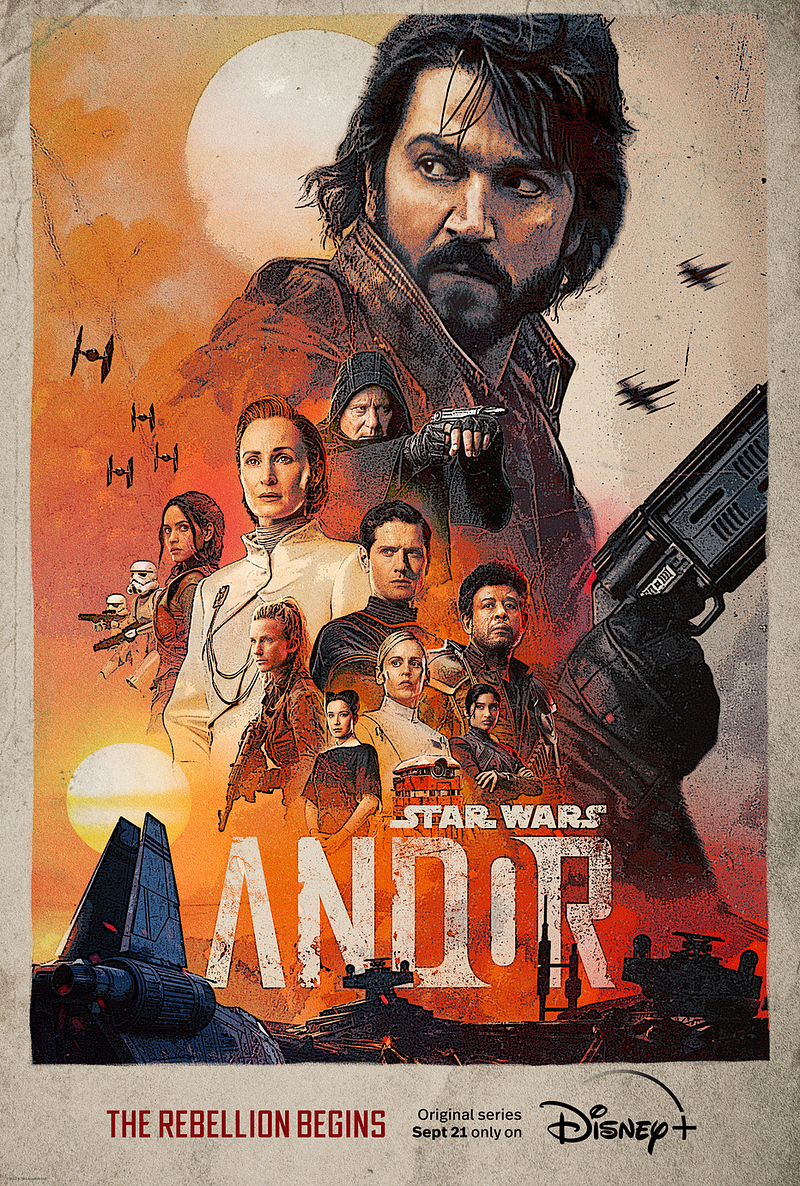
A conversation with the creator and showrunner of the TV series Andor.
Script Magazine has run two interviews with Tony Gilroy, creator and showrunner of the new Disney + series Andor.
Series summary: Prequel series to Star Wars’ ‘Rogue One’. In an era filled with danger, deception and intrigue, Cassian will embark on the path that is destined to turn him into a Rebel hero.
Here is an excerpt from the first interview:
SCRIPT Magazine: The first three episodes of Andor feel very much like it was a movie put together, and you have parallel timelines going through Cassian’s past and his present and ending with both of those chapters of his life ending and starting new ones. At what point in your process does that structure come in? Do you just start writing? Do you have that structure mapped out first?
Tony Gilroy: The very, very, very first problem — ’cause I really like problems — is what do I do about his accent? How am I going to explain that? I thought that was something that we could legitimately address. What’s the accent about? And that’s probably the point of origin.
As I always do, I just do just tons and tons of sketching and just endless files of sketching and along the way, coming up with an origin story for him and then realizing I wanna get it in here, I don’t want to carry it through the whole show. This first chapter is a very important chapter. These first three episodes are very unique in that sense, it was always a contained piece. I wanted to make it exciting. I think at some point, I must have come up with the cutting pattern, and then the interesting thing became how to really tell the young Cassian story, how to stretch that out, and how to get the most out of it. The breakthrough for me was that moment there where he sees himself in the mirror of the ship, and the idea that this boy had never really seen his face and then, with the coming Empire and its most outrageous contrasts, that image was there early for me, and then after that, it just built out, I guess…
Isn’t that interesting? Gilroy began the entire process by focusing on the Protagonist’s accent. How am I going to explain that?
Here is an excerpt from the second interview:
Script Magazine: For writers who don’t have the benefit of a production designer, how can they pay attention to things like production design when they’re writing?
Tony Gilroy: I’ve come completely around on the whole notion. I don’t ever wanna hear anybody say that writers shouldn’t be directing… You have to be directing. I’m not interested in reading anybody else’s scripts anymore [who] aren’t directing the film that they’re writing. You should be making a film and showing it to me on the page.
I used to half-believe that and I used to sort of say it, but this experience has led me to be completely… I’ve gone completely shied on this at this point.
You could see people annoyingly like “oh the tracking shot takes him here” and then they get micro instead of writing, they get into that, but you’ve gotta see it, it’s gotta be real. You gotta build it.
I can’t tell you how much time I spent sketching, how much time I spend drawing. My god, the amount of sketches… And I’m not good. But you know, there’s… “What’s the room look like? How’s it laid out? Where are they gonna walk? Oh my God, if the thing is here and this is here, that’s there, and it’s like, My God, can you see them from here.”
You’re trying to make something real.
Gilroy’s advice runs entirely counter to the supposed screenwriting ‘rule’ not to direct on the page. One way to get around this conundrum: Consider each paragraph of scene description as an individual camera shot. You don’t use directing lingo or camera jargon. Just describe what the audience sees. I wrote an extensive article on the subject: LINK.
Here is a trailer for the series Andor:
For the first Script Magazine interview with Tony Gilroy, go here.
For the second interview, go here.
For 100s more interviews with screenwriters and filmmakers, go here.