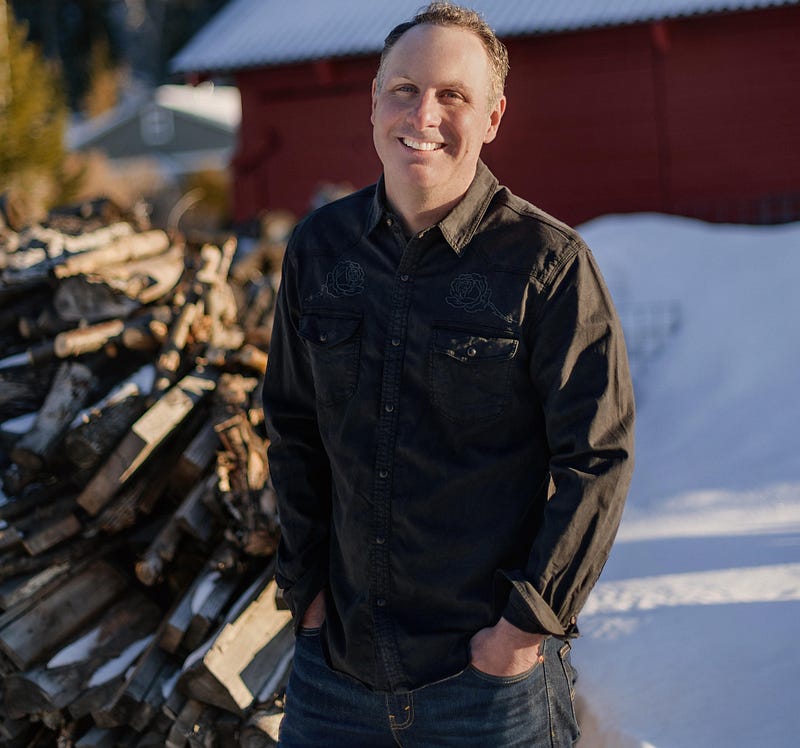
Interview: Stephen Camelio
A conversation with the screenwriter of the indie drama Mending the Line starring Brian Cox.
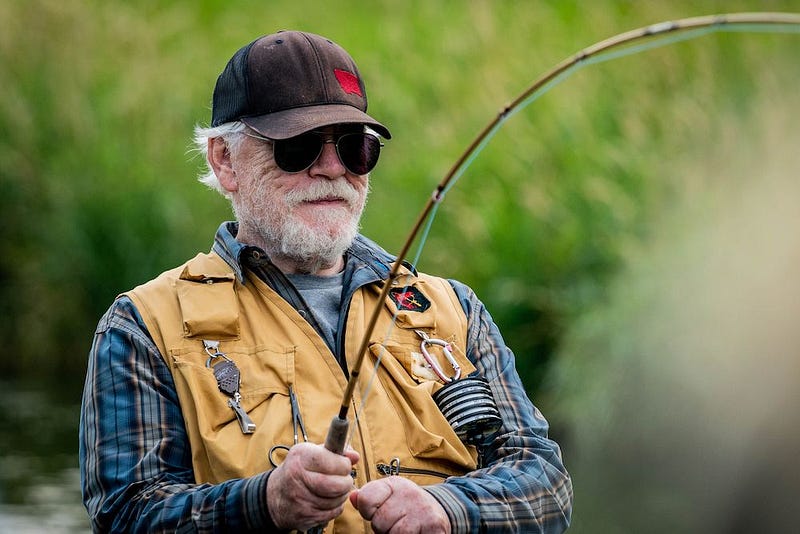
A conversation with the screenwriter of the indie drama Mending the Line starring Brian Cox.
Some months ago, I had the opportunity to screen the indie drama Mending the Line. I enjoyed it. I’ve gone fly fishing quite a bit with my brother, who is hugely into the sport. That’s my impression: People who are into fly-fishing are really into it.
Here’s a plot summary for Mending the Line: “A Marine wounded in Afghanistan is sent to a V.A. facility in Montana where he meets a Vietnam Vet who teaches him how to fly fish as a way of dealing with his emotional and physical trauma.”
I reached out to Josh Caldwell, who directed the movie, to inquire about an interview with the film’s screenwriter Stephen Camelio. Here is that conversation in its entirety.
You have a background as a freelance writer and editor at In Style magazine. When did you develop an interest in screenwriting? How did you go about learning the craft?
During the time I working at In Style in New York City, my good friend Bryan Blatstein, who had studied acting at the Stella Adler studio and at NYU, was performing off-Broadway and in small parts on shows like NYPD Blue and CSI but wanted to do something bigger. This was after Matt Damon and Ben Affleck wrote Good Will Hunting for themselves, so he thought that was the way to go. Knowing my background in writing and studying Irish and English literature, he asked me if wanted to write a screenplay with him and I jumped at the chance.
I’d taken some film appreciation classes in college but those focused almost exclusively on directors so I don’t think I’d ever seen a screenplay. He gave me a copy of a script he had written and I downloaded a few off the internet and we started writing. I had an old laptop that we’d share. One of us would write a chunk, then we’d meet at the Old Town Bar near Union Square and talk about the new text, and then the other person would take the laptop and write the next chunk. I learned a ton from Bryan about crafting characters and writing dialogue, and it didn’t take us long before we had a script we liked.
The problem was we didn’t know how to make it. Through the Villanova Alumni network, I got the actor Jon Polito, a Coen brothers’ favorite, attached to play the dad and talked to Maria Bello’s mom on the phone, but that’s as far as we got. Instead, we sent it out. It did well in some contests and we got an agent called “The Cowboy”, who would call us every time he sent it out — I’d get really excited, and then really disappointed when it didn’t sell.
But it didn’t matter, because I was hooked. After that I started reading all the “how to” books and listening to the Scriptnotes podcast, taking little bits of advice from each about structure, dialogue and story, but mostly I learned from reading other scripts like Do The Right Thing and anything by Scott Rosenberg or Cameron Crowe, and dissecting movies like Swingers, Clerks and Phil Joanou’s State of Grace, one of my all-time faves since I lived in Hell’s Kitchen and had lived in Belfast.
What inspired you to write Mending the Line?
After we wrote that script and a few others, my wife and I decided to we needed a change and moved to Yellowstone National Park to be snowed-in at Old Faithful for a winter as volunteers for the Yellowstone Association. During this time, my father was diagnosed with a rare form of cancer caused by Agent Orange exposure when he served in Vietnam after volunteering for the Army.
The following summer, I was working at a bookstore in Yellowstone and spending my off days fly fishing, which had been a passion of mine for many years. In the morning and evenings when no one was in the store, I started writing a story about a Vietnam vet who teaches a younger vet how to fly fishing to deal with his PTS.
As my father’s battle worsened and he eventually passed away and I spent more and more time on the river as way of dealing with his loss, the script evolved into a story of the destructive elements of war and the healing power of nature, specifically through the art of fly fishing.
Though many things changed over time, the overall storyline for script we shot is basically what I wrote in the first draft years and years before.
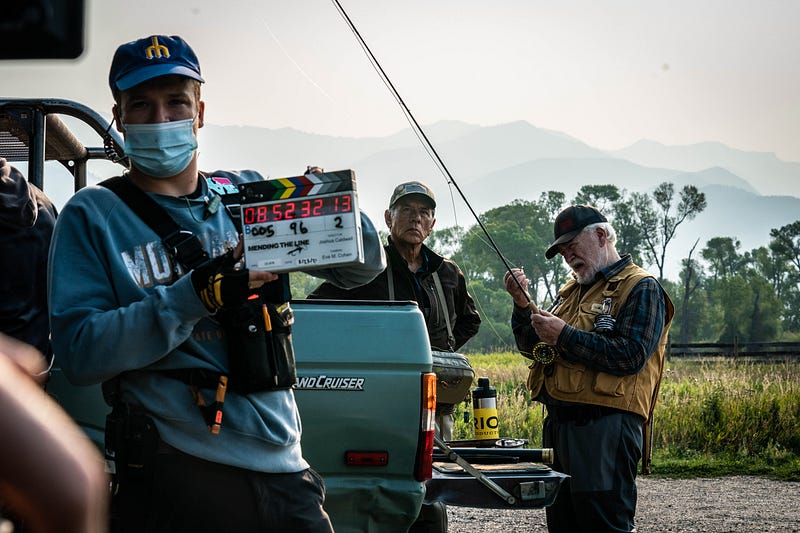
What research did you do to write a story involving Montana, military veterans, and fly-fishing?
I grew up fishing in New England and while I was an editor at In Style magazine and later working in Yellowstone, I freelanced for publications like Fly Rod & Reel, The Drake and Field & Stream so I felt like I had the fishing down pretty good, and it helped that Josh is such a passionate angler. Plus, when we went into production, we had Simon Gawesworth, one of the world’s greatest fishermen, on set every day to make sure we didn’t screw up.
I’m not a Montana-native but during this time I was living in Yellowstone and in Gardiner, Montana and fishing the local rivers so every location was basically just a place where I fished or hug out. The closest “big” town was Livingston, Montana, and it’s not only a trout fishing Mecca but also has a long literary and film history that includes Jim Harrison, Peter Fonda, Tom McGuane and Sam Peckinpah. I really wanted to set the film there and it was something we fought for — there were more than a few people that said they would be interested if we moved the story or shot it in Canada or Utah, but it was important to me and the story that it be filmed in the place I live and that inspired it.
I’ve never served in the military so I had my friend John Robison, a Marine who served in Afghanistan, and my uncle Kevin Murphy, a Marine who served in Vietnam and retired from the Marines as a colonel, help me get things right for early drafts of the script.
Once we got closer to production, a few things really informed additional changes to the script to ensure accuracy. First, we partnered with the US Marine Corps Entertainment Liaison Office. The program’s lead at the time, Major Joe Patterson read the script and helped make sure all the military content was correct and also helped us tailor the war scene to the Afghan village training on Camp Pendleton as I had originally written it to be shot with Montana filling in for the Middle East.
Also, when we were doing location scouting a few months before shooting, Josh and I were able to go fishing with a Warriors & Quiet Waters group on DePuy’s Spring Creek. There we met Luke Cureton. He told us his story about getting wounded, trying to get back to active duty and, ultimately, being denied reinstatement due to his PTS. Luke became a creative consultant on the film and his story helped us add refinement to Colter’s journey, and he also became a sounding board for Sinqua Walls, who played the role.
We also spoke to folks at the V.A. and I know Patricia Heaton, the consummate pro, did a lot of her own research with them to make sure that aspect of the story was accurate, and it shows in her nuanced performance.
Josh really guided me in making these edits in a way that best served his directorial vision, fit the locations we had chosen and also meshed with the budget. For a writer working on their first script going into production I couldn’t have asked for a better director — he let me do the work but guided me in way that was best for the film and taught me a lot about the difference of writing for readers and writing for a film that’s going into production in a month.
There are three characters who are dealing with death in their pasts: Ike Fletcher, a Vietnam War veteran; John Colter, an Afghan War veteran; and Lucy, a talented photographer turned librarian. How did these three characters emerge in your story-crafting process?
At first, Ike was basically my dad, but though going to Vietnam ultimately led to his death, my father wasn’t haunted by the war and didn’t deal with PTS. He never talked about the war — once he did tell me going to Vietnam was best and worst thing he ever did — and he was a great teacher and coach, and it was really those two things that informed the basis of Ike’s character.
From there, I wanted Ike, Colter and Lucy to play off each other. Colter shares Ike’s military experience and reticence but lacks Ike’s perspective that comes with age and experience. Lucy doesn’t have the military experience and worldliness so to speak of the others, but shares the trauma and is more in touch with her emotions.
Someone once told me that some people come into your life to share something with you — it may be a song, a story, one-line of wisdom, a skill — and I wanted to explore that idea in these three people. They come together in this moment, have something to share with each other but also need something from each and have to figure how to get it.
The story is told through Colter’s perspective, so in effect, he serves as the Protagonist, but Fletcher and Lucy each have their own psychological journeys and character arcs. How did you balance working out their individual storylines and the intersection of all three?
Maybe it’s because I started to pay attention to movies as an artform in the ’90s and early 2000s when Pulp Fiction, Beautiful Girls, Snatch and John August’s Go came out, but I really like movies with multiple storylines that weave together. Obviously, MTL isn’t as intricate as those but I took a lot of care to make sure each character had their own story.
While the Lucy character was in early versions of the script, her character wasn’t originally drawn as fully as it is in the film. But I quickly realized that the character needed be stronger and more fully formed to not only stand up to these two Marines but also because the script felt very male-centric without a strong female character. By amping up that role and giving the character her own agency and then getting such a powerful performance by Perry, it really helped balance the story in many ways.
It also helped that once Josh came on and shared his vision for the film, we were able to tweak the script and bring all the storylines together in the fishing scene that has Ike, Colter and Lucy coming together for the first and only time on screen, which I think is really impactful.
Overall it was important for me and the script that each character be there for a reason. For instance, though she only has a couple scenes, even Mrs. Redcloud, played amazingly by Irene Bedard, has an arc and her own personal story that touches audiences in a different way than Ike, Colter and Lucy’s stories.
Credit also goes to Josh and, later the editor, for making sure the stories all went together in a seamless manner that serviced each character in a way that pays off emotionally for the audience.
There are several themes at work in the story, so I’d like to get your thoughts on some of them. First, the theme of the past haunting the present.
To some degree, this is the major theme of human existence. Basically, if people do something and it makes them feel good or it has a positive outcome, they will do it again. If it’s bad, they’ll shy away from it.
For the most part, these bad outcomes are little things that we can overcome, but when it’s something as powerful as feeling like you’ve caused the loss of a life or losing a loved one you feel you can’t live without, it can be overwhelming to the point of being debilitating. It takes something monumental to overcome it and that’s why this film is set at this exact moment in time. In the past, something tremendously negative has happened in all these characters’ lives and their intersection at this exact moment in time has the chance to be just as significantly positive if they are strong enough to deal with the uncomfortable feelings that come with being at their most vulnerable.
Perry said that one of the things that attracted her to the script was that you don’t see men being vulnerable on screen, but that the script and subsequently the film shows that. It is real testament to Josh’s direction and the performances of Sinqua and Brian to be believable as Marines yet be able tap into their emotions in a way that way don’t see very often yet feels so real. As a writer you quickly find out you can write whatever you want but if the actors can’t bring it life it doesn’t matter. Luckily, we had an amazing cast that took what I wrote and made it their own and made it better!
What about the theme of letting go?
Again, I think this comes down to balance. Just like I tried to balance the story and characters, this theme is all about finding that balance. Dr. Burke (Patricia Heaton) says as much as she introduces Colter and Kovacs to the V.A. facility. She tells them don’t forget about your service and those you served with, but don’t let it dictate your future and control your life.
At the beginning of the script, the memories are so heavy on all of these characters that they are out of balance, most notably we see this in the Mrs. Redcloud character. But, like Lucy tells Colter, he’s gotten so much good things from serving in the Marines that he can’t let go of all of that. And he can’t let go of the people he served with, like Kovacs.
So for me it was just trying to give the characters and story an equilibrium that felt real and earned. I also helped that Josh did such a great job visually showing both sides of this equation and getting tremendous performances from the actors who were able to show these emotions without us having to tell the audiences how they were feeling in every scene.
How about the theme of healing?
When I wrote the script I was thinking mostly about my father’s passing and his long and courageous battle with cancer. He was stalwart, never complaining. I watched his experience with doctors, the V.A. (he had a positive experience with them) and various treatments, some of which worked better than others. All that is to say, originally I was more focused on the fight — after all, Colter and Ike are both fighters, literally as Marines and figuratively in their combative natures.
The healing was sort of a secondary aspect of their journeys for a long while. It wasn’t till we spoke to actual vets who had been through what these guys had been through that the theme of healing started to reveal itself in an authentic way.
Even more so, it was through seeing the powerful performance of Perry Mattfeld and Irene Bedard that I realized the healing elements of the film are defined by their strength more so than Ike and Colter “fight.” It also made me realize that the story owes a great deal to my mother and the strength she has shown in my father’s absence.
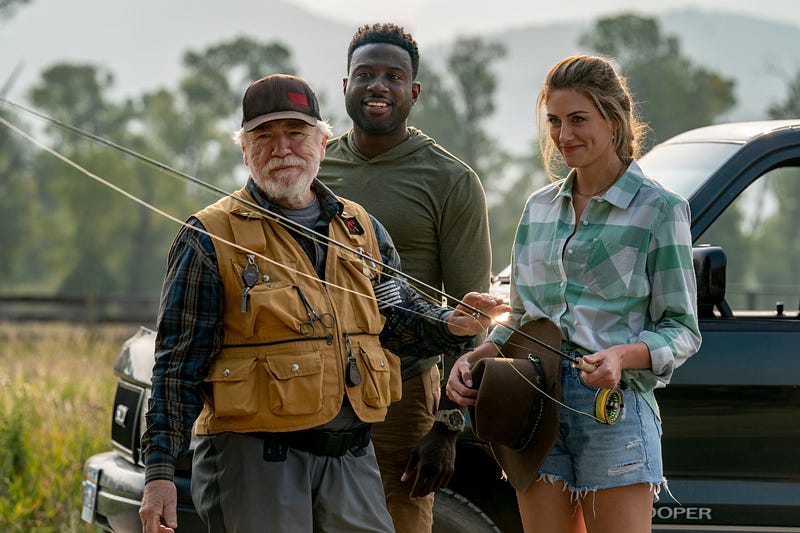
There is an actual outfit called Warriors and Quiet Waters which uses fly-fishing as a key part of military veterans who seek healing based on their military experience. What is it about fly-fishing which makes it so therapeutic to soldiers?
As I noted, Montana non-profit Warriors and Quiet Waters played a big role in the film by sharing their process of teaching post 9/11 combat vets fly fishing as a way of dealing with their physical and emotional wounds and helping them integrate into society after leaving the military.
WQW isn’t the only organization doing this. For instance, Project Healing Waters is doing it on a national level and there are countless local and national groups that have realized the positive effects fly fishing can have for veterans, especially in a group setting that provides the comradery and support network many veterans miss when leaving active duty.
First off, in terms of the actual act of fly fishing, it requires you to be in nature, usually incredibly beautiful places that have an element of wildness in them. Places where your phone doesn’t work. That in itself is a great boon for the human spirit, especially nowadays when everyone and everywhere is so connected digitally all the time.
Furthermore, to fly fish you usually have to be in the water, either wading or float. Again there’s an immersion in nature there and, as anyone who has ever been to the beach or even just been in a hot tub knows, water can be relaxing and invigorating all at the same time.
Then there’s the act of fly fishing. The cast itself is rhythmic and repetitive to the point of being soothing, comforting and restorative — it’s been used as physical therapy for breast cancer survivors. That’s why we see Ike casting on dry land — the movement is like a security blanket for him.
Finally, when you fly fish you have to be in tune with the natural environment — what is the water doing, what bugs are on or under the water, what’s the weather doing, what are the fish doing and where are they — so you need to be completely in the moment. As Colter says in the film, you can’t be thinking about anything else.
I once interviewed actor Henry Winkler for a fishing magazine, and he called fly fishing a washing machine for your brain. In the moment, the focus it takes to try to fool a fish with a tiny fake fly forces you to let go of all the junk floating around in your head, which is not only mentally freeing while you are doing it but also can be restorative and therapeutic when you leave the water.
At this point in the conversation, Stephen is joined by the movie’s director Joshua Caldwell.
So Stephen, you write the script. Then what happened?
Stephen: Like the first script I co-wrote, I was planning on making this myself — Kevin Smith Clerks-style — but again didn’t know how. I sent it director Nick Stagliano (The Virtuoso), who I had become friendly with in New York City when Bryan and I were trying to make that first script. He liked it and was interested in directing it, but had a slate of films that already had funding.
Not sure what to do, I went back and wrote a Montana-set TV pilot that was mentioned in Variety as an ATX Writers Program selection for the high marks it received on the Black List website. An actor’s rep read that script and we attached him to MTL but he couldn’t get it off the ground. At that point, being in Montana and not having representation, I started trying to raise funds on my own and also reached out to Jeri Rafter, a local producer, and Richard Gray (Robert the Bruce), a director based in Livingston. They both liked the script and couldn’t have been more supportive in encouraging me to apply for a Big Sky Film Grant from the state of Montana.
Being awarded the grant in 2019 changed everything. Soon after producer Kelly McKendry, an Army brat who I had met with through the Villanova Alumni program, came on board. She talked with the investors that were interested and started using her connections in the industry to see who could help us. From there producer Scott MacLeod, an Army veteran, came on board. He brought on casting director Neely Eisenstein, whose dad served with the Marines in Vietnam. Kelly, in turn, brought Carl Effenson, who produced the Oscar-nominated Mudbound, to the team. But we still didn’t have a director.
Josh, how did you intersect with the script?
Joshua: Once Stephen got Kelly on board, she started calling around to every producer she could find that had made a film in Montana. Eventually, she called my manager who had produced a film called Population Zero which took place in Montana but was actually filmed in Canada. He informed her of that but then asked about the film she was producing. She told him about Mending the Line and he asked if she had a director yet. She said “no.” Now my manager fly fishes and he knows I’m a big fly fisherman so he asked if he could send it to me. I read the script and immediately wanted to do it.
Of course, I had one big test to pass. Kelly told Stephen that I was a fly fisherman and he was like “Yeah, right, let’s see.” But then he looked at my Instagram account (@joshuacaldwelldirector) which, at this point, is mostly fish pics. Once he saw that, I guess I passed the test.
There are a bunch of executive producers listed in the credits, so I imagine raising funds to produce the movie was quite a process. How did you go about getting the money to make the movie?
Joshua: Like any independent film, the fundraising was like putting together a puzzle. The first piece was the grant, which wasn’t a huge amount of money but gave us a little cash in the bank and a calling card to get in the room. It also gave us a connection to the Montana Film Office and later the state’s 20%-35% tax incentive made it possible to film the movie here.
I come from a research background, so after I got the grant I made a list of hundreds of high wealth individuals with connections to the military, Montana or fly fishing. People who support veterans and who fly fish are incredibly passionate and I got a great response from those emails. Even if only a handful said that were interested in investing, it told me that there was an audience for this film. Using my connections within the industry I also started the process of connecting with fly fishing companies like Far Bank, SIMMS and Tom Morgan Rodsmiths, and their in-kind support was invaluable to the production.
One of the potential investors who responded early on was Mark Comora, who is on the board of the American Museum of Fly Fishing and would become our lead executive producer. He really responded to the script and before we had a producer, director or a cast, he told me he would back me if I could get the project off the ground. Two of Kelly’s connections, Brett Cravatt and Keith English, are big fly fisherman and they also supported the project financially because they knew first-hand about the healing power of fly fishing.
When we got close to production, like any indie, we still had a gap between the investors and the tax incentive amount, which Three Point was giving us a loan against. The gap was filled by deal Scott and Carl brokered with Robert Barnum and Rick Sasner, who represented a group of investors interested in getting into the film business. Finally, Kelly, Josh and Scott’s families saved the day and stepped up when we needed to finance pre-production while we were finalizing all the other investments.
We were lucky that people were really passionate about this story they thought could help make a difference for veterans who didn’t know that there were options for dealing with debilitating PTS other than drugs, alcohol and suicide.
What was the casting process like?
Joshua: In all honesty, the casting was fairly simple. We had a fantastic casting director, Neely Eisenstein, who really took charge and helped us figure out who would best fit the roles as well as who would work with us on our budget. Often people ask “How did you get Brian Cox to be in the movie?” The answer is pretty straightforward: we made him and offer and he said yes. That’s pretty how it went with every cast member.
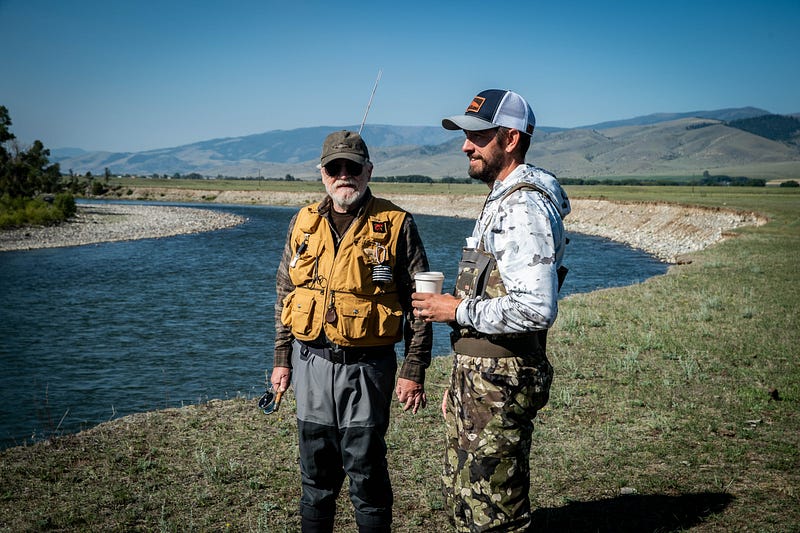
It’s quite a coup for you to land Brian Cox as a lead actor coming off the buzz around his role as Logan Roy in the award-winning HBO series Succession. What was it like to work with Brian and how did his presence impact the film?
Joshua: Brian is such a legend and I still can’t believe he’s a part of this film. Working with him was both a learning experience and a privilege. His depth of understanding, commitment to the role, and sheer mastery of the craft brought layers to the character that went beyond what was on paper. His presence, undoubtedly, elevated the film, providing gravitas and authenticity. It’s one thing to envision a character, but Brian breathed life into it, capturing the complexities and nuances beautifully. Every moment on set with him was a masterclass in acting.
I only really knew Brian from his film roles. But once he was cast I started watching Succession (which I had wanted to watch but hadn’t yet gotten the chance). So, leading up to production, all I saw of Brian was Logan Roy. And of course, you’re wondering, in real life, how much of Logan is Brian? But he couldn’t be further from that guy. He’s a sweetheart and a gentleman and he put everything into portraying Ike in our little film. And he put up with a lot! We had him fishing and casting (which he doesn’t do in real life), standing and laying in rivers, rowing drift boats, I mean, it was a very physical role. But he did it all with the grace and humility you might expect from an actor of his caliber.
Actress Patricia Heaton has an important role in the movie. How did her being cast come about?
Joshua: We got a call from her agent. She had read the script and wanted to play Dr. Burke. I love Patricia. My wife and I are big fans of Everybody Loves Raymond and I thought she would be a wonderful addition to the film.
Working with Patricia Heaton was truly a memorable experience. Like Brian, she’s a legend in her own right and she’s not only incredibly talented but also extremely professional and grounded. Patricia brings a wealth of experience to the table, and her dedication to her craft is evident in every scene. Off-camera, she’s warm, genuine, and has a great sense of humor, which created a positive and collaborative environment on set. Collaborating with an actress of her caliber and reputation definitely added a special touch to the project. Every day working with Patricia felt like a blend of learning, creativity, and sheer joy.
Production took place during the pandemic, so I’m assuming you had to follow COVID protocols. Could you describe what that was like shooting a film in that situation?
Joshua: It was strange to say the least and a bit schizophrenic because we had these super strict protocols on set like masking up, being tested three times a week; yet most of us had gotten the vaccine and Montana itself had such a low rate of spread and pretty low infection numbers that pretty much everything was open and back to normal there. So, you’re following these protocols during shooting and then you’re back out in the world on the weekend where no one is masking or following the protocols.
That said, we took it seriously, because a COVID infection on our film would have been devastating. There was no way we could absorb a two-week shutdown, not only due to the costs, but also the actors’ schedules. We only had Brian for a two-week window. And I’m proud to say we didn’t have a single positive test during the four-week shoot.
We were also helped that much of the film was shot outside. We were able to spread out production and crew out a little bit and give people space. While we had all this testing and masking and extra costs, I don’t feel like it really impacted the production in any meaningful way. We didn’t really change how we approached anything because of the pandemic.
The movie features some beautiful cinematography and in a way, it feels like Mending the Line is a love letter to Montana. Could you talk what your approach was to using those visuals to support the story?
Joshua: The only way I really know how to make film is through the subjective experience. I don’t know how to approach a film from a purely objective point of view. I want to give the audience a subjective experienced and the best way to do that is through the cinematography and the camera work. In Infamous it was about creating a film that felt like the main character’s Instagram feed for example. It was bright, poppy, kinetic, visceral and subjective. With Mending the Line I wanted to cement the audience’s experience watching the film with Colter’s journey.
One approach was to try and use the camera work and framing to reflect Colter’s state of mind. So, you may notice that the first half of the film, with the very rare exception, we use a lot of handheld and a lot of tight framing. In fact, much of the first half of the film takes place in doors. We really wanted to create a feeling of claustrophobic because there’s where Colter’s head is at. He’s looking inward and not seeing what’s around him. So, when we’re first introduced to Livingston, we see it from Colter’s point of view in the van. Its half cut off by the windows, it’s shaky, it’s a little blown out, because that’s how Colter is seeing Montana right now. He’s not seeing the beauty of this place; he’s not seeing Montana. He’s just seeing a place that’s not worth paying attention to or investing in because it’s something in the way of him going back to the Military. He’s built a wall around him. It’s not until halfway through the film when he goes fishing for the first time that he (and the audience) really see Paradise Valley and the river and the beauty around him.
Beyond that we wanted to create a contrast between the “unnatural” interiors and more “natural” exteriors. We wanted the audience to feel off when we’re inside and feel more at peace when we’re outside. The pacing of the movie is like a river. We have these sequences of rough water (the opening, the dreams, the drinking) that mimic the faster water and then other parts that feel calm, quiet and peaceful, like those big pools. So we wanted to take those elements in natura that provide such relief and calm and not only bring that Colter but have the audience experience that as well.
Montana is incredibly beautiful and it almost doesn’t matter where you point your camera. It actually took quite a bit of discipline to take the approach we did because it meant withholding all that beautify from the audience until we’re nearly halfway through the movie (with the exception being Brian’s fishing scenes but that’s because he’s already come to see Montana for what it is). But I think it made for a better journey for the audience. It connected you to Colter, it took you along on his journey, and gave you better insight to both the experience of PTS and the stress of that, but also the relief that something like fly-fishing and nature can provide. That was the goal with how we approached the visual language of the film.

The movie screened in theaters across the country and is now out on VOD. After each of your journeys with this project, what are your hopes for it as it plays to audiences?
Stephen: When I started out writing it I wanted it to be a worthy testament to my father, but while Mending The Line is still very personal to me, watching the beautiful film that Josh conjured from the script and after connecting with the cast, crew and everyone who supported the production, many of whom are veterans or have strong ties to the military or had to overcome emotional trauma in their lives, I have come to realize it is no longer my story. Everyone involved with the film has turned it into a universal tale of resilience and redemption, and in doing so they’ve created something much bigger than the story I created.
Around 22 veterans commit suicide every day in the United States. We hope this movie shines a light on their plight– and not by creating policy or changing a huge, government organizations, but by showing veterans (and other people dealing with trauma and grief) that there are alternative therapies. It doesn’t have to be fly fishing — we’ve met vets who use woodworking, surfing, working with horses, birdwatching, hiking, photography, writing as therapy. We’ve been told people who served in the military, folks running non-profits dedicated to helping veterans and veterans themselves, that this film will save lives, which is humbling in the deepest sense. To do that, it must be authentic, which is why we put so much time and effort into research, and it must also be engaging, entertaining and inspiring, so I hope it all those things and more.
What are you up to next?
Stephen: Working closely with the Marine Corps, I’ve done a deep dive into some of their more fascinating untold stories. For instance, I’ve written a script about the first Asian-American officer in the Corps who overcame discrimination to become a hero fighting in the Korean War. I’ve also got the rights to a couple books about the Vietnam War — one I’ve turned into a feature and the other is a Band of Brothers-like TV show but with a Sixties bent. Closer to home, my pilot that did so well on the Black List is about two young women who stumble into the world of drug smuggling in the wilds of Montana so were trying to find a showrunner who wants to help us develop it and shoot it here.
A trailer for the movie:
To learn more about the movie and where you can watch it, go here.
For 100s more interviews with screenwriters and filmmakers, go here.