Interview: Rich Wong
A conversation with the screenwriter of the upcoming comedic road movie Come As You Are.
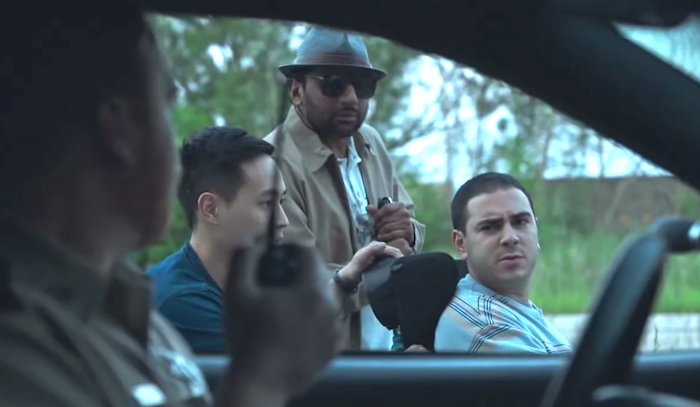
A conversation with the screenwriter of the upcoming comedic road movie Come As You Are.
In the past, I have championed small independent movies I felt deserved whatever little boost my blog could give them including interviews with Destin Daniel Cretton for his movie Short Term 12, Matt Manfredi and Phil Hay for the movie they wrote The Invitation, and Rob Meyer and Luke Matheny for their movie A Birder’s Guide to Everything.
This week, I am featuring a series of interviews with some of the filmmakers behind a wonderful indie comedy Come As You Are which opens February 14.
Plot Summary: Three young men with disabilities hit the road with a jaded nurse driver to a brothel in Montreal catering to people with special needs. Remake of the acclaimed Belgian film Hasta La Vista.
Here is my interview with the movie’s director Rich Wong.
Scott Myers: As I understand it, you intersected with Come as You Are through your connection to actor Grant Rosenmeyer, who stars in the movie. Could you talk a bit about that?
Rich Wong: That’s right. I got my start in my career as a DIT (Digital Imaging Technician) back in the really early days of DIT, which is the ushering in of HD in the TV world. They needed a bunch of DITs.
I live in San Francisco, but in LA you needed a lot. I think I might be only the sixth DIT, like number six in the union.
I ended up working on TV shows. The very first TV show I ever worked on was a show called Oliver Beene in which Grant played the titular character when he was 10 years old. I was 24. He was 10. We worked on this TV show together, two seasons of it.
I knew him that way, but then off he went to NYU. Off I went to direct a little movie called Coma ‑‑ The Musical, which ended my DIT career.
I ended up going down a DP (Director of Photography) path. Maybe about two or three years ago I felt like I wanted to start directing again. Grant ended up doing a movie with one of my best friends named Ryan Sage. He did a movie called Temps with him.
When he connected with Ryan to do that movie and Ryan was telling me about it. “Oh, Grant Rosenmeyer? I know him from the old days. That’s amazing.” Grant and I ran into each other at a coffee shop and said hello and stuff.
We didn’t really reconnect other than hearing about that project. I saw the movie and I liked it. I thought Grant was great.
It wasn’t until sometime in 2000 and…What are we now? I guess in ’17, maybe, when I had dinner with Ryan. Ryan had told me about this project (Come As You Are) because when Grant had finally gotten the rights to the project, he had approached Ryan, who he had just done a movie with, to direct it, to see if he was interested in it.
Then, Ryan ended up really not being available for it. Ryan was telling me about it. When he told me the logline and the story, it sounded up my alley. It happened to coincide with me wanting to direct again.
Actually, when he told me about it at dinner I said, “Oh, cool. Anyway, how’s your kids?” Then, it stuck with me for a while. It stuck with me all the way through the night.
I remember calling Ryan at 11:30 PM the same night and being like, “Hey, remember that project? Are they looking for a director? If they are, I know Grant from the old days. Can you put my name in there?”
Then Ryan was like, “Oh, yeah. Totally. Sure.”
That night, he sent Grant my first film, Coma ‑‑ The Musical. He sent me the script. I read it. He watched it. He set up a meeting for us the next day. Luckily, Grant liked my film. I loved the script.
That next morning, I was driving from LA back to San Francisco, because I live in San Francisco. We talked the entire way home for five‑plus hours.
I remember arriving in San Francisco and parking for another half hour, just finishing up that phone call. So began our journey. We talked about everything under the sun about the movie in that conversation.
It was the start of a great relationship.
Scott: So there’s this confluence of intersections. Grant was part of a writer’s workshop with Erik when Erik was writing the script. It’s almost like fate that brought all of you together.
Rich: A little bit. It’s a little cosmic. I don’t mind saying it’s cosmic. I think the story of meeting him when he was 10, coming really full circle, how many years later, 30 years later, is really actually amazing.
Scott: What appealed to you about the story? You’re out to dinner with Ryan. You hear the logline. Then it stays with you. What was it about the story that stuck with you?
Rich: I think if you look at my other two films, I’m interested in human stories. Stories where people have… they’re just kind of everyday stakes, but the stakes are really big for them, it will be big for the audience.
Obviously, in order to be myself, I’m interested in telling stories about people who are often forgotten or don’t have a lot of place in the media. That’s probably something that’s naturally been ingrained with me my whole life. Part of my wanting to diversify the cast in other ways, ethnically, too.
That said, it sounded like a fun movie. In the end, I think I want to make movies that have a really positive message. I think you can see from my two films, movies that are really funny, but also can be dramatic at the same time.
I don’t know how much I can intellectualize other than it was up my alley. I connected to it immediately.
Scott: The movie’s an adaptation of a 2011 Belgian film, which is an adaptation of a documentary, which is based on the real life experience of Asta Philpot. In essence, this story has kept evolving as a narrative.
How much of the background material did you delve into? Did you watch the Belgian film? Did you watch the documentary? How much did you intersect with Asta?
Rich: I watched the Belgian film, even though Grant hadn’t, which I think is awesome. Probably he shouldn’t. I watched the Belgian film and loved meeting with Grant and Erik. I walked in there having just watched the Belgian film and loving it. The first thing when I walked in and sat down I was like, “Hey, guys. Oh, I saw the Belgian film. I love it.”
They’re like, “Yeah, that’s cool but we don’t want to do that, though, right?”
I was like, “Oh, yeah. We totally don’t want do that.”
[laughter]
Rich: I think the Belgian film is amazing. I think the documentary is really great. I watched the documentary more than I’ve watched the Belgian film. Obviously, we got a chance to be in touch with Asta, which has been amazing, too.
I tried to have a nice level sense of, I guess, inspiration but again, a lot of it’s about the script, too. The script in its own way, its own entity, its own inspiration. I read it. I saw a pretty specific movie. Then, we tried to set out and make that.
There are certain things that I feel like that are homages to other things, but in the end we were trying to do something, even though it’s in a canon of Asta related material, we were also trying to do something that was pretty standalone.
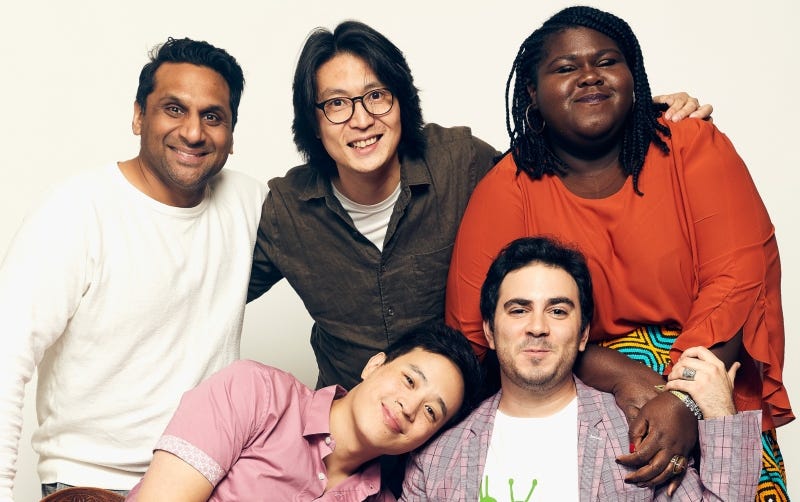
Scott: I talked with Erik yesterday. He said one of the biggest areas of focus in terms of exploring this story was Act Two and the road trip as compared to the Belgian film. They felt like that wasn’t really maximized.
It’s interesting, too, because we discussed the irony of how the goal of the story, which is basically these three guys traveling to get laid, is really a McGuffin. The real point of the journey is what they learn about themselves as individuals and friends on the road.
Rich: I always say that to people. Whenever people, let’s just say my very religious family is like, “What’s the movie about?” It’s like, “Oh, it’s about three guys with disabilities going on a road trip to Montreal to a brothel to lose their virginity.”
Really, it’s not about sex at all. It isn’t. I think it really, again, is just any human story. It’s a road trip movie. We tried to treat the characters without feeling sorry for them or anything like that. I think that’s something that happens quite often when you do movies about minority groups or anything like that. In this case, people with disabilities.
It’s about the human need for connection. I think the human need for connection started off as…In this particular case, starts off as this need for sex, connection that way. It’s like Scotty (the lead character) says after it happens, “I feel a bit empty because there’s more to it.”
The real connection they really get is from each other. That’s a universal message.
Scott: How many days was the shoot?
Rich: 20.
Scott: 20 days. That’s a pretty compressed time frame. You’re on the road. Do you have a favorite anecdote, or experience, or something that’s really super memorable from the production that you carry with you?
Rich: Oh, so many. We had a great shoot. Also, I would probably say that if I had to pick one anecdote that I love the best, that I felt was a perfect synthesis type of moment was the scene in the hotel conference room where the families converge. It’s just a blow out fight.
I think that scene in a lot of different ways is a synthesis of what the shoot was like. We absolutely followed the script, but we also had room to play a little bit, room to improv and make choices.
That scene was really cool. It was one of those things where…My background is more as a director of photography, although I went to film school to be a director. I directed Coma. Then, I went on the DP path.
This being my third movie, I really am aware of the directing part of it, even though I was DPing and editing the movie also. I feel like that scene, what I’m proud about that scene is there’s a lot going on. There’s a lot of dynamics. There’s power shift and all kinds of stuff.
Also, by the way, every single scene that was shot in that hotel, we had to do it in one day. I think a scene like that in a normal Hollywood movie or a movie that was shot you’d have two or three days to shoot a scene like that. If you were going to cover it “traditionally,” it would be such a big deal.
Because we only had essentially two hours to shoot that scene, we decided to set up a thing where we basically played it like a documentary, where it’s like, “All right. You guys know these characters by now. It’s the third week of shooting. You guys know the scene. We’re going to put it in a…”
It was originally written to be something much smaller, but we were going to put it in a room where we required no lighting or anything like that. There’s not a single movie light in that whole scene. “We’re just going to let you guys play the scene.”
We rehearsed it first, “But let’s just do a thing where we set up…” We set up the scene, block rehearsed it without really doing it. We had a plan in a sketch kind of way.
I think, “OK. Now, let’s just do the scene all the way through.” Me ‑‑ I operated one camera ‑‑ and the other operator are just going to capture it like it’s a documentary. He and I had our own rules, our own kind of camera rules. I’m big on rules, especially with cameras.
We did it six or seven times. They played out the entire scene. It was amazing. It really was…I don’t know. I don’t want to say movie magic because movie magic implies all the fakeness. It was so real and raw. It was its own kind of movie magic.
I think we all felt like something was so real, and authentic, and true coming out of that scene.
Then, when we edited it together, I think it shows. It’s very, very real. I also just think it’s cool because it was a bit of a stylistic change there from the rest of the movie, this rawness that I think really, really grounds the whole thing.
Scott: Grant talked about how he was sitting in post with you and watching that scene and said, “Yeah, we got that.”
Rich: It’s amazing. In fact, from the assembled cut, it’s virtually not changed at all. It’s one of the few scenes that haven’t changed at all since the assembled cut.
Scott: Did you shoot this, then, chronologically? The story going forward or did you…?
Rich: No, we had to shoot way out of order.
Scott: They were three weeks into the process at this point where they shot that hotel scene.
Rich: I think it was the fourth week. Actually, I think it was the first day of the fourth week is actually when it was.
Scott: The movie launches in select theaters and digital platforms Valentine’s Day, February 14th. Looking back on this entire experience, your involvement in it…I know Erik said he’s been involved with it for seven years. Grant said he’s been involved with it for three years.
What are your thoughts and feelings? What do you take away from this experience as a director and as a creative for making this movie, Come as You Are?
Rich: Hmm. I’ve never been asked that.
What do I take away from it? I feel really fulfilled. I think when you get into the “movie business,” when you decide you’re going to do this for a living, you don’t really know how many movies you’re going to get to make. You’re lucky to make three, or four, or five, or whatever it is.
Each one, you try to give everything, your all. You hope you’re doing things that are meaningful. That being “the dream,” that being what you aspire to do. The chance to do this hit all those boxes. I got to work with all these great people.
It’s a cliché about, “We were like a family on this thing,” but really, Grant and I, we speak every day. We really don’t have to because once I turned in the movie…I’m not a producer on the movie. Once I turn in the movie, I don’t have to talk to them every again.
Grant became one of my best friends and I also became one of Grant’s best friends. Erik and I talked about doing movies. Grant and I talk about doing movies. We had an experience that was really, really special.
Obviously, the movie turning out as good as it did… I hate saying it that way because it sounds a little conceited, but the fact that we were all happy with the outcome means a lot. It’s going to be one of these experiences that I think I’ll always look back on as one of the most fulfilling experiences in my career.
Here is a trailer for Come As You Are:
Los Angeles
Laemmle Glendale
New York
Cinema Village
Boston
Apple Cinemas
Chicago
Gene Siskel
Cleveland
Tower City Cinema
Columbus
Gateway Film Center
Dallas
Harkins Southlake
Denver
Harkins Northfield
Fort Wayne
Fort Wayne Cinema Center
Kansas City
Screenland Tapcade
Napa Valley
Cameo Cinema
Oklahoma
City Rodeo
Phoenix
Harkins Arizona Mills
San Francisco
Roxie Theater
The Villages, Florida
Old Mill Playhouse
The movie will also be available on digital platforms on February 14:
iTunes/AppleTV
FandangoNow
Goldwyn
Do me a favor: Spread the world about this funny, heartfelt movie. Then do yourself a favor: Watch Come As You Are to be entertained and moved.
To read my interview with screenwriter Erik Linthorst, go here.