Interview (Part 6): Wendy Britton Young
My interview with the 2024 Nicholl Fellowships in Screenwriting winners.
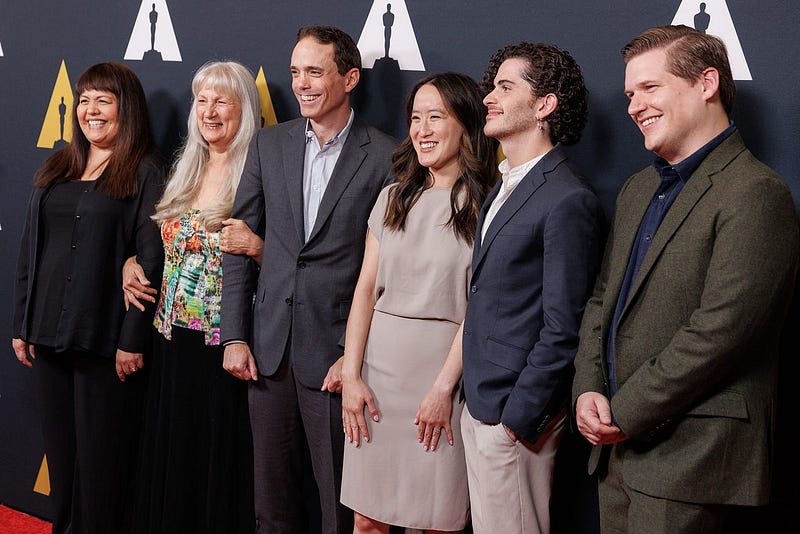
My interview with the 2024 Nicholl Fellowships in Screenwriting winners.
Wendy Britton Young wrote the original screenplay “The Superb Lyrebird & Other Creatures” which won a 2024 Nicholl Fellowship in Screenwriting. Recently, I had the opportunity to chat with Wendy about her creative background, her award-winning script, the craft of screenwriting, and what winning the Nicholl has meant to her.
Today in the final installment of this 6-part series, Wendy answers some craft questions.
Scott: Congratulations again. It’s great. Love the script. Can totally see it and look forward to seeing it fly.
Let me ask you just a couple of craft questions here. You mentioned that you’ve written some other scripts. How do you come up with story ideas?
Wendy: It’s more like, “How do I pick from the storm of ideas that are constantly flying into my head?” The picture that I have is of the people put in those tubes, with all of the dollar bills being blown around, and they’re supposed to grab them.That’s what it’s like.
My biggest problem is trying to…I want to write all of them. I know that’s never going to happen, it’s just like which one to do now. I don’t know. They just are constantly flying into my head.
Scott: Then how do you determine which ones to write?
Wendy: Eventually one or two come to the forefront. Right now, I’m working on one, mainly. I make a ton of notes and then I have the story in my head enough to write. But I like to have another that’s in line behind it.
If I get stuck, I just shift over, and then those creative juices are flowing over there, and you can take the momentum back to the first story–you’re not in a stuck place.
Scott: How about prepping a story? Do you have a specific process at this point? Like when you’re breaking story, what they call it in Hollywood?
Wendy: Yeah. I do a lot of daydreaming, especially while driving. I have notebooks full of handwritten notes, and everything is out of order. It’s like I’m in the middle of a giant sphere with all this dialog and story bits swirling around, but that’s how I work.
Scott: The characters, we’ve talked so much about the characters in your script that are just so beautifully drawn. Is that more of an organic thing, or do you have particular exercises, biographies and interviews and that sort of thing to help develop them?
Wendy: I would say I know about those things, and I use them, but in a way that’s organic. I’m just not very…the word that comes to mind is sequential about it. I do come up with a bio, but it just takes longer, I guess, because it just comes in little lightbulbs as I explore the character.
Scott: The story, if you laid it out with all that sort of organic and wonderful…following your instincts and jotting down notes in this sort of not capricious, but floating kind of way…
The script reads like, “OK. This happens on this page. This happens on this page.” It’s not like you sat there and said, “Well, the scholarship needs to be announced here.” It lays out…not in a bad way when I say “conventional,” but it lays out like a conventional movie.
Was that just complete blindside, or did you actually bust out cards, or how did that work?
Wendy: I would think of a scene, and it would give me a lot of joy to write that certain scene. I write out of order, but I do get there eventually. I write the scenes that I want to write at that moment, and then I go back and make them better, and then figure out the order.
I would say that I have a rough idea of the shape of the story, but I do wrestle with organization.
Scott: Well, if you know the beginning and you know the ending.
Wendy: Yes. That’s true.
Scott: Then you could probably get there. In my book, I did lay out, “OK, you want a path of least resistance. This is the eight-sequence theory,” or whatnot. I’ll lay that out for you. I think more importantly, most people, because we’ve seen, read, or heard thousands and thousands and thousands of stories, so we have an intuitive sense of this.
Aristotle, beginning, middle, and end. That sounds like what I’m hearing from you is you have kind of a trust in that, that maybe there’s an innate instinct there that you’re going to write whatever scenes you want and eventually, somehow, it’s going to all take shape. Is that a fair assessment, a fair approach?
Wendy: Yeah. I think there is an enlivening of the actual story that takes place when you do all that daydreaming. I feel like something really does come alive. There is an “other dimensional-ness” to it. It’s a living thing. It blossoms, it matures. So then you do have a shape that you’re writing to, a living thing you’re connected to. Let’s put it that way.
Scott: Yeah. I tell my students it’s the difference between receptive writing and reflective writing. Receptive writing is the daydreaming and writing the scenes you want to write, writing notes while you’re driving.
That’s the idea of go into the story. You go into the story, immerse yourself in the lives of the characters, and just see what emerges. So you do all that, but then you also step outside, like you said, that you don’t mind getting notes at all. In fact, you really just sort of soak that up.
So you do have to kind of think about it structurally and just pragmatically. Right? So that part of it. Let’s talk just a bit about the reflective writing where it’s like, “OK. This is too long, or the direction I went where she was assaulted, that was too much.”
Now you have to do both, kind of receptive and reflective. Right? Maybe talk a bit about incorporating notes and revisions and that sort of thing.
Wendy: When I get a note, sometimes it’s like, of course! Sometimes I have to keep trying it on. It will end up either fitting, or I try to hear the “note behind the note,” and solve the problem a different way.
I will say structure is something I’m still working on. But I’ve gotten better at it.
Scott: Well, maybe you can have a happy synergy where you’re really comfortable with that sort of receptive mode, and then you get these notes from your writer’s group, and they’re like, “Hey, but if you do this, you could have this happen here and shape the structure a little bit this way.”
Wendy: Full on admitting I get a lot of help!
Scott: OK. One last question. Is there a single piece of advice to a youngster, a young person, or a new writer? It doesn’t matter what age they are. They could be 80 years old, and they’re just starting out, or they’re trying to embrace their writer’s voice or whatnot. Is there any single piece of advice you would — after having gone through your own journey — offer to someone else?
Wendy: I would say don’t try to write like everybody else. Write about something that you love. Find something beautiful and meaningful to you. It can be funny or exciting, or sad.
Even if you’re writing like an action script or something where there’s not as much weight on the characters or theme, but find something meaningful that you connect with. And then hold on to that because you’re going to go through times when you feel like, “Why am I doing this? Why am I writing this? I don’t like this story anymore.”
You have to be able to connect to something in the story that can pull you along, that gives you chills, or gives you joy. To me, it’s beauty — I use that word a lot.
I think human beings have this…We’re drawn to beauty. What does that mean? Find that thing in yourself. What is your big inner tuning fork resonating to? There’s a reason you’re connecting to it. Hold on to that. Write it.
For Part 1, go here.
Part 2, here.
Part 3, here.
Part 4, here.
Part 5, here.
For my interviews with every Nicholl Fellowships in Screenwriting winner since 2012, go here.