Interview (Part 6): Vanar Jaddou
My interview with the 2020 Nicholl Fellowships in Screenwriting winner.
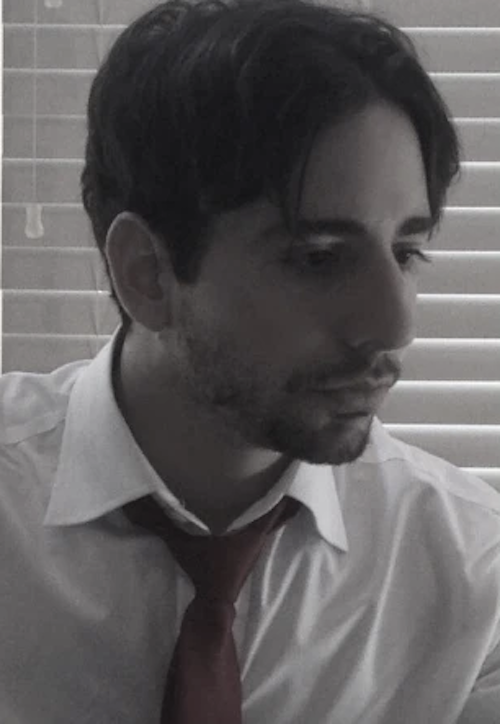
My interview with the 2020 Nicholl Fellowships in Screenwriting winner.
Vanar Jaddou wrote the original screenplay “Goodbye, Iraq” which won a 2020 Nicholl Fellowship in Screenwriting. Recently, I had the opportunity to chat with Vanar about his creative background, his award-winning script, the craft of screenwriting, and what winning the Nicholl Award has meant to him.
Today in Part 6 of a 6 part series, Vanar answers some craft questions and provides advice on writing a Nicholl worthy script.
Scott: How about themes? Is that something that you start upfront with, like you’ve got some themes in mind or something you discover along the way?
Vanar: Sometimes, themes are apparent right from the get‑go. You want to follow those themes. I feel like theme and dialogue are intertwined a lot. Also, that moment, when the inner journey is resolved and the exterior journey is resolved, the theme can also be expressed visually.
You can do it through that, through prose and through action, visually. You could also do it through dialogue and subtext. Sometimes, yes. Sometimes, when the story is completely in your mind, you already know the message or messages that you want to send by the end of it. But other times, it just comes out through the actions and words of your characters. How they respond in certain types of scenarios, certain conflicts.
Scott: What do you think about when you’re writing a scene? Do you have some specific goals? I know you want to be entertaining. You talked about that. Obviously, you have affection for words, but are there other goals that you have in mind when you’re approaching writing a scene?
Vanar: Yeah, sure. If you’re writing action, I really think everything that your character is doing should reveal something new about himself or herself.
For example, if it’s an action sequence and you haven’t demonstrated that your character is athletic or is strong and that he or she can take a bullet or has military‑type of maneuvers or as a sharp shooter, whatever it may be, everything needs to have a purpose in that sense.
In terms of the dynamics of a scene when multiple characters are speaking, I think you always want opposing ideologies that are both valid, those schisms I spoke about earlier. When two people see a similar situation completely differently, I think that’s what creates the drama and the conflict.
Then it comes down to layering. I’m never satisfied with a scene. I want another layer, then another. I’ll spend a week editing one scene even on the 10th draft, I don’t care.
Scott: Quite visually, are you interested in directing at all?
Vanar: Unfortunately, that’s not a skill that I have mastered. Maybe down the line, it’s something I would be interested in. I know a lot of writers want to direct, but for me, I feel like I wouldn’t be able to do justice to a script that I wrote if I directed it. I feel like there are people who are a lot more advanced than me in terms of their craft.
Writing is something I’ve focused on solely for the last nine years or so. I would never want to compromise the integrity of a film by doing something that I can’t do at an elite level. I am interested in working and collaborating with people who are as serious and meticulous about what they do in their line of work, as I am with what I do. If we can find a director like that for Goodbye, Iraq, if they put in the same kind of time and obsession as I did on my end, I think that it’s a movie that could help change the landscape of the industry and I could envision a best director nomination to be frank. We talk about inclusion, we talk about diversity, we talk about originality and inverting or subverting genre — here is a director’s chance. The movie is 75% English. Don’t be afraid to tackle it. You don’t need to be Middle Eastern.
Scott: One last question, I always end with this: What advice can you offer to aspiring screenwriters about learning the craft and trying to get into the position like someone such as yourself?
Vanar: Very good question. This is just my opinion. I’m sure that other people, like yourself, who are way more experienced than me can give better feedback. I’ll give my opinion. I think that if you really want to succeed on a high level, you have to be your harshest critic. You can never be satisfied.
You need to throw yourself in the ocean without a lifeline, without a flare gun. You need to be prepared for any kind of storm you’re going to weather, any kind of beast that’s lurking down there. You need to be prepared to sink or drown.
If you really want to do this, I don’t think that you should have a backup plan. People always ask me, “What are you going to do if this doesn’t work out?” I don’t know what’s going to happen if this isn’t going to work out. I hope it does.
I’d always say something just to get people off my back. I’ll continue consulting or maybe I’ll become a professor or something like that, but really, I never believed in a backup plan. I always thought a backup plan is an excuse to quit. Like, “Screenwriting, it’s not going to work out. OK, I have this to fall back on.”
When you have nothing to fall back on, then you’re all in. There is no lifeline. This is it for you. When you think in terms of that, then it really pushes you every day to get better. You start to read Oscar‑winning scripts and you say, “How can I get to that? What do I have to do to achieve that level of success or that level of writing? How can I get there?”
I know quite a few screenwriters, both professional and some that haven’t made it yet. I would really like to see that mentality of pushing their own limits. Not just for, “Yeah, we want a paycheck,” or “We want our movie to get made,” but to bring the best out of themselves. Seek mentors anywhere you can seek mentors, join writers’ groups. Don’t get discouraged. I fall back on Kobe Bryant’s lessons all the time, every day.
Aside from all that, the number one thing I would say is don’t be in a rush to send out your material, because you just get one first impression. That’s one of the biggest mistakes I always see. People are just so eager to make connections. They spend all their time doing that, sending emails, calling, going to mixers, whatever. You want to fly under the radar for as long as you can until you’ve honed your skill to that elite level. That’s the time to start coming out and saying, “OK, this is what I could do,” and then see the response if people don’t ignore you anymore. You know that, “OK, I’ve reached a level that…Now, maybe I could start thinking about turning this into a career.”
You have to be very hard on yourself. With the words from a language standpoint, my personal opinion is, don’t write a script like a blueprint.
I’ve seen people say, “I wrote a script in four weeks. I’m thinking. How can you write a script, a movie, in four weeks? How is that going to actually turn out?” You’re competing against people who have been working on their scripts for a year, or even years, and have nuanced every fine detail. Don’t be delusional.
The moment that I knew I was done with “Goodbye, Iraq,” for example, was when I went through, and I’m like, “I don’t even know if I could delete one comma here. I don’t know anything else that I could do.”
I’m sure there could be somebody, like yourself, could probably pick some things apart, but for me, I didn’t know where else to go. That’s when I knew probably I was done. On a language level, just make sure you understand that every single word counts, pick every word carefully, craft every sentence as meticulously as you can, and other people will start to notice.
And you asked me, how to get into the position I’m in, I’m not sure I’m in any crazy position or anything, but if you want to win Nicholl, you have to want to win. When the first batch of results come out, you’ll go online on Instagram and you’ll see everyone posting they made the top 20%, or they made the quarterfinals, and they’ll give a long speech about how happy they are. That’s fine, but you’re asking for my honest opinion, there’s a lack of honesty in the world. And in that world every person does not get a trophy. The chances of becoming a lifelong professional screenwriter aren’t that much different from becoming a pro athlete. If you’re trying to win an NBA championship, and you only make it to the playoffs, are you going to celebrate? No. Your mentality will take you where you need to go.
Scott: Maybe there’s one other secret tip, and that’s access to your 30‑page document that you put together.
[laughter]
Vanar: I think that would definitely be helpful to a lot of people for sure. That’s something like you’ll read a book, and you’re like, “Man, this book is not that good. I didn’t learn that much from it,” but you’ll take two things from it, two bullet points from a 200‑page book on screenwriting. Those two bullet points are worth it.
That document, if there is anybody that ever reaches out to me ‑‑ and, of course, I welcome people to reach out to me because I know how it feels to be in that situation ‑‑ I would gladly share some of my tips that could help expedite the learning process because, as you said, that’s definitely a big part. I won’t give you my email but if you really want to find me online, you can.
One of the things I always ask people not just in writing but in life is, what are some of the mistakes you made when you were younger that you realized now, or what would you do differently? It becomes a crash course in life.
If you made a mistake, for example, in your youth, maybe I would love to talk to you about this at some point. But in your life or screenwriting career, if you can fill me in about that mistake, then potentially, I can avoid it. I could save myself a year or two years just by not going down that path. I’m willing to share that with people who are serious about wanting to win Nicholl.
Vanar is repped by Bellevue and APA.
Instagram: @vanarjaddou
For Part 1, go here.
For Part 2, go here.
For Part 3, go here.
For Part 4, go here.
For Part 5, go here.
For my interviews with every Nicholl Fellowships in Screenwriting winner since 2012, go here.
For my interviews with Black List writers, go here.