Interview (Part 6): Sean Malcolm
My interview with the 2019 Nicholl Fellowships in Screenwriting winner.
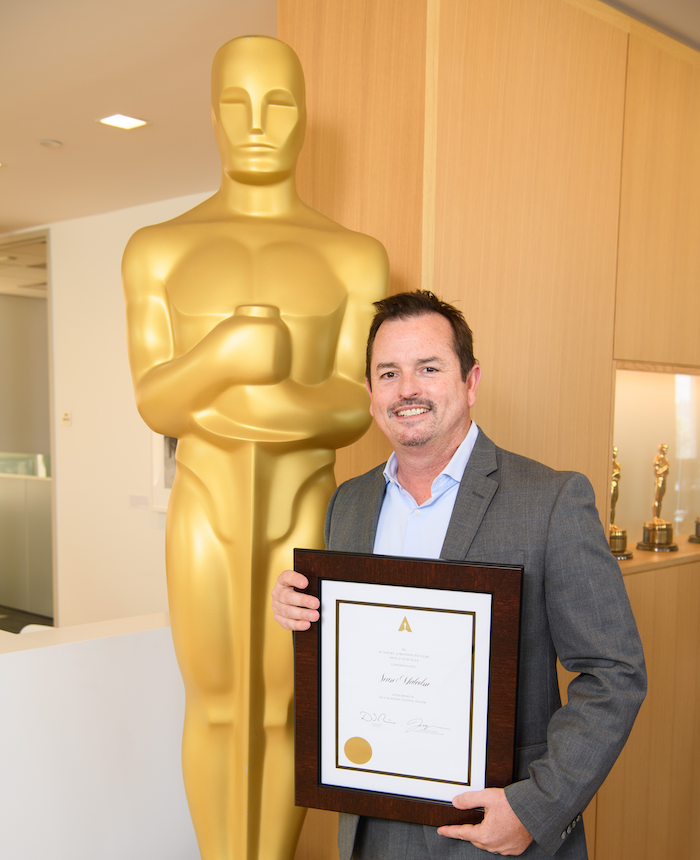
My interview with the 2019 Nicholl Fellowships in Screenwriting winner.
Sean Malcolm wrote the original screenplay “Mother” which won a 2019 Nicholl Fellowship in Screenwriting. Recently, I had the opportunity to chat with Sean his background as a screenwriter, his award-winning script, the craft of screenwriting, and what winning the Nicholl has meant to him.
Today in Part 6, Sean answers some questions about his approach to the craft of screenwriting.
Scott: Let’s jump into some craft questions, we got a few minutes more, if you’ve got the time. How do you spend time in prep writing? What are your strategies? Do you have a specific approach, or does it vary from story to story?
Sean: It varies from story to story, but I do rely heavily on outlining now. But I tend to have five or six different ideas germinating all at once. They’re all at different stages. You’re in the car, you’re in the shower, you’re working on something else, and they’ll pop into your head. You’ll hear a piece of music, or something will happen. I’ll sketch down notes, random bits and pieces of images, notes, or scenes from different things until they build up into a pile.
In a case like this, where I specifically knew I need to execute this by a deadline and there was a fair amount of research, then it was a period of literally pulling up maps, Google Earth, word searches, coming up with names for the characters, typing in, “female Syrian names,” trying to find one that resonates. Why? I don’t know. What does the name mean? Let me look at that. Gathering all of that, in this case, and then boarding it out and blocking it out. You mentioned the All is Lost moment, and so yeah, I absolutely sketch everything out.
I know I’m going to have my inciting incident, I’m going to have my debate, and I’m going to have my turning point at midpoint, and my third act is going to be where everything goes haywire. Then I’m going to have the all is lost, and often somebody is going to die in that section, physically or figuratively. Then I’m going to have what I would call the finale, and rebirth. I use that model consistently. I’m not dogmatic about it in terms of page numbers and that kind of stuff, but the overall model makes sense to me. And stories seem to want to fall into it, at least features do. TV is different.
But I’ve used it enough times that it’s familiar to me, so it’s instinctual. It just feels natural. I use index cards, on a table or on a board to see the arcs. I try different combinations. I also use the storyboard inside Final Draft.
I have a physical cork board, and I’ve also tried using index card software. Always experimenting. But basically, I will map out all the building blocks before I write the script. I won’t necessarily know every emotional turn. I’ll leave some problems unsolved, so that I’ve got work to do inside the writing, because ultimately, I get impatient and just want to start already.
At a certain point, you feel you have a critical mass and it’s enough to go. It’s not like you say, “Oh, now I’m just doing the mechanics, and everything’s been solved.” No, because, when you get into the act of writing, you find things anyway that you thought they were going to work, and they don’t work, so maybe you have to set it aside and move on. So why wait till everything’s perfect, when it’s never really done anyway? You know there will be another draft!
But when I get into that stage of feeling critical mass, for the sake of momentum, generally I’ll write in sequence. Sometimes I’ll write out of sequence if I know there’s a scene and I just already see it, and it’s going to be in the third act. So I might just frame it up. Maybe it won’t be fully fleshed out, but I just want to write that piece of it, or I’ll have a piece of dialogue I don’t want to lose, but, generally, I’ll be writing in sequence, following the very detailed outline that I’ve created. I know my major setups and payoffs, there’ll be minor details that need to be worked out. Maybe some things I haven’t solved for yet.
Then fill it in as you go and hope that you can solve that stuff when you get there. I don’t like to sit down and write the script and feel like I’m just dictating to myself because I’ve already written it, but I need to have a solid framework. I think of it as building a house. I’ve got the blueprint and now I’m actually going to build the house.
Scott: Back to your architecture.
Sean: Yes, I like to have the blueprint. I’ve tried it once and I hated it, not knowing where I’m going and not knowing my ending. In one of my books, I don’t remember who said it, but she said, “Write with no attachment to outcome.” It sounds romantic and exciting, but I just can’t do that. I need to know my destination! [laughs]
I just don’t think that there’s one way for everybody to do it. This is why this stuff is so fascinating. I love talking about it because I love reading these types of interviews with other writers. Because everybody’s got their own tricks and their techniques.
One trick that I use a lot is if I know I need to get through a scene but I just can’t quite get into it or it’s not working, now I’ll just give myself the freedom to write a bad version and allow the bad version to just get thrown onto the page. Then from there I know I can go back.
Sometimes what you find is you thought it was going to be the bad version, but some of it actually works. But you don’t get stuck. So maybe there’s 10 or 20 percent you can keep when you go back. When you have the bad version out of your head and on the page, you keep moving, then you can see what you like or don’t like about it later, what’s working, not working, and you know what to fix.
Until it’s on the page, you can end up chasing your own tail in your head. So I’ll write the bad version if I have to, and then hopefully fix it.
Scott: Let’s drill down a little bit more into that whole scene writing thing. Do you have any specific goals when you’re writing a scene?
Sean: Yeah. I need at least three or four reasons for that scene to be there. It can’t just be purely expository. There hopefully is some emotional change in the scene. And there’s got to be new information, plot change, plot twist, either a setup that opens a mystery that you know the reader or the viewer is going to want to see resolved, or a payoff to a prior setup or better off both, or dialogue or action that reveals more character. And if people are just getting along, you’ve got a problem. That’s not drama.
I also definitely get in as late as I can and get out as early as I can. Any scene, you come in at the absolute, last possible moment that you can, and get the hell out as quick as you can.
I used to write a lot of dialogue heavy stuff, but there’s just not a lot of dialogue in Mother. I did that partly out of self‑preservation because I don’t speak Arabic. I didn’t really feel comfortable knowing how Syrians actually speak in terms of cadence and what kind of words they would use, so I made it extremely economical to reduce my cultural weakness.
For me, dialogue has always been my weakest area. I’m hoping now that I’m spending more time thinking about character and letting the characters drive the plot, that the dialogue, obviously, is an outgrowth of who the character is and knowing the character, and their choices, so it’s more natural.
There are some writers, some of my peers who were in this year’s group, and we all read each other’s scripts, and they’re just so good at dialogue. You just read the dialogue, and it’s like these people are just jumping off the page. You can just see them.
I don’t know that I have that, but I do know that I’m good at the big picture. I’m good at the execution. I’m good at the plot and that kind of stuff. So you try to accentuate your strengths and minimize your weaknesses.
Scott: Well, speaking personally, I like your dialogue, so there you go.
Sean: Thank you.
Scott: I’ve got two final questions for you. Both of which you will probably have to anticipate being asked by aspiring screenwriters. First thing, you’ve lived in LA now for 20‑some odd years. Do you have to live in LA to become established as a screenwriter?
Sean: I would say the answer is no. I would say that you will need to come to L.A., though. You can win the Nicholl without living here, that part is irrelevant. But you will need to come to town for meetings if you want to have a career where you are getting assignments or pitching stuff. Unless you’re the very rare breed that can sit in an ivory tower and just write and ship it to your agent, because you’ve made a name for yourself. Once you’ve made it a career, obviously that’s a different story.
But it’s a people business, and you need to be able to take meetings. You don’t need to live here full time to do that, though. Maybe you come once a quarter or twice a year and line everything up. Plus, in an odd way, when you live here, people don’t feel as hesitant to reschedule you because they know you’re here and so they’ll move you on their calendar in a heartbeat.
But if you tell them, “Look, I’m based in Vancouver. I’m going to be in LA for three days, and I’m taking all my meetings,” and you line them all up, chances are they’re more likely to keep those meetings if they want to have a shot at you, because they know that there isn’t going to be another shot for some time.
I’m not saying that’s a reason to not live here. Overall, it’s easier if you do, but based on the working writers I have met, the idea that you can’t break in if you don’t live here is false.
Scott: Last question. What advice can you offer to aspiring screenwriters about learning the craft and trying to break into the business?
Sean: That’s a great question. I guess there’s a lot of things I could say. I know for me my journey’s been very long, but I would say the most important thing is to write because you love it, and don’t give up. Literally. Do not give up.
It sounds like a platitude, but I’ve got a magnet on my refrigerator that has a quote by Winston Churchill. All it says is “Keep Going.” Keep going because the writing is the thing. Everybody’s got their own voice. Everyone’s got their own ideas. The world needs fresh voices. The world needs fresh ideas.
I don’t think you should write to the market. I don’t think you should write because you want to be rich or because you want to be famous. Trust me, I tried that in the 90’s — it didn’t work!
You should write because you have to. You have to write because you love to tell stories and they bother you until you get them out of your head and on the page. Or you see something that is maddening, or hilarious, or beautiful or fascinating, and you just have to share it somehow. Then it’s a worthwhile exercise. Otherwise, it’s maddening.
Obviously, there are those rare overnight successes or, “I wrote my first script and I won the Nicholl, or I sold a million-dollar spec.” That’s like winning the lottery. It happens, but it won’t happen to me. [laughs]
I would say just keep going. Do it because you love it, and don’t ever give up. “Keep Going.”
For Part 1, go here.
Part 2, here.
Part 3, here.
Part 4, here.
Part 5, here.
For my interviews with every Nicholl Fellowships in Screenwriting winner since 2012, go here.
For my interviews with 53 Black List writers, go here.