Interview (Part 6): Renee Pillai
My interview with the 2019 Nicholl Fellowships in Screenwriting winner.
My interview with the 2019 Nicholl Fellowships in Screenwriting winner.
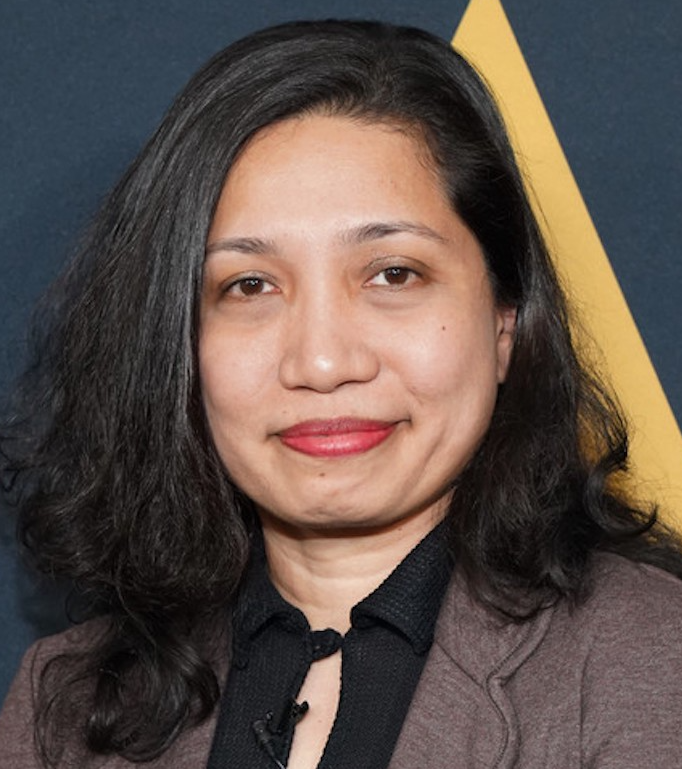
Renee Pillai wrote the original screenplay “Boy With Kite” which won a 2019 Nicholl Fellowship in Screenwriting. Recently, I had the opportunity to chat with Renee about her background as a screenwriter, her award-winning script, the craft of screenwriting, and what winning the Nicholl has meant to her.
Today in Part 6, Renee provides advice for aspiring screenwriters.
Scott: I’d like to round everything out here with one last thing. I typically ask people…and the Nicholl people, I say, “Look, this is a question you’re going to be asked a lot moving forward, which is ‘What advice can you offer to aspiring screenwriters about learning the craft,’” but there’s a quote here from you that maybe I would like you to go into a bit.
Because in some ways, you’re the poster child for people who don’t have a chance to go to film school or don’t go to USC, or aren’t the sons and daughters of moguls or haven’t had access to seminars and classes. You’re self‑taught.
You said, “Being self‑taught, I didn’t really have the opportunity to receive this. Having said that, I think the way I learned ‑‑ by reading as many screenplays as I could get my hands on and watching as many movies as I could, and writing as much as I could ‑‑ show me that if you’re going to write, a good place to start is having a story to tell, especially one that’s going to yell in your face until you get it all down.”
Could you maybe expound on that a little bit?
Renee: Yeah. Exactly as you said, I did not have any of these things. Fact is, I didn’t even get feedback for any of my work because of the peculiarity of geography, language, socioeconomic factors, all of that.
I will say this — I did read, in addition to the screenplays, I did have a look at Robert McKee’s “Story,” Syd Field’s “Screenplay” ‑‑ you know, all the things that everyone says you have to read.
I did not finish the books. There was only one book I read cover to cover, and I’ve read it more than a few times. It’s Aristotle’s “Poetics.”
Scott: [laughs] Yeah. Great to hear that!
Renee: That book explained so many things, it contains things that tell you what the essence of storytelling is, of dramatic storytelling. And I also read all the Oscar‑nominated scripts, because every year, it comes out, and you can get a copy.
I read a lot of those, so that’s like, “OK, this is good writing. This is good.” The fact of the matter is you start to be able to tell what’s good, and what’s not good. And read bad scripts as well. Read scripts of movies that make you go, “Oh my God,” because it does educate you.
At certain points, you don’t really have a choice. You go online and you find whatever you can. For me, it’s just being hungry for that knowledge. One thing that was interesting was people go, “You seem to not really follow the rules.”
Here’s the thing I learned. Yes, you can know the rules, but these are tools, they’re guides, and I’m not talking about things like formatting. I’m talking about how you tell the story. I found that you should use it the best way you can to tell your story, to make that connection.
So what I did was, I immersed myself. In fact, I started learning how to write screenplays, about eight years ago. That’s when I went, “This is what I want to do.” For the first couple of years, I didn’t even write. I just read and watched and immersed and studied.
Then I thought, “OK, now, I’m ready to do this. I’m going to write.” And it was horrible, I was really bad. But, I kept at it.
Here’s the thing also. When I first started, I didn’t think I’d be able to write by myself, so I would look for people who might be interested in being writing partners. But no one wanted to keep at it. They don’t actually write or they really didn’t want to, that kind of thing.
That’s why three years ago, I decided, “OK, I’m going to do it myself.”
What I took from the experience is that once you learn something it becomes… Honestly, I don’t know any other better word for this, but it starts to become instinctive.
Like with structure. That’s something that you learn, then after that, you absorb. You start writing and you don’t really even think about it, but you know it’s there at the back of your mind. I don’t know if that makes any sense.
Scott: Oh, yeah. We had this conversation yesterday with Walker McKnight. I said, “It’s great for you to work out an outline scene by scene or however specific I think you want to be. If you do all that work, particularly if you ground it in the characters, that’s where you start. When you sit down to write the scene, or write the script, and each scene, come from a feeling place.”
Renee: Yeah.
Scott: “Dispatch all that left‑brain stuff you’ve done and really be here now with each of the characters. Where are they emotionally and psychologically in this scene? What are their goals? What are they bringing to the scene?” and “Write from a feeling place.” Does that resonate with you?
Renee: Absolutely. That’s basically the basis of how I work. When I told you I tried to break in to the Malaysian film industry, I was told stuff like, “Why are you even writing description? You’re a script writer. Just write the dialogue. All we need is for people to say things.”
These are producers there who tell me these kind of things. I’ve been told that scripts are disposable, that it’s a necessary evil when it is necessary.
Hearing all that, I came to the point where I said, “This can’t be right.”
When I started writing, I realized, exactly as you said, it has to come from a feeling place. It’s not just writing dialogue. It’s not just writing the action lines. It’s everything, the whole story.
I mean, what is connection? Connection between the movie and the audience has to come from feeling. The creation of it should come from feeling as well.
For Part 1 of the interview, go here.
Part 2, here.
Part 3, here.
Part 4, here.
Part 5, here.
For my interviews with every Nicholl Fellowships in Screenwriting winner since 2012, go here.
For my interviews with 53 Black List writers, go here.