Interview (Part 6): Joey Clarke Jr.
My interview with the 2018 Nicholl Fellowships in Screenwriting winner.
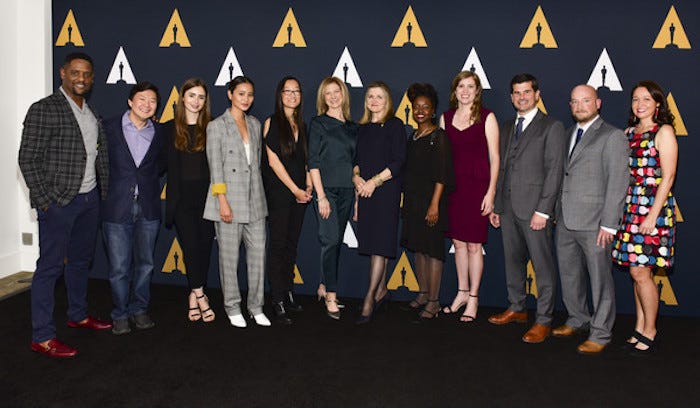
My interview with the 2018 Nicholl Fellowships in Screenwriting winner.
Joey Clarke Jr. wrote the original screenplay “Miles” which won a 2018 Nicholl Fellowship in Screenwriting. Recently, I had the opportunity to chat with Joey about his background, his award-winning script, the craft of screenwriting, and what winning the Nicholl has meant to him.
Today in Part 6, Joey provides advice for aspiring screenwriters about learning the craft and breaking into the business.
Scott: Do you think in terms of theme at all? If so, do the themes start to emerge in the process of the writing, or are you have it more upfront in your process?
Joey: When I set it out, when I start outlining and stuff, I have a theme in mind. Then, by the time I’m writing, I’ve completely forgotten what the theme was supposed to be. I’m just writing what the story is supposed to be about. If I’ve done the earlier work correctly, then the theme and the emotions that I wanted to get across are going to be in there, regardless if I’m conscious of it.
Scott: How about when you’re writing a scene? Do you have some specific goals in mind?
Joey: Yeah. Every scene, I’m aware of how it’s supposed to move forward, or what it’s doing to the story, which scenes are character building, etc.. I’m aware what exactly is supposed to set up. Then I just try to do it as quickly as possible in the scene.
I do have scenes that’ll run five and six pages sometimes, but I’d like to keep them one or two.
Scott: You finish a first draft, and now you got to go through the rewrite process. What’s that like?
Joey: Once I’m confident and I feel like it’s not wasting somebody else’s time, I’ll reach out for notes. If I agree with the notes, I’ll go address those parts of the script that need addressing. I don’t always have a set way to do it.
Sometimes, I will just go start on…I know I need to work on page 45. Sometimes, I’ll just go straight to that scene and start working on it. Some other times, if I’m trying to get working on page 45, I might start on page 40 to get back into it, and then do it. Sometimes I’ll start back on page one. I really don’t [laughs] have a set way of going about it.
Scott: Just like I say, there’s no right way to write, there’s also no right way to rewrite. Everybody’s got to figure it out, what works for them.
What’s your actual process like? You said you started to write every day when you moved to Colorado. Is that a thing you still do, or do you work in sporadic bursts? Do you go to coffee shops? Do you work in private? Do you listen to music? Does it have to be quiet? How do you approach the writing?
Joey: I write almost every day. I might miss a day here and there, but almost every day. Sometimes that means outlining or whatnot, rather than actual script work. Then I do go to coffee shops a lot. Sometimes, I write at home, but that’s usually when the kid and the wife are asleep because that makes it’s easier to write at home.
I almost always listen to music with headphones. I can’t stand quiet, so I almost always have music on. Also, a lot of times I don’t want any words in the music. I’ll just do stuff that’s all music without any lyrics.
Scott: Instrumental, yeah. What do you love most about writing?
Joey: I like that it takes me away in something else. I’ve had tons of jobs. When those real jobs or any job, you’re there every day doing the exact same, you fall into a routine. The act of writing is a routine, but mentally you get to leave your life’s routine and go into these different stories and imagine these other worlds.
While you’re writing it, it’s a world that is very real to you, but nobody else knows anything about it. Some of these characters are alive for me for a long time before anybody else has any idea they exist. Then I send it to somebody and they’re telling me that this line is out of character for the person that I created. I like that. It means I made this person so real for someone else, they can tell me what’s out of character for them. I don’t know. I like that you’re able to go glimpse into a different life, I guess.
Scott: Gives you a chance to live in multiple worlds as opposed to just one.
Joey: Yeah.
Scott: Finally, what advice can you offer to aspiring screenwriters and filmmakers about learning the craft and breaking into the business?
Joey: Learning the craft, like you always say, read scripts, watch movies. Then I also add on read books, even though it’s not the actual screenwriting craft to tell stories. Another thing, I’m pretty sure I read this on your site, but it’s John Green, “The Fault in Our Stars.” He said he allows himself to suck.
Scott: Yeah, I have that.
Joey: When I read that, it just opened this different world of writing to me. I just thought there was this mythical place where you get to where every single time you sit down you create gold. When I read that, I was like, I don’t have to put this pressure on myself every single time I write to be great.
Half the time, I’m going to write something and I’m going to delete the entire thing the next day or change the entire thing the next day. That was freeing to me. It just allowed me to keep writing and keep getting better.
And, you have to sacrifice. Everyone, or at least most people, have to have a day job while they pursue writing. Not to mention other responsibilities. Time is limited. No one is going to magically add five hours to the day or a third day to the weekend. So, if writing is important to you, in order to make a proper effort, you have to sacrifice other facets of life — be it going out with friends, or happy hours, or watching sports or English baking shows, or sleeping. Otherwise, it’s always just going to be something you wished you had time for or are planning to do at some point and all the sudden you’re five years older than you were when you had that new idea you were so excited about. And, eventually, you’re going to be dead. If you want to write, you have to do it before that. Writing careers usually don’t work out for dead people.
Scott: I’m glad that you’ve discovered the blog at some point. I guess it was several years ago. That’s been a little bit of inspiration for you.
Joey: Absolutely. No. I still go to the site all the time, read it a lot. I appreciate that you do it.
Scott: And I appreciate you taking the time for this conversation.
Joey: Likewise.
For Part 1 of the interview, go here.
Part 2, here.
Part 3, here.
Part 4, here.
Part 5, here.
Joey is repped by Fourward.
For my interviews with every Nicholl Fellowships in Screenwriting winners since 2012, go here.
For my interviews with 53 Black List writers, go here.