Interview (Part 6): Chris Parizo
My interview with 2023 Black List writer for his script Kazan.
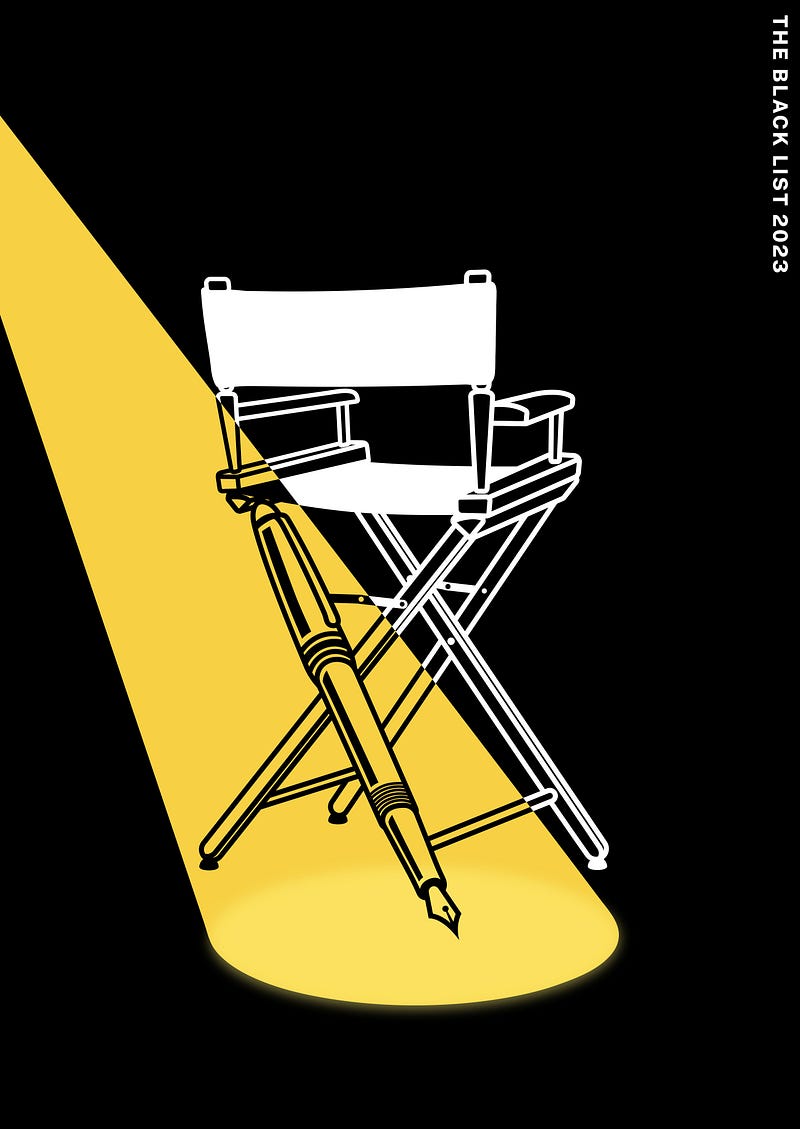
My interview with 2023 Black List writer for his script Kazan.
Chris Parizo has made the annual Black List two times: In 2020 for his script Viceland, then in 2023 with Kazan. Recently, I had the opportunity to chat with Chris about his creative background, the craft of screenwriting, and the challenges associated with writing a biopic like Kazan.
Today in Part 6 of a 6-part series to run each day this week, Chris offers his best piece of advice to aspiring screenwriters.
Scott: Let me ask you one last question. What advice do you have for aspiring screenwriters about learning the craft and trying to break into the business?
Chris: I always try to avoid the typical go to response of, “Well, read a lot of scripts and watch a lot of movies, and read scripts while watching movies.” Yep, that’s very important. However, my biggest hack is this.
Get an Excel file opened up, or Google Sheets, or whatever you’re using. Color code it, so the cells alternate colors. You got one column going down.
Sit back and watch a movie by yourself with your laptop, with the screen open, and type what you see and what you hear just as fast as you can. Don’t think. Just type what you see. Then when they switch to a new scene, press tab, go to the next cell, type that scene out.
What starts to happen is a pattern emerges, and things start to come out that you wouldn’t notice through reading the script, or even watching the movie passively, but to actually engage with the film.
An example of this is “The Social Network.” I have probably 100 of these in my Google folder of movies that I have taken for…I think it was Goldman who said every movie has 40 great scenes. I have 40 great scenes of a hundred different movies that basically just explain what’s happening.
In The Social Network, the concept of temperature is mentioned in so many scenes. It’s not a movie that makes you think “temperature” but it’s there. One scene is hot, next one is cold. There’s a scene where they’re outside, and he’s doing this, and he’s looking at Mark going, “Aren’t you cold?” He’s like, “No, I’m fine.” Would have never have noticed this motif unless I was literally sitting there typing out what I am witnessing. Then you go back and you look at it and you start to see it, you start to pull out those things.
Hooray for my literary criticism degree.
That’s how I got ideas like Miller looking at Kazan and seeing…
Scott: That smile.
Chris: His smile, his angry Anatolian Smile. He sees that in the reflection of the silver plate. He’s like, “Ah, there it is.” Then we see it again when it’s reflected in the gold of the Oscar award. Things like that, motif of reflections, are in Kazan. That’s because I’ve sat there and done this to a hundred movies.
You basically map out the entire movie, then in the next column, why? Why did that happen there? What was the character’s reasoning for asking that question?
Why did Eduardo turn to Mark and say, “Aren’t you cold”? Why was that such an important interjection to put into their really intense conversation at that exact moment? You start to realize they’re separating, they’re no longer…He’s literally warming up to Facebook and Eduardo’s cold to it.
Then in the next column, so you got like three columns, you start to create your own little beat sheet. You start to create your own little Joseph Campbell story. The mentor enters, the friendship shatters, you just write these little scene summaries, two or three words.
Then what you have is you have this incredible arsenal of essentially structures of how these things are broken down. When you are writing, you can say like, “Well, man, I just got done writing a very out of character, haunted house story, that I don’t know what’s going to happen with it.”
I went back and I was like, “Well, what did ‘Insidious’ do?” I can sit there and see how Insidious uses its beats to craft its story. Then I can like, “Well, does ‘Poltergeist’ does the same thing?” Like, “Go look at Poltergeist.” I’m like, “It does here, but it changes it down here.”
The wealth of knowledge that you gain about structure from just that process of breaking down movies, scene by scene, is more important to me than just reading the script. Reading the script gets the voice, but the structure comes from dissecting what you’re watching, actively engaging and actively questioning what you’re watching. That’s what I tell everybody. Break them all down.
Scott: That’s great advice. You’re not only learning that script by script, movie by movie at a conscious level, the more you do it, there is an osmosis thing going on where you’re starting to intuit this or get it at a subconscious level.
Chris: Yes. You do start to figure out the pattern of the biopic, even when they’re cradle to grave or when they’re snapshots. They all do have this flow. I hear a lot of writers, especially in the subreddit these days, the screenwriting subreddit. “The structure is bad. Don’t worry about structure.”
If you think about it from an architect’s point of view, the concept of a building, of a standing skyscraper, the structure of that building is built upon concepts that go back thousands of years. You can’t change them too much. It’s the solid base that keeps the building up. Storytellers have to do that same thing. They got to find that solid structure.
What screenwriters have to do is they have to decorate that structure to make it look completely, totally different than anything else they’ve ever seen before, so that when someone drives by it, they see a work of art versus the girders — the structure.
That’s what screenwriters do. That’s the importance of structure: how do you take what a biopic does and play with time. Move forward a decade seamlessly, but yet you’re still doing exactly what the Elvis did as far as structure, and you’re still doing exactly what the biopic Tucker did. You’re still doing exactly what all these other biopic films that come out did — followed the same structure. It’s decorated in a different way.
Sometimes they’re identical, and you’re just like, “Yeah, OK, so every Steven Seagal movie does the same exact thing.” Every now and then you stumble on something like Social Network, where you’re like, “Wow. The moving through time backwards and forwards, it’s ‘Amadeus.’” Then finally you’re like, “IT IS AMADEUS!” That’s magical for me to discover that.
That gets rid of the mystery of structure for me. It’s there and it’s strong, use it. Just make it beautiful. Just make that structure beautiful. If you can’t do that, you shouldn’t be a screenwriter. You should be doing something else.
Scott: Like William Goldman said: “Screenplays are structure.”
Chris: Absolutely. A hundred percent. The artistry, the talent of the screenwriter is to turn it into an art form, to turn it into something that makes people go like, “Oh, that’s new.” It’s like, “No, it’s not. No, it’s not. You just made it look good.”
For Part 1 of the interview series, go here.
Part 2, go here.
Part 3, go here.
Part 4, go here.
Part 5, go here.
Chris is repped by Bellevue Productions.
chrisparizo.com
https://www.imdb.com/name/nm8446483/
www.slamdance.com
For my interviews with dozens of other Black List writers, go here.