Interview (Part 6): Charmaine Colina
My interview with the 2024 Nicholl Fellowships in Screenwriting winner.
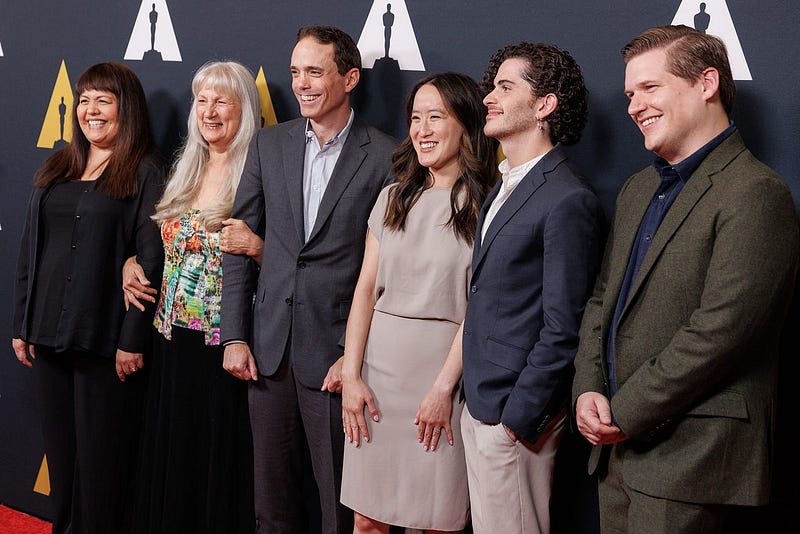
My interview with the 2024 Nicholl Fellowships in Screenwriting winner.
Charmaine Colina wrote the original screenplay “Gunslinger Bride” which won a 2024 Nicholl Fellowship in Screenwriting. Recently, I had the opportunity to chat with Charmaine about her creative background, her award-winning script, the craft of screenwriting, and what winning the Nicholl has meant to her.
Today in the final installment of this 6-part series, Charmaine answers some craft questions.
Scott: Again, congratulations on that wonderful experience. I hope you can parlay that into jumping forward in your career. I’d like to ask a few craft questions. People like to see how other writers do stuff. Here’s a pretty obvious one that I like to ask that often a little to stump people, how do you come up with story ideas?
Charmaine: That’s interesting because it’s almost like you can’t sit down and go, I need to come up with some story ideas. I feel like the ideas find you. That’s sort of what happened with Gunslinger Bride and with my other stories too.
But I always start with a character. I tried it the other way where I thought, ooh, wouldn’t this be cool idea for a story? And it would be all plot, and then I’d try writing that story and it would die at the end of act one because I didn’t bond with the main character.
I’ve found that my most successful screenplays, like Gunslinger Bride, start with a character. I bonded with Lou because I spent some serious time thinking about who she is, what had happened to her, what got her to this point, what are her greatest strengths, what are her weaknesses, what are her triggers, all that stuff. Then I was ready to put her into the story.
Scott: Do you find that by doing that work, you’re also developing a relationship or connection, an emotional connection with that character, which is helping to sustain and feed your writing process?
Charmaine: Yes, I think the stronger the connection you have with your protagonist, the more you know what they will do in a certain situation, and it doesn’t feel forced.
Like in the story, when someone’s asking them a question or they have a choice, if you really know who that character is and what they’ve gone through in their life because you’ve had to build that in your mind, it is so obvious. Like, “Oh, this is what she would definitely do,” because of X, Y, and Z that happened when she was a kid.
When I can see parts of myself in a character, that’s when I feel like I’ve created a successful character. When the story has been sitting for a while and I feel the characters calling to me, “Open up Final Draft, let’s go. What am I going to do next? Let’s get going,” When I feel like my characters are urging me to write the next scene, that’s then I know the story is gelling. [laughs]
Scott: Yeah, that’s that weird thing that we have as writers where we either believe or they do exist these characters somewhere in this parallel universe. When they come alive like that, that’s why I wrote this book on character‑driven storytelling was about that. Just the more you get to know them, then they drive the process.
Charmaine: Yes, and I’ve tried it the other way around and I have felt the difference. I have numerous stories where it just stopped in act one because I didn’t really understand the characters’ motivations. I just had a cool situation that I thought would make a good story.
Scott: Yep. OK. I hear that. What about your prep writing process? When you’re breaking a story, what do you do?
Charmaine: I wasn’t a big outliner when I first started writing screenplays and I feel twofold about outlining. It’s sort of like you can do your outline with your beats, but also let it be malleable. If I focus too much on hitting an outlined beat, it might not feel organic to what my character would actually do.
I try to be open. But I need my structure too. I need to know where the story starts and where it’s going to end. Then, of course, that middle act two, where all scripts go to die, [laughs] that’s the hardest part.
But if you’ve got a general sense of the big turning points, like those tent pole moments, then the things that happen in between, as long as it makes sense, how you get from one to the next, I feel like that’s a good roadmap. But I’m OK going off route to see where that takes me too. If it doesn’t work out, it’s a “save as”.
Scott: Let’s talk about dialogue because in this script, it’s set in the 1870s or 1880s by the time we get to when Lou is an adult, you’re dealing with jargon and slang of that era. Did you do some research on this front in terms of informing your approach of dialogue?
Charmaine: Yes, I did some research because I wanted it to feel like it could be of that time period, but I also wanted the dialogue to be relatable so we could bond with the characters because sometimes they sound like us. They might use words that sound kind of old‑timey, but at the same time, the situation that they’re in, maybe we can all relate to that.
Also, I didn’t know that much about horses, wagons, and farming equipment of that time. The amount of research that I had to do about firearms and harnesses and coaches and vehicles, you go down a rabbit hole in search of authenticity.
I learned a lot about horses and the transportation at the time. Yeah, I wanted the story to have a period-specific feel, but yet we can relate to the characters in a way that feels like they’re relevant to today. It was tricky. It was.
I do this thing one of my mentors taught me about dialogue. If you want to make characters sound distinct, read a few pages of dialogue without the characters’ names visible. If you can tell which character is which just by the words they’re using or the length of their sentences, that’s good. Like are they an entire paragraph response kind of person? Or are they a one-word response person? Or maybe they deflect by changing the subject? Or maybe it’s a nod or a gesture. For the character of Detective Thorne, the Pinkerton agent, I made it a point to have no contractions in his dialogue at all. I feel this gave him a distinct sound and feel.
Scott: Do you do that thing where you read the dialogue out loud, like for characters?
Charmaine: With my writing group, we do that on Zoom and we’ll assign characters. Of course, we’re not trained actors or anything, but you do get a better sense of a scene, does the joke land, or if the scene is too long.
I’ve also learned, and this is another one of the things that my mentors have taught me, is go in late, get out early. It’s like, you’ve got this scene. Can we go in a little bit later? Like maybe those first two things of dialogue aren’t necessary and the last bit, maybe you can leave a little bit earlier, and then you’ll find it actually works better.
Scott: Yeah, I think audiences nowadays, particularly younger people who’ve seen, read or heard exponentially more stories than my generation because there’s TikTok videos and YouTube videos and text conversations are all stories. They don’t need as much exposition. They just want to go. They’re very savvy. They pick up on stuff. So I think that’s good advice.
Charmaine: Another thing I do for scene transitions, whatever question is posited and the end of the scene is visually answered at the beginning of the next scene, and there doesn’t even have to be any dialogue. The question is answered by what we saw.
Scott: What about this writers group?
Charmaine: We’ve been off and on for about ten years, different people have come in and out; this writers group started in 2015. It was started by my friend and mentor, Philip Eisner. He wrote Event Horizon. Even with different writers coming in and out of the group over the years, there are still three of us who are part of the original six or seven. We used to meet in person on the weekends, but when COVID hit, we went on zoom. We’re still primarily on zoom because it’s easier for everyone’s schedules and some writers are located in other states now.
Being part of a writers group has been instrumental in my writing journey. I feel like I have grown so much as a writer by being part of a group that understands the highs and lows, the challenges, the frustrations, all of the stuff of writing. It helps to have people to bounce ideas off of too.
You can try to write in a vacuum, but I think you’ll eventually figure out that you need people. It’s sort of like the older I get, the more I can commiserate with the “Grinch.” It’s like he just wanted to live in a cave with his dog away from people. Far away from the noisy Whos in Whoville. But then he realized he needed the companionship and a sense of belonging and community. At the end, the Grinch’s heart grew three sizes.
You need a community of writers. Based on my personal experience, that would be my advice to beginning writers. Find a cohort of people who are writing. It doesn’t have to be all the same genre. Like in my writing group, we write all kinds of stories. Comedy, horror, rom-com, drama, sci-fi thriller. It’s all writing. Dialogue, scene description, pacing, character development. I know that I would not be the writer I am today without the group that I’ve been with for, yeah, it’s going on ten years. I can’t [laughs] believe it, a decade.
Scott: Speaking of 10 years, where do you see yourself in 10 years as a creative?
Charmaine: Wow. As a creative, well, I want…my movies are made, they’re out there. My dream is to take my mom to the movies but I don’t tell her what we’re going to go see. We’re in the theater, eating our popcorn, the house lights dim and the opening credits roll, and she sees “written by Charmaine Colina” on the big screen. I know what my mother will say, “Oh, they have the same name as you!”
[laughter]
Charmaine: But then there will be that moment when it clicks, and she realizes that her daughter wrote the movie we’re about to watch. That’s my dream. To share that special moment with her. That’s the short-term goal. Hopefully in the next couple of years I can make it happen.
But my long‑term goal, after establishing myself as a successful working screenwriter, I will find like‑minded individuals who share my passion for bringing amazing stories to life from underrepresented voices. So, in addition to writing, I’d like to produce.
Scott: One last question, do you have a final one piece of advice?
Charmaine: Don’t give up. Don’t give up five minutes before the miracle. You can apply that in so many ways, like before the breakthrough or before the dialogue finally works. Because there’s so many times you just want to give up but push through it. Don’t give up. Just don’t. It took me ten years of writing until I got my big break. Keep your head up and keep going. Be relentless.
For Part 1, go here.
Part 2, here.
Part 3, here.
Part 4, here.
Part 5, here.
For my interviews with every Nicholl Fellowships in Screenwriting winner since 2012, go here.