Interview (Part 6): Alysha Chan and David Zarif
My interview with the 2024 Nicholl Fellowships in Screenwriting winners.
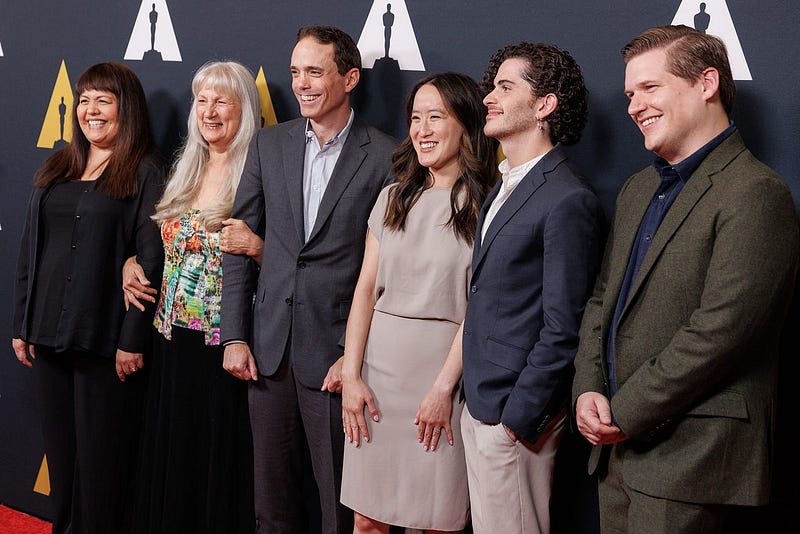
My interview with the 2024 Nicholl Fellowships in Screenwriting winners.
Alysha Chan and David Zarif wrote the original screenplay “Miss Chinatown” which won a 2024 Nicholl Fellowship in Screenwriting. Recently, I had the opportunity to chat with the couple about their creative background, their award-winning script, the craft of screenwriting, and what winning the Nicholl has meant to them.
Today in the final installment of this 6-part series, Alysha and David answer some questions about their approach to the craft of screenwriting.
Scott: As I mentioned several times, I’m impressed how you handle characters. Are there any specific exercises you do to generate or to develop characters?
David: I don’t know. I’ve always been horrible at character development.
Alysha: It must be me then.
[laughter]
Alysha: I try to make our characters feel authentic and lived in. It didn’t hurt that we drew a lot of inspiration from real people in our lives.
Scott: Well, it’s hugely important. Along with entertainment, I mean, you want the audience to come away feeling something, having emotions, and so the best way to do that is through characters.
I do want to ask, there are these little bits of business in your script I really appreciate. Like the father, Edwin. Early on, he’s looking at a news article about a new product called the iPad. He critiques it: “That seems just like a bigger phone.” Later, he’s looking at another news article on the Apple Watch. He says, “That’s like a smaller iPad.” His assessments on new technology are always off. He’s like the anti-Steve Jobs.
But then much later on, he ends up actually becoming pretty good at running the camera, taking videos of Jackie and Jade. I mean, those are like little grace notes which speak to the specificity of the characters and it’s just wonderful. Did you plan that or did it just happen working with the characters?
David: I think it started as a one-off joke. And then we were like, “Oh, this is interesting. How can we expand on this, make it part of who he is?”
Scott: You know what? It’s like you think, “Oh, he’s just this sort of fumbling guy that his instincts are always wrong,” and then you have that dance thing and he’s got this wisdom to him. It’s just, I don’t know. That character stuff is just the stuff for me that makes me love movies.
David: Thank you.
Scott: OK, let me ask you about this. Alysha, you work full-time as an engineer. How do you find time to write with David?
Alysha: We write for about an hour and a half every weekday after I get home from work. On weekends, we dedicate most of the day to writing. It probably takes us longer than most to write since we can’t commit as much time, but that’s our process at the moment.
Scott: Now, if this becomes a thing and hopefully it will, where it’s like you’re, even pitching stuff, landing assignments. What do you imagine that looking like? Are you still doing the engineering thing, or do you think you’re both fully into the screenwriting thing?
Alysha: This industry is so fickle, and nothing is guaranteed. You could have a flash of success then radio silence for years. So I’m going to keep my day job for as long as possible until something life-changing happens.
David: Plus, she has good benefits. I’m on her health insurance. So unless something crazy happens — or we decide to bubble wrap ourselves for the rest of our lives — we’ll continue writing like this.
Alysha: I’ll just have to suffer. [laughter]
Scott: Let’s wrap this up with a final question: Is there a single piece of advice you could convey to people aspiring to write a script which could win a Nicholl fellowship?
David: When it comes to feedback, try not to take it personally. I used to come up with elaborate excuses for why someone didn’t like something I wrote — telling myself they were just bitter and jealous. But the reality is simpler: they didn’t like it because it just wasn’t quite ready yet. Notes are intended to help, not attack. Unless you’re getting notes from this one guy, Todd — he actually is bitter and jealous.
Scott: Anything to add there, Alysha?
Alysha: If you have any desire to write, go for it. Don’t let any insecurities or self-doubt hold you back. The beauty of screenwriting is that anyone can do it — you don’t need formal training or a degree. I’m living proof of that. I started writing on a whim, and here we are as Nicholl Fellows. As the saying goes, you miss 100% of the shots you don’t take… so take the shot.
For Part 1, go here.
Part 2, here.
Part 3, here.
Part 4, here.
Part 5, here.
For my interviews with every Nicholl Fellowships in Screenwriting winner since 2012, go here.