Interview (Part 6): Aaron Chung
My interview with the 2019 Nicholl Fellowships in Screenwriting winner.
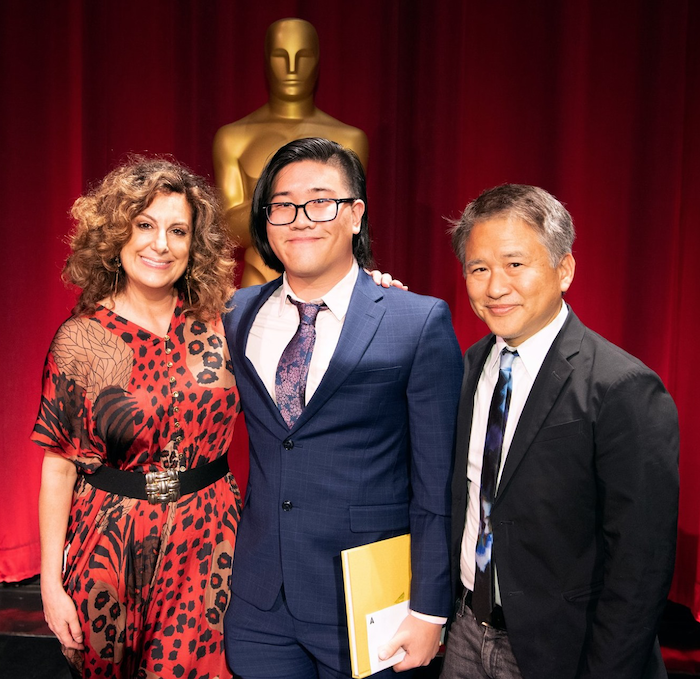
My interview with the 2019 Nicholl Fellowships in Screenwriting winner.
Aaron Chung wrote the original screenplay “Princess Vietnam” which won a 2019 Nicholl Fellowship in Screenwriting. Recently, I had the opportunity to chat with Aaron about his background as a screenwriter, his award-winning script, the craft of screenwriting, and what winning the Nicholl Award has meant to him.
Today in Part 6 of a 6 part series to run each day through today, Aaron answers some craft questions, then gives some suggestions on what a writer can do to try to break into the business.
Scott: What do you think about when you’re writing a scene? Do you actually consciously say, “Oh, beginning, middle, end. What’s the conflict?” How do you approach scene writing?
Aaron: For scenes, as I said, there was always that beginning, middle, end. There is always that idea. I have to approach the scene of what each character wants. Characters can’t start a conversation out of the blue. They always have an end goal in mind, right? That’s how people talk. We have this other thought in the back of our heads as somebody else is talking.
For me, scenes always need to have a conflict. They always need to have something happening that progresses either a situation or introduces a new one. If two characters with different ideologies are in the same car together and are driving towards a destination, how will they fill that silence?
How will they try to get to know each other? Are they going to do it in a way that makes them instant best friends? Of course not. They’re different. They’re too different for that. How are they going to find common ground is the big end goal in mind.
Scott: When Kiwi Smith introduced you at the Nicholl awards ceremony, a couple of times, she said that your script felt so poetic. In reading your scene description, I get what she was talking about. There’s a minimalism to it.
One of the best mantras I heard in that is “Minimum words, maximum impact.” Yet, you do have a very visual and sense of the present, the moment in your writing. Is that just something that you worked on, or is that you feel more like an innate thing?
Aaron: I don’t know about worked on. I feel like it’s more innate. I know it sounds…I know it’s useless to say, but because I do want to help aspiring writers as much as I can when it comes to developing voice.
That’s really all there is. It’s developing your voice and my voice across that script. If people found it to be poetic, then great, I’m glad they did. I don’t. I thought it was very, like you said, I try to find ways to be minimal but effective.
That’s what good screenwriting is, it’s always minimal and always effective. Today, people’s patience levels have gone down to the point where they can’t read blocky paragraphs on a page anymore.
Scott: That’s completely true. I say to my students, “Let’s read this script from the ‘50s.”
Aaron: Oh yeah, those are novels.
Scott: It’s 25 lines of scene description with all these camera shots. Nowadays it’s like one line, two lines, one line.
Aaron: Have you showed your students the Taxi Driver script?
Scott: Oh yeah, yeah.
Aaron: Character description alone for Travis Bickle is astounding. Informative, but astounding.
Scott: You said you wanted to provide some advice to aspiring screenwriters. That’s something you’re going to be hit‑up on, I guarantee you as you move forward in your career. What advice can you give?
If you had to give one or two things that contributed to becoming who you are as a writer, maybe setting aside the specifics of going to an MFA program or whatnot, but what advice would you offer to aspiring screenwriters?
Aaron: I’ll give them two pieces of advice, just somewhat interconnected. First one should be a common one. I think should fall into any corners of life and career paths, and it’s to be patient. Be patient with yourself, with your career, and your writing.
I think reading a lot of amateur scripts in my life, as part of my job, I realize that people send out rough drafts too much. Usually, I can tell it’s a rough draft because of how many grammatical errors there are, or how some story points don’t make sense.
It’s very easy to tell when the script is a first draft. You should not be sending out your first draft. You should be sending out your second, third, fourth ones, and the ones that are better. I guess there’s a lot of impatience for success. I want to say to aspiring writers, “Be patient. Keep working,” and you’ll know when it’s ready.
My other piece of advice is to find something that’s important to you, as much as we all want to write the next big franchise or blockbuster or next big horror film. I respect those goals. I admire those goals. I, too, want to write my next big action movie. I also want to work for Marvel one day.
You also have to find something that speaks to you, that says something. Once you find that, once it becomes important to you, you will write it till the very end. Your voice will spark out. That’s how you develop your voice, it’s finding that important story.
Aaron is represented by MGMT.
For Part 1, go here.
For Part 2, here.
For Part 3, here.
For Part 4, here.
For Part 5, here.
For my interviews with every Nicholl Fellowships in Screenwriting winner since 2012, go here.
For my interviews with 53 Black List writers, go here.