Interview (Part 5): Wenonah Wilms
My interview with the 2018 Nicholl Fellowships in Screenwriting winner.
My interview with the 2018 Nicholl Fellowships in Screenwriting winner.
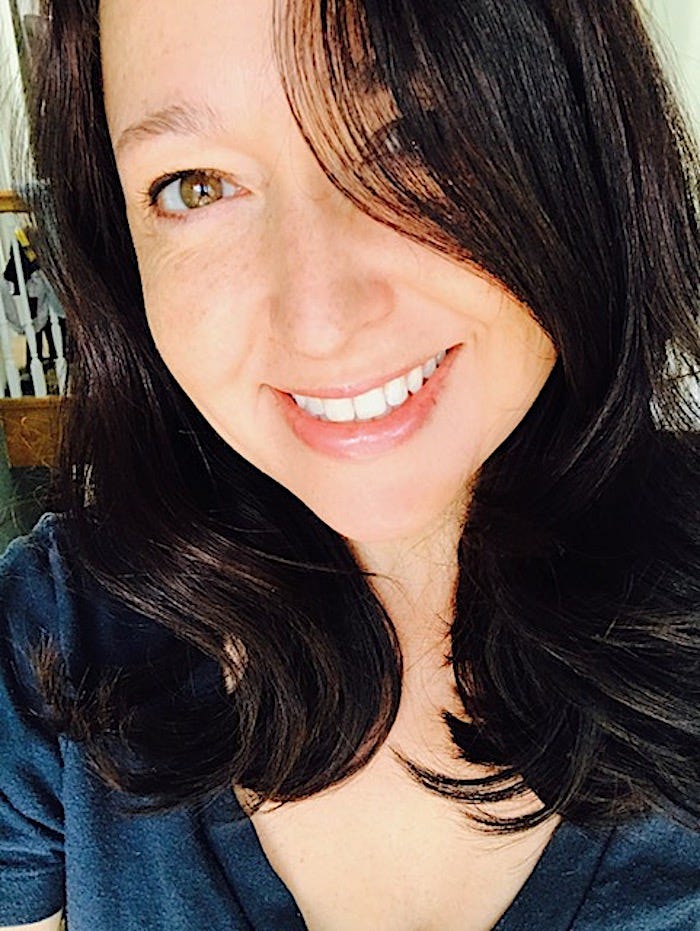
Wenonah Wilms wrote the original screenplay “Horsehead Girls” which won a 2018 Nicholl Fellowship in Screenwriting. Recently, I had the opportunity to chat with Wenonah about her background, her award-winning script, the craft of screenwriting, and what winning the Nicholl has meant to her.
Today in Part 5 of a 6 part series to run each day through Saturday, Wenonah shares what the experience has been after winning the Nicholl Award and answers some writing craft questions.
Scott: Your script ends with this superimposed over credits: “American Indian women suffer sexual violence and human trafficking at the highest rate per capita in the country. It’s time to fight back.”
One of the biggest challenges with this script, again to spotlight in a way, was to write a story with a strong message but not come across as preachy, where the message would outweigh the story. How challenging was it for you to find that balance between story and message in writing Horsehead Girls?
Wenonah: I feel that was really important, too. Many of the documentaries that you see have Native Americans in them and views that are very politicized and that’s important and needed in the film and the Native community. I love documentaries, but that’s not what I do.
I feel like there’s these are two completely opposing views of the modern Native American culture in media. We’re either very spiritual and connected to our environment and each other or we’re victimized, forgotten, abused and lost. I think there’s truth in all of it but in the end we’re all just people living our lives the best way we know how. There’s a balance between culture and people.
Everyone wants to tell a story from their viewpoint. I also have viewpoints as well. To me, like I was saying earlier, being a writer is the most important thing to me. To be able to tell stories with strong characters I relate to is number one. I’m not trying to romanticize or politicize anything. I just want you to feel something while I tell a story. One story. One slice of life, a moment in time. it’s up to you what you feel after that.
It’s a Trojan horse. You can slip your messages in that way, and people will go into it and come out of it with whatever their view is on the sex trafficking or Native American women. I might change those views, I might not but a strong story that makes an emotional impact or makes you questions why you think a certain way is more important to me than trying to make you think like me.
I like people to come up with their own viewpoints. Maybe things change, maybe not. That’s OK, because this is my story. You’re welcome to write your own.
Scott: That’s why I thought it was so great, because Keya is such a specific character, and she is deeply flawed. She’s not just an angel in white. She’s got demons of her own. The nuance in her character helps create more nuance in terms of the overall messaging. You did a good job of finding that balance.
Wenonah: Thank you.
Scott: Let’s jump to the “I’d like to thank the Academy” moment, your Nicholl experience.
Wenonah: Surreal is the number one thing. It’s so funny. You have weeklong events and activities put on by the Nicholl, which is amazing. We have panels, lunches, dinners, happy hours, and all the kinds of things to ease you into who you are and what you’ve done.
Before you get out to LA, they send you this document from a lot of the past winners, writing out what you can expect for your week at the Nicholl, a little anecdotal, “Congratulations. You’re one of us, and here’s what you can expect.”
All of them say, “Just enjoy it. Enjoy and have fun.” [laughs] That whole week, I didn’t enjoy. I was so nervous, scared, and taking in so much. Now, in retrospect, of course, I would look the next years’ winners and say, “Enjoy your week.”
It was very, very scary and surreal for me probably because I’ve been building this up in my head for so, so long. 16 years of entering this competition. I’ve always just told myself, “I’m not going to stop. I’m just going to go and go until I’m dead or whatever.”
To win it is just incredible. It’s incredibly validating. It’s humbling. It’s exciting. I feel like I’ve been telling people that it’s going to make your career. If you win the Nicholl. Your career is set.
Now, I feel like I have to prove that. I’m hustling. I’m taking a lot of meetings and I’m trying to get work. I’m just trying to make the most of it now.
Scott: Did you get representation of this?
Wenonah: I did. I’m rep’d by UTA.
Scott: UTA. Peter Benedek, who’s their cofounding partner, was my first agent.
Wenonah: They’re great, all of them.
Scott: What’s the status of “Horsehead Girls”?
Wenonah: We’re still looking. I know that my agents think that it’s a good script and an important script. Because it would be my first sale, they don’t like me running into this all super excited. They’re having me take it slow and easy, which I appreciate.
Find the right match, which is somewhat challenging, given the cultural relevance in male versus female and Native versus nonNative. Who is the right match to take this on? We’re still looking.
Scott: Robin Swicord said in her comments, “The right producer.” That’s absolutely critical. You got to find someone who gets the materials and is passionate about it. Maybe not necessarily as you are but passionate about it. That would be my goal.
Congratulations again. Let’s jump into some craft questions here. This is funny. It seems like such a basic question but it oftentimes stops people. How do you come up with story ideas?
Wenonah: For me, it’s character first. I have a person in my head and I just go through the basics like, “What are their flaws. What are their goals? Where do they live? Male or female? How old are they?” I start with a person and then start throwing problems at them. It’s always that way. I’m a character writer for sure.
Scott: How do you go about in doing your prep writing? What are the processes brainstorming, character develop, plotting, and all that?
Wenonah: I’ll usually open a new file on my phone in the notes. I don’t ever start on my computer. Once in a while, I do it on paper but I just start throwing down ideas for either a scene or a character, story questions, a lot of questions what if, what if, what if.
Then I let it sit in my head and I watch the movie in my head over and over. I’ll add to it, take stuff out. Then I’ll just sit down and write. I don’t outline. I open up my final draft and I write. It takes about, I don’t know, four weeks to eight weeks.
Scott: The whole process or once you go to pages?
Wenonah: That’s it. That’s all. It’s the whole thing. [laughs] I just think about it and then I write it. It’s very simple sounding. Of course, obviously, there’s a million things that go through my head.
I get that thousand yards stare when you try and have a conversation with me and I have a story in my head. It takes up all of my thoughts.
Scott: How old are your kids now? The boys?
Wenonah: 18, 21, and 23.
Scott: That I was going to say. If you had the little ones around, then maybe the thousand yards stare thing may not work so well.
Wenonah: [laughs] They’re used to it at this point. You’ll ask me a question and I’ll look at you for a long time. I’ll be like, “What?” They’re like, “Oh, she’s thinking of a story. Let’s not bother Mom.”
Scott: Somebody had a quote like that. It was saying one of the most challenging things as a writer is to convince people that when you’re staring out the window, you’re actually working.
Wenonah: [laughs] Exactly.
Scott: Dialogue was an impressive in your script. How do you go about finding your characters’ voices?
Wenonah: I listen. I listen a lot. For this one specifically, you have to spend time around the people. It’s a different place. It’s a different community. We have our ways of speaking.
It’s funny. One of the first people that read this is one of my friends. He’s a police officer on the reservation and he said, “You know, it’s like you’ve been living here your whole life. I don’t know how you do it.”
I said, “I grab a bar stool and I hang out for a couple of hours and I talk to people.” Dialogue is definitely the hardest part. To me, it came in last as far as my craft. Learning the format, learning the verbs, tenses, all that was not easy, but it came fairly quickly for me. It was the dialogue that was hard.
The last edit I did on my very first script I stripped out every single line of dialogue and just started all over. It’s tough. I guess one of the things I talk about to new writers is “Scooby Doo” is my goto for dialogue.
I say, “You have to think about, if he says, ‘Zoinks,’ or ‘My glasses,’ you can attribute one word or one line of dialogue to each character, you know exactly who they are. That’s up to you as a writer to develop your character so strongly that you can give them those quirks and those one-liners and you know who they are.”
Tomorrow in Part 6, Wenonah talks about what the Nicholl experience has meant to her and offers advice to aspiring screenwriters.
For Part 1 of the interview, go here.
Part 2, here.
Part 3, here.
Part 4, here.
You can learn more about Wenonah at her website here.
Wenonah is repped by UTA.
For my interviews with every Nicholl Fellowships in Screenwriting winner since 2012, go here.
For my interviews with 53 Black List writers, go here.