Interview (Part 5): Walker McKnight
My interview with the 2019 Nicholl Fellowships in Screenwriting winner.
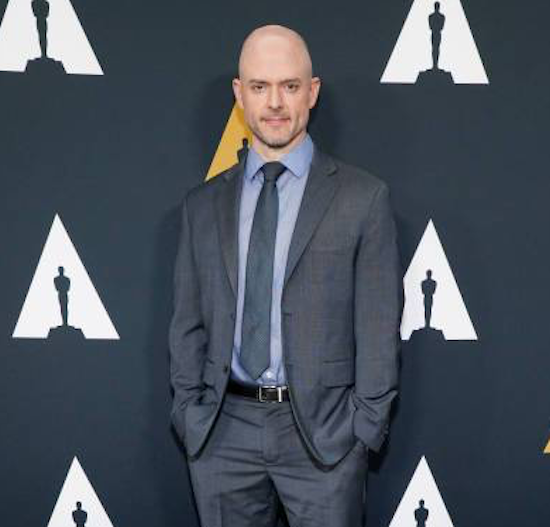
My interview with the 2019 Nicholl Fellowships in Screenwriting winner.
Walker McKnight wrote the original screenplay “Street Rat Allie Punches Her Ticket” which won a 2019 Nicholl Fellowship in Screenwriting. Recently, I had the opportunity to chat with Walker about his background, his award-winning script, the craft of screenwriting, and what winning the Nicholl has meant to him.
Today in Part 5 of a 6 part series to run each day through Saturday, Walker shares his approach to story prep and what he tries to accomplish when writing scenes.
Oh, here’s everything we’ve lost.” Everyone is dirt‑caked and struggling. Everything’s misery.
I tried to take this into a post‑post‑post‑apocalyptic place. It’s so far beyond a collapse that the characters barely even care about what was lost or what came before. It’s just become a series of trivia question for them. This is just the reality.
The place might be a nightmare, but they’re still kids and they’re going to find humor in things. They’re used to seeing giant, scary, horrifying monsters loom over them. Sometimes it will be funny to them, or they will naturally crack wise. Fun dystopia! I don’t know if I succeeded in making that, but I tried.
Scott: What’s the status of the script?
Walker: Nothing’s happened yet, but I have a management team, so that’s one lovely thing that the…
Scott: Who’s that?
Walker: The company is Fourward. It’s Jon Levin and…
Scott: Jon Levin. He was my agent for many years…
Walker: No…
Scott: Yeah, at CAA.
Walker: Yeah, it’s him and another manager named Sean Woods. They’ve been super‑cool, and Jon’s been really fun. They’ve been getting it around town and getting reads from people. We’re still in that process.
Scott: Jon’s really smart.
Walker: Oh God, yeah. He knows everybody. Even in just the super‑brief time I was in LA doing the Nicholl Fellowship week stuff, they both got me into four really nice generals. So yeah, they’ve been great.
Scott: Let’s jump to a few craft questions here while we have a little bit of time. Let’s talk about your prep‑writing process. What is that like?
Are you just noodling around in a notebook, or do you have a specific set of processes that you do when you’re developing a story?
Walker: I have a couple of digital means and a little pocket notebook that I write down story ideas in as they occur to me. Just throwing in random scene or story nuggets.
But once a specific idea has started to get its hooks into me, I’ll decide to explore it in earnest and break out a new notebook to fill that up. And I stay with pen and paper for quite a while before I go to actual pages on a computer.
I force myself to stay in that pen-and-paper concept development phase as long as I can. It’s a “don’t let the cement dry” kind of thing. I’m trying to keep it fluid so I can explore every element of the idea. So I’m jotting down stuff about the world and characters and why I like the idea. Asking what it means to me, why should I care, why is this story happening now — all those really big questions. At a certain point, I start to toy with structure options. I’ve sort of intuited most of them by then, but I force myself to get literal with questions like “What’s that inciting incident? What’s that central character question? What’s the first act? What’s the midpoint?”
I’ll play with that a while, and if I get to a point I’m happy with, I’ll start outlining. A really detailed outline. I don’t go to pages until I have every scene described and in order. Of course, it will change over time, but I really force myself to avoid page one before that process is finished. I may write dialogue and scene snippets by hand in the notebook, but there is no actual digital screenplay file created until the outline is done.
Then I’m on the first draft, however long it takes me. Sometimes that depends on what’s going on with the day job, but I’m usually relatively quick with the first draft.
I’ll revise that a couple of times. Then I’ll get that out to beta readers, usually four or five people. I’ll get notes back, rewrite it again, maybe revise that again, and then get that to maybe just two or three people.
You have to be strategic, because it’s hard to ask people to read stuff more than once. Sometimes I hold people in reserve and I’m like, “Well, that person’s super‑sharp with their notes, so I’m going to wait until I’ve got two or three drafts under my belt. Then I’m going to go to that person and they’re really going to give it to me.”
Then it’s another rewrite and polishing. I think like most writers, there’s never a point where I think, “OK, it’s done.” It’s more like “the competition deadline’s coming up, and I’ve gotten to the point where I’m just fiddling with little individual lines of dialogue, so it’s time to let it go.”
Scott: What about writing a scene ‑‑ structuring a scene, laying it out, writing a scene? What are your goals?
Walker: The first goal is that I find it fun and inspiring and exciting. Hopefully something in every scene I can get excited about that. But beyond that, it’s a lot of basic Screenwriting 101 stuff. Conflict in every scene, no purely exposition scenes, goal and opposition to goal. If my protagonist is not in a scene, there really needs to be a very good reason.
I’m sure that sounds very basic, but I do think about these things.
My first draft is very…I’m caught up in the story and I’m having fun and I’m discovering these places and living these moments with the characters for the first time. Even though there’s an outline, I try to make it about just discovery and fun. I’ve been imagining the movie, and I try to live it in the moment.
In later passes, I can start to judge each individual scene and get serious about whether or not it’s justified or the way it’s structured. But that first draft, it’s just the magic (hopefully).
Scott: That’s interesting, because I always recommend that with the students and writer clients and whatnot, say, “OK, yeah. It’s great to work out the outline scene by scene, and I’m a huge proponent of that ‑‑ doesn’t work for everybody, but at least just give it a try. But when you actually sit down to write the scene, go from more of a feeling place, like Ray Bradbury says: “When you sit down to write, don’t think ‑‑ feel.” Have fun with that first draft. Really allow yourself to enter into the lives of the characters and be with them and just see where that takes you. That way, you get that balance between left and right brain.
Walker: Yeah. Unless you’re lucky enough to actually have your film made, I think you’ll never get closer to actually watching your movie than that first draft. That’s always the most fun part for me.
I don’t worry about length on the first draft. It’s not rare for me to end up with a 160‑page first draft. I don’t worry about it, because I’m letting whatever I want to happen (without straying dramatically from my outline).
Tomorrow in Part 6, Walker shares his thoughts on what the Nicholl experience has meant to him and offers advice to aspiring screenwriters.
For Part 1 of the interview, go here.
Part 2, here.
Part 3, here.
Part 4, here.
For my interviews with every Nicholl Fellowships in Screenwriting winner since 2012, go here.
For my interviews with 53 Black List writers, go here.