Interview (Part 5): Tim Ware-Hill
My interview with the 2022 Nicholl Fellowships in Screenwriting winner.
My interview with the 2022 Nicholl Fellowships in Screenwriting winner.
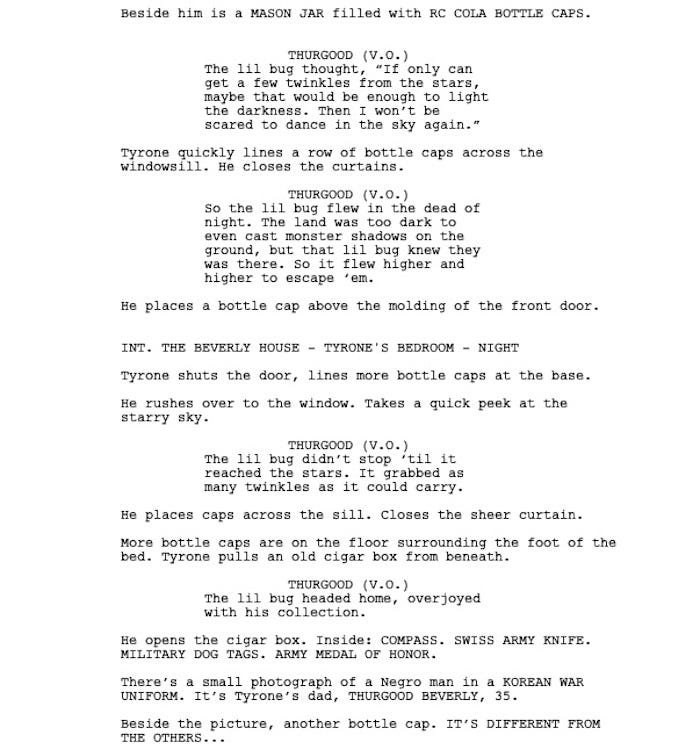
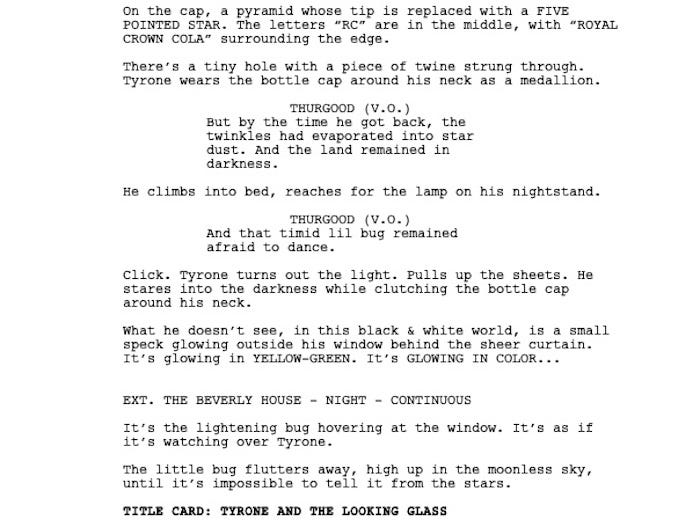
Tim Ware-Hill wrote the original screenplay “Tyrone and The Looking Glass” which won a 2022 Nicholl Fellowship in Screenwriting. I had the opportunity to chat with Tim about his creative background, his award-winning script, the craft of screenwriting, and what winning the Nicholl Award has meant to him.
Today in Part 5 of a 6-part series to run each day through Saturday, Tim reveals what winning the Nicholl has meant to him.
Scott: In the script, that’s the dramatic Act One end, is the bombing. Then this magical journey becomes not only about slaying the dragon, but also, this ticking clock. He’s got X amount of days in order to try and save Carol.
Tim: Save Carol.
Scott: Of course, there’s the fire, which brings you right back to the dragon stuff. There’s another character, who I imagine maybe your grandmother may have been a little bit of inspiration, Jemima.
This is someone who knows her mind, knows who she is. She’s making that point to Tyrone, “You got to know yourself.” Maybe you could talk a little bit about Jemima’s character.
Tim: Jemima is based on Aunt Jemima, or as we say in the South, Aunt Jemima, [laughs] the woman from the pancake box and the syrup bottle that we’ve all grown up with. I didn’t want to write her like the stereotypical nanny that many perceive her to be because she was a real woman.
The woman who portrayed the figure of Jemima was a real woman in the real world. First, this guy came up with this idea of instant pancake mix, and he hired her to make pancakes during the world despair. That’s how Jemima came to be. I didn’t want to make her subservient. I wanted to make her the woman that I think she probably was in real life.
A woman who probably didn’t take no shit from anybody. We have the character Jemima, who’s literally larger than life because when we meet her, she’s a giant. She takes up space, and she’s OK with taking up space. She sits on her throne basically saying, she knows who she is, and it doesn’t matter how anybody else perceives her.
She knows who she is, and she’s going to fight to have the life she knows that she deserves in this world. There is a little bit of my grandmother in her that fire, in spite of how the world may see her. She was a woman of strength, courage. When she was in a room, you felt her in the room. [laughs] That’s my grandma I’m talking about, not Jemima.
Scott: She strikes me as a mentor figure. She’s this profane figure, but she knows what she’s about.
Tim: She knows what she’s about. She’s also in this Alice in Wonderland structure. She’s like the caterpillar in the story that says, “Who are you? Who are you?” That’s the question she asks Tyrone. When she sees him she says, “You’re him. You’re the prince. I know you’re him.”
He says, “I’m who?” She said, “Shit, if you don’t know who you are, then you must not be him.” That’s life. Like Maxine Waters say, reclaim your time. We got to reclaim who we are. We got to stand strong in who we are, stand strong in our power, in our conviction, and be assured.
I think of the “Roots,” the movie Roots and Kunta Kinte. He say, “What’s your name?” He whips him and say, “What’s your name?” He says, “Kunta Kinte.” “No, your name is Toby.” He whips him again. “What’s your name?” Kunta Kinte. He holds onto that. He holds onto his name. He knows who he is. He holds onto it as long as he can, until it’s beaten out of him.
I feel like through the slave trade and through Black people being enslaved here in America, we’ve had our name beaten out of us so that when somebody says, “You’re him. I see you’re special.” We’re like, “No, we can’t. What are you talking about?” We have this humility that we always have to be humble and subservient.
We can’t claim, “Yes, I am him. This is me.” Jemima, she’s like, “No, I don’t care. I’m Jemima. Now you need to learn who the fuck you are.” That’s what she tells Tyrone, because without knowing who he is, he doesn’t know that he has the power already to do the things that he has been tasked to do and to do the things that he doesn’t even know are possible to do beyond that.
It’s a love letter to my people. It’s a reminder or a revelation for those who didn’t know that yeah, everything you need, it’s already there.
Scott: That reminds me of Glinda the Good Witch in The Wizard of Oz: “Dorothy, you’ve always had the power to go home.”
Tim: Always had the power. Exactly. You’ve had the brains, you had the courage, you had the heart. I need to remind you of that. You need to see it. That’s Tyrone and his journey.
Scott: I’m very pleased in a way that you weren’t like, “I’m approaching this, this is the hero’s journey and structuring.” That there’s that instinctual, understanding of story and humanity because it does. That’s what Campbell talks about is that, the external journey.
You’ve got an incredible thing where Tyrone’s got to accomplish several things, tests along the way in Act Two in order to burrow down deeper. That’s what Campbell says, that the exterior journey is incidental, it’s the interior journey that’s what the story is about. What I’m hearing you say right there aligns with that.
Tim: That’s absolutely right. It’s the interior journey. Everything else informs or affects what’s going on inside. When we tell stories, see films, or read books, we don’t want our character to be in the same internal place. They start out at in the beginning when we get to the end of the story.
We want to see a change in them, because that change in them in many ways as the observer as the viewer, it’s the change in us or the hope that that change is possible.
Scott: RC, real change.
Tim: Real change. RC.
Scott: Let me use that as a segue here. How has the Nicholl experience changed your life?
Tim: The Nicholl ceremony was an amazing, out‑of‑body experience, to actually go to the Academy Museum for the presentation and stand on the stage, receive an award, and to have the words come out of my mouth, “I would like to thank the Academy.”
[laughter]
Tim: Is pretty damn amazing. It’s pretty damn amazing. Put that in quotes three times. It’s pretty damn amazing. Then to have these amazing actors perform a scene from my script. It was Mr. Solid South. That’s the scene they did.
Scott: I always thought that was symbolic of the Jim Crow test that they had for voting.
Tim: It’s very much the poll tax test. It is based on that. The other amazing part of the Nicholl win is meeting my cohorts, the other winners, and to realize that there are five‑winning scripts.
To know that there were other writers going through this experience at the same time with me, because there aren’t many people who know what this feels like, because out of the hundreds of thousands of entries over the decades of the Nicholl, there are only a handful of Nicholl winners.
I was just talking to Callie [Bloem] and Chris [Ewing]. We Zoomed a week and a half ago. To know that we can check on each other and be like, “What’s your experience like? Where are you in your journey with your script? Are you getting it made? Are you working on getting it made? Do you have representation yet? Do you have this? Do you have that?”
It’s nice to have that company to be able to relate to. Then the amazing Nicholl committee and Joan. Joan, who’s over at the committee. So many other people. Just to know that they’re there and to have them as resources, it’s pretty damn amazing. It’s pretty damn amazing. Thankfully, I have wonderful representation.
Scott: The Gotham Group, right?
Tim: The Gotham Group, who I’m repped with. I was so glad that I had them prior to this win. They were able to help keep my feet on the ground because it can feel quite overwhelming. When the announcement came out about the Nicholl winners, my email was inundated with messages from everybody, from producers, to managers, to agents.
As exciting as it was, started to feel overwhelming as well. I was grateful for The Gotham Group and my managers, Ellen Goldsmith‑Vein and Matt Shichtman, who I was able to lean on and say, “Hey, I need to filter this through you because it’s a lot.”
I’m grateful for the a lot part. I’m even more grateful that I have my team behind me through this process and to take this journey with me.
Tomorrow in Part 6, Tim offers advice to screenwriters.
For Part 1 of the interview, go here.
For Part 2, go here.
For Part 3, go here.
For Part 4, go here.
Tim is repped by The Gotham Group.
For my interviews with every Nicholl Fellowships in Screenwriting winner since 2012, go here.