Interview (Part 5): Renee Pillai
My interview with the 2019 Nicholl Fellowships in Screenwriting winner.
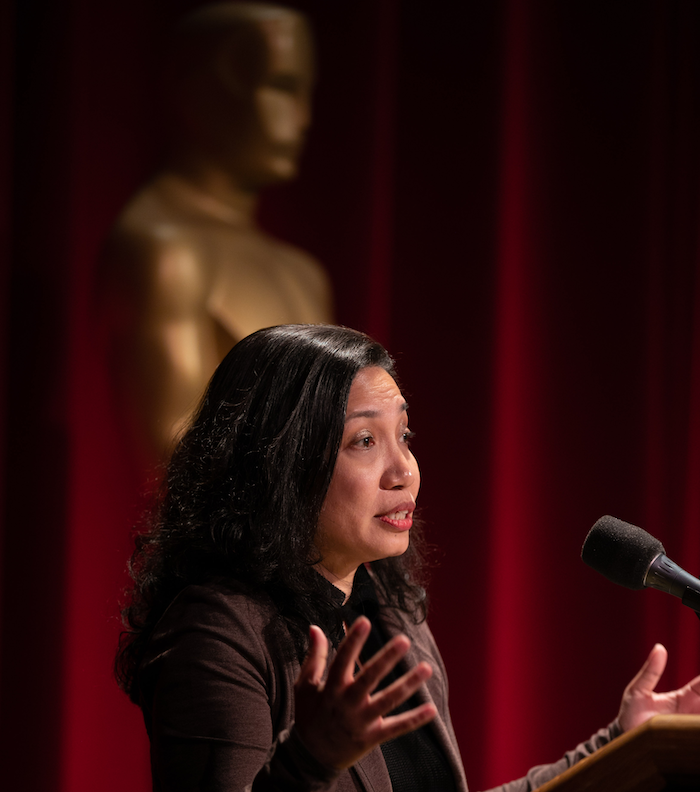
My interview with the 2019 Nicholl Fellowships in Screenwriting winner.
Renee Pillai wrote the original screenplay “Boy With Kite” which won a 2019 Nicholl Fellowship in Screenwriting. Recently, I had the opportunity to chat with Renee about her background as a screenwriter, her award-winning script, the craft of screenwriting, and what winning the Nicholl has meant to her.
Today in Part 5 of my interview, Renee takes on some questions about the craft of screenwriting.
Scott: I have to ask you, once you got to LA, after your 14,000 miles, the Billy Wilder type trip, how was the Nicholl experience?
Renee: It was amazing because you know how it goes — even with everything you imagine, nothing really prepares you for the reality? Everything was like a fantastic dream.
Except when I arrived on a Sunday and I checked into the hotel. This is going to sound so bad because everything that could go wrong for me went wrong.
I’m not, how do you say… I wouldn’t be considered a person who’s comfortably well‑off. I don’t even live in the city. We have regular power outages and no running water. Which reminds me of another thing that’s apparently peculiar, because when I tell people, they go, “You did not do that.”
I actually wrote the initial draft of Boy With Kite on a typewriter, my grandfather’s manual typewriter. Because you don’t have to worry about saving it or losing power or anything. People find it out there but that’s my reality.
And then I’m in LA — at the Marriott and everything’s paid for, of course, by the Academy. Except for one thing, one very important thing — the security deposit. You need a credit card for that and I don’t have a credit card, so that happened. But I managed to work that out.
So I finally get to my room, completely jet-lagged, after 30 hours of travel, three flights, two layovers and the first thing I do is give an interview before crashing completely.
But then the next day I wake up and I go to the Margaret Herrick Library.
And it’s everything that you ever imagined Hollywood would be, because it’s got all the ephemera and all the photographs, and all the vaults and the posters, and scripts, everything. I do not know how to describe it. It was just mind‑blowing. It was a lot to take in, but it was amazing. It was just wonderful.
Then the next day, we got to meet with Nicholl alumni. We did a boot camp where we’re taken through discussions on how to pitch, what to expect about getting representation. We even met with WGA West’s assistant director and it’s just so much information, so much assistance. So many things — some of it you know, a lot of it you don’t.
Then the day before the awards, we got to meet the Nicholl committee members who selected us as Fellows. That was an incredible experience as well. Then it was a blur leading up to the awards, because I think most of us were actually really nervous about that, because we had to get our speeches done.
Since then, it’s been amazing, the doors that have opened, the people who want to meet you, who want to read your script, and who want to work with you. I don’t know what to say.
The Nicholl experience, I think, would be overwhelming for anyone. In my situation, coming from not exactly, I think… the term is a “developing country,” but in many ways, to be very honest, it is very Third World. So coming from that to this, it’s been a lot to take in.
Scott: You mentioned that in an email, that you did not have any idea there’d be that many people there for the staged reading.
Renee: Yeah. Because I looked up, and I think I went, “Wow,” and that was obviously not in my speech, but just seeing all these people… And after, having people come up to you… and it was people who’d read my work in the earlier rounds, or people who just wanted to tell me how much they enjoyed the reading. It was so many people. It was overwhelming.
Like I said, you have an idea of what it might be, but nothing prepares you for the reality of it. Think about it. I’d never even been to LA before.
Scott: It’s almost like Dorothy going to Oz.
Renee: Yeah. Absolutely. It’s like, “Technicolor, oh my God.”
Scott: Stepping out of the door from the sepia-tone world, and boom! All of a sudden…
[laughter]
Renee: It’s a good thing I went from Malaysia to LA, because LA is sunny. It was sunny when I arrived and quite warm at that time. The weather was familiar, but everything else… it was things I’ve only seen in the movies.
I was standing at Fountain and Vine, which is at the Pickford Center. I went like, “Oh wow.” One of the other Fellows went, “Yeah, we’re on Fountain.” And I went, “No. Office Depot?! I’ve only seen it in movies, and here it is!”
Scott: That’s great. Congratulations on that wonderful experience. I know you’ll continue on as a Fellow with other Fellows and whatnot, and that whole group of people. If you have time for a few craft questions, you mentioned that you worked on an outline. You dropped that in in terms of this project. Is that something standard operational procedure for you that when you break a story, you go to outline?
Renee: Yeah, I do that for almost everything. How it works for me, my process, is I get the idea, I write it down. Because then I’m just flooded with a million disconnected ideas, and I just put all of that down.
I found that that’s what I do. It’s sort of like I pour out all the ideas, and then after that I would outline based on what I have. From there, I would create something I call… because, like I said, I’ve never been to film school. I’ve never been to a writing class, I used to call it a draft zero.
Scott: Zero draft, yeah.
Renee: I’d just write it. No formatting, nothing. Just the whole story, with dialogue, everything, just there. Then I’d write my first draft based on that.
Scott: How about the characters? We danced around that a little bit. Some of these characters in this particular script arose from a pretty conscious kind of place which you were aware of, but other stories that you’ve come up with, how do you go about typically…or is there a specific way you choose to develop your characters?
Renee: Basically, when I look at all my stories, they start from the characters. In fact, when I first started learning to write, I realized I’m that kind of a writer. I start with characters, and there’s a bit of a story attached, and then I have to concentrate on the story.
That’s a good question — the other tools. It would appear that my characters seem to come somewhat fully formed. I would like to be able to figure that out as well, because you can’t always go… Bam! Athena came out of Zeus’s head fully grown.
I’ve read books about how you can use tools to develop your characters. But even though I may refine them through rewrites… because my starting point are the characters, they come pretty much fully formed, they come as real human beings. I know that’s not a good answer.
Scott: No, it’s actually…I tell my students and writer clients…It’s been my experience too. You kind of reverse that whole “Seeing is believing.” No, believing is seeing. If you believe they exist, you’ll see and hear them.
Renee: Absolutely, yes.
Scott: The key is just to engage them directly and immerse yourself in their lives. It’s their story. They exist. Is that a fair…?
Renee: Yes. I’ll give you an example. One of the questions I was asked by the first person who contacted me about the script was, “Who do you see playing the characters? Who are the actors you had in mind?”
My answer was, “Anyone who’s the right age?” That’s what I said. It sounds very lame, but that was my answer, and the reply was, “That’s fantastic, because it means that you wrote real characters,” And it’s true — Linny, Stella, Ben, they’re all real to me.
I did not pen them on, “Oh, this actor…” There’s a type, yeah, sure, but in terms of the creation of them, they’re very real to me. I love what you said. Believing is seeing. That is exactly how these characters come to life. That’s how they become real and they connect with other people, because you have believed them into being.
Tomorrow in Part 6, Renee provides advice for aspiring screenwriters.
For Part 1 of the interview, go here.
Part 2, here.
Part 3, here.
Part 4, here.
For my interviews with every Nicholl Fellowships in Screenwriting winner since 2012, go here.
For my interviews with 53 Black List writers, go here.