Interview (Part 5): Murder Ink
My interview with Brandon Broussard, Hudson Obayuwana, and Jana Savage, the writing team behind the 2021 Black List script “Homecoming.”
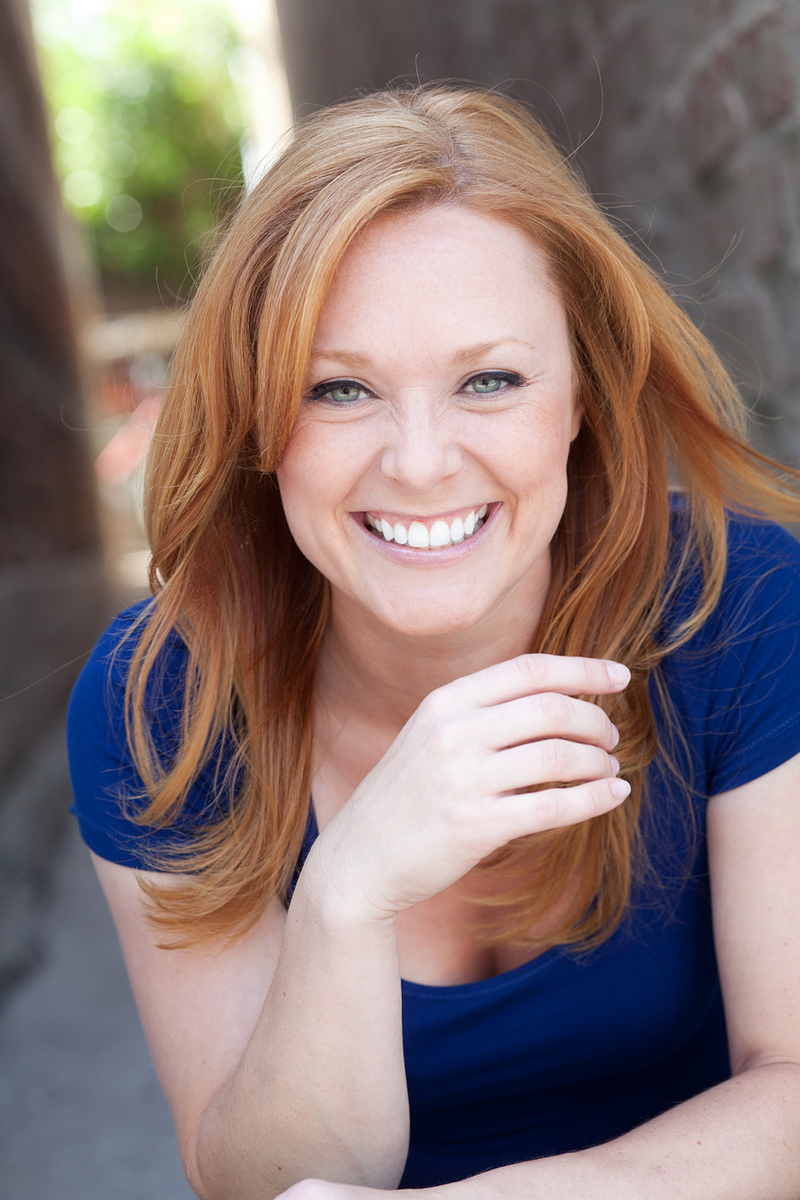
My interview with Brandon Broussard, Hudson Obayuwana, and Jana Savage, the writing team behind the 2021 Black List script “Homecoming.”
Murder Ink consists of three writers (Brandon Broussard, Hudson Obayuwana, and Jana Savage) who wrote the comedy feature script “Homecoming” which not only landed on the 2021 Black List, but also sold as a spec script to Lionsgate in January of this year. Recently, I had the opportunity to talk with the trio about their backgrounds, the inspiration and writing of “Homecoming,” and where their careers have gone after making the annual Black List.
Today in Part 5 of of a 6-part series to run each day through Sunday, Brandon, Hudson, and Jana share some thoughts about the craft of screenwriting.
Scott: Let me ask you a few craft questions because this is a unique situation. I’ve talked to writers who are partners, two artists, but three? I think this may be the first time.
I’m curious about this thing with regard to layering you mentioned earlier, that layering process. Layering is after you’ve worked on the story and written the first draft or so? What does that mean to you?
Jana: We know the themes and the characters’ arcs and the main things that are really important about a script. Sometimes if you try too hard to accomplish everything in a draft, you’re never going to get it done. Obviously, when we write our parts of the script and come together, we’re all cognizant of those elements.
One of us, usually me because I’m a control freak, I’ll make a list of tracking and layering and things that we’re like, “You know what? Let’s make sure when we go through that this is tracking or this theme is tracking, and this character arc, we’re hitting the things.”It takes a little bit of pressure off when you’re trying to go through and structurally make sure the story’s there. Also, it allows you to infuse the script with the things that are important. Sometimes you overdo it, you put too much in, but, again, it’s easier to pull back than if it’s not there.
Brandon: Part of the layering just happens naturally. We are layering as we’re doing the beats, and we’re building on that. We’re constantly building on the thing that we just made. When we expand to the outline, we’re layering in there as well. We’re looking at some of those setups and payoffs definitely early on.
Once we’ve got this 25‑page outline well say “Jana, you’re going to take this section. Brandon, you’re going to take this section. Hudson, take this third because this seems like it suits your voice best.” We go off and write. We all add our own little things. When we come back, we write the hell out of each other.
We’re layering again so much through that whole process of rewriting one section at a time. Then, we put all three together. We literally go through it and do another pass over that. Throughout the process, I feel like we do four passes on the script before we ever send it to anyone. That’s once it’s all assembled and stuff.
Sometimes, when we don’t think it’s funny enough, we’ll do an additional pass just for punching. We’re like, “This is not hitting enough or it’s not raunchy enough.” You got to have the raunch.
Scott: That opens the door to the next thing. How do you all write? You’re all in LA, right? Is that right?
Brandon: Yeah.
Scott: Do you get together? Do you just divvy things up?
Jana: We used to. Pre‑pandemic, every day we were together. I miss it. It’d be nice to be together some of the time. It’s obviously super convenient to be home. You can just hop on. We’ve adapted to Zoom for sure.
Brandon was saying, we do much of the process together and then we break off to write our sections. That allows us to stick to the outline, but also you get to infuse your own ideas and things. Generally, we always work together all day. We never get sick of each other. [laughs]
Brandon: Really? How about that?
Jana: We never fought or any of that.
Scott: Do you feel at this point, when you’re going off to write stuff on your own, that you have a shared voice in how you approach tracking a scene or the scene description? Do you feel like there’s a commonality there? Do you feel like, “This is me. I’m going to put it out this way”? How does that work?
Hudson: We try to be respectful. When we outline, we know that there are certain things that we’ve all agreed upon, what we all feel is best for the story and for the characters, what makes sense. There is a little bit of room to play. There’s liberty.
Like Brandon was saying, when we assign the sections because we know, “OK, this is much more Brandon’s voice or this is much more Jana’s. This section is more her sensibility,” so we’re leaning into each other’s strengths. There’s room to play, but then also have to know, “OK, I took a shot there. I know you guys might not like it.”
Sometimes those things work and sometimes there’s absolute gold that comes out of that and we’re always very objective. That’s one of the great things of us learning to work together, because people are always curious how a three men, three‑person team works.
There were times early on, we had to learn how to disagree and how to argue and fight about things and not take it personal and still be able to be productive. With one of our first projects, we always talk about how we were having this knockdown drag out, two and a half hour, three‑hour fight about…
Brandon: Was like six‑hour fight. It was the whole day.
Hudson: It was about, if it should be a Ginuwine or Bobby Brown reference. Then when we actually filmed the movie, that whole scene got cut.
[laughter]
Hudson: It didn’t even wind up being in a movie, so we were arguing about it for no reason whatsoever.
Brandon: Was literally a line. We weren’t going to see that person in the film. It was a line.
Hudson: A line. It was a line. We were really going back and forth. We’ve learned, “OK, is my pitch better? Is what they’re pitching better? Is this my ego wanting to hold onto exactly how I wrote it? Or is this objectionably better?” We had to have those kinds of arguments and fights early on.
We still argue when we’re passionate about things like, there’s three of us, so we have the rule of three. If two people feel one way you might get outvoted. But sometimes there might be something that’s missing, even if Jana and I might feel one way, Brandon may be like, “Man, my instincts are telling me, something’s missing here. That’s not quite it.” We’ll take the time to sit down and figure it out till we’re all satisfied. We don’t move forward till everybody is good with something.
Brandon: We develop a language with each other as well. In addition to saying, “save it for your play” we call stuff a “Detroit player” if we’re trying to explain something in the script that seems too absurd and need a character to call it out as absurd. One of the things we recently say to show respect for each other “now that I’ve stepped back.” For instance, “I’ve had a second to take a step back. I know that I was standing my ground for the last 30 minutes or whatever, but you’re right, I’ve taken a step back, and I see your point and we could keep it moving.” We have so much language like that, that’s developed over the years and has made our process a lot smoother.
Jana: TIO. I’m trying to make TIO happen.
Brandon: TIO is like fetch it’s not happening.
Jana: Talking it out.
Brandon: Talking it out, just talking it out here, TIO.
Scott: That’s funny. Do you all have like, “Oh, this one’s good with dialogue, or this one’s good with scenes?” Do you have it broken down like that, or do you basically all step into every area of the writing in terms of who’s considered to be the expert or the best to compete?
Brandon: I think that we have strengths, but we also definitely compete. There are certain scenes we’re like, “Let’s all take a stab at it,” because we want the best. We try not to have egos, like Hudson was saying, it’s just, “Let’s all three write this scene, and then let’s come back and objectively look at them and let’s choose the best one.”
Maybe we’ll Frankenstein them and put pieces of it together. Maybe somebody will knock it out of the park and we’ll say, “Oh, we don’t need to look at my shit,” because clearly Jana wrote…
Jana: I feel like through the years of working together, we’ve all become very well‑rounded. Whereas when I started, I didn’t even know how to write. I didn’t know how to do anything.
Brandon has good strong instincts. Hudson writes with a lot of heart. I write a lot of dick jokes. That’s what I bring to the table.
Brandon: In the clutch, if you need a closer to come through with a joke, Jana will come through usually with a pretty heavy hitter.
Jana: They always get cut, but I feel like dick jokes are making a comeback.
Brandon: [laughs] I will never have as much heart as Hudson, as much as I try. I’d like to. My fiancé would like me to.
Hudson: Brandon fights me on the heart.
Brandon: I do. I’m like, “Why are we sitting down on this scene for so long?” I need to get out of it, but he’s right. It happened with “Homecoming.” They loved the stuff we sat on it.
Jana: Literally, Brandon gave me notes on a film I just shot. He’s like, “I feel like these scenes are too long, but also I may just have a cold, cold heart.”
Brandon: At least I’m self‑aware, at least.
Scott: I’m often reminded of Franklin Leonard. He has a tweet where he said, “People don’t go to movies for plot. They go to feel something.”
Brandon: That’s true.
Tomorrow in Part 6, the writers of Murder Ink provide advice for writers who are trying to break in as a film or TV writer.
For Part 1 of the interview, go here.
Part 2, go here.
Part 3, go here.
Part 4, go here.
Murder Ink is repped by APA.
Twitter: @BrandonQreative, @HuddyRozay, @TheSavageJana.
Instagram: @murderink_llc.
For my interviews with dozens of other Black List writers, go here.