Interview (Part 5): Lindsay Michel
My interview with 2022 Black List writer for her script Caravan.
My interview with 2022 Black List writer for her script Caravan.
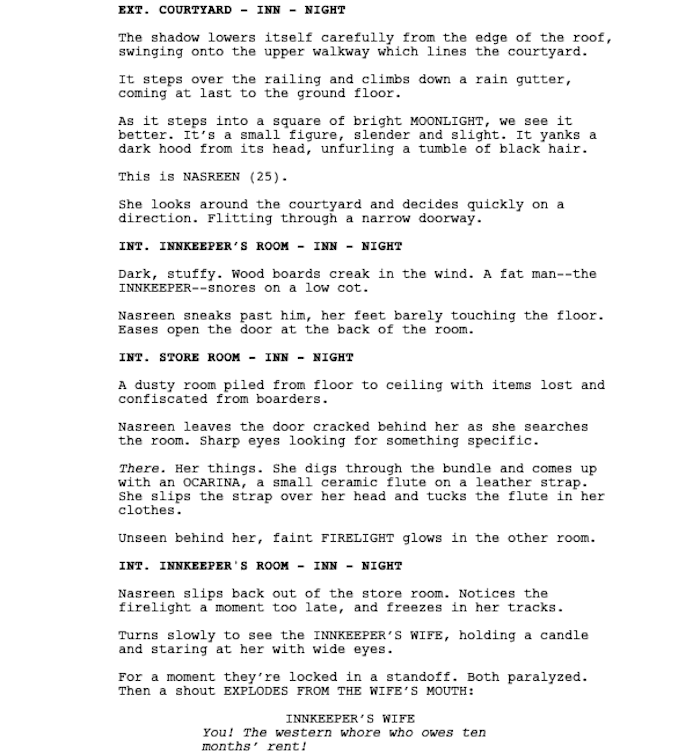
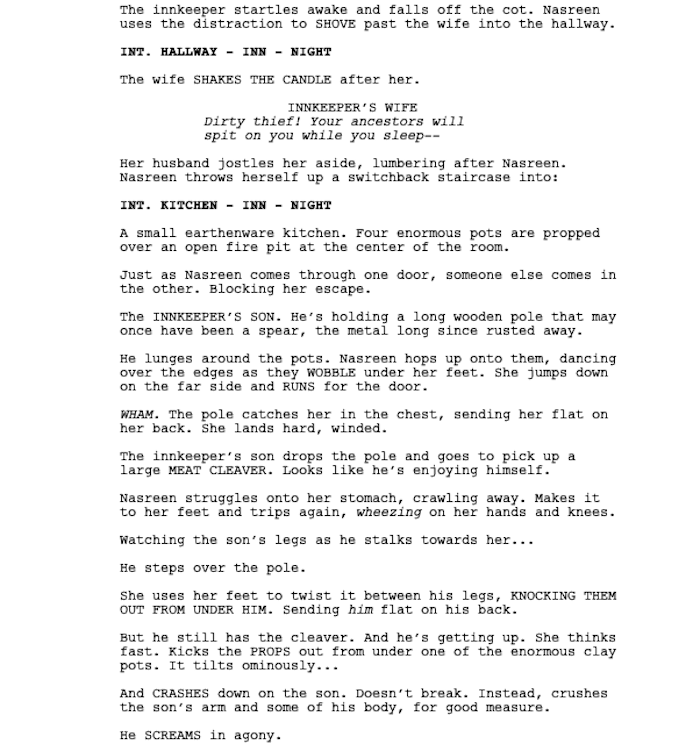
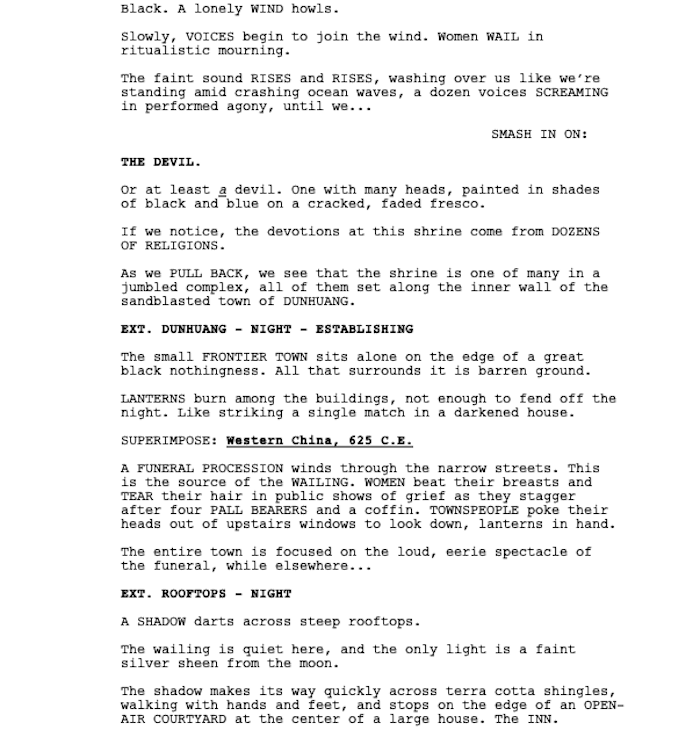
Lindsay Michel wrote the screenplay Caravan which landed on the 2022 Black List. I had the opportunity to chat with Lindsay about her creative background, writing a Black List script, and the craft of screenwriting.
Today in Part 5 of a 6-part series to run each day through Sunday, Lindsay answers some questions about the screenwriting craft.
Scott: For all the spectacle, it’s a really compelling script to read at a psychological level. And it proves once again, you can have great stories with three-act structure. In “Caravan,” by the end of Act 1, they’re off on the road. Pretty soon, within 10, 15 pages, you’re into the horror thing. End of Act 2, she’s left alone, basically, to die, All Is Lost. Then Act 3, leading to the Final Struggle.
Lindsay: I’m a big proponent of three‑act structure. My favorite thing about writing genre films is that they fit together really neatly, like puzzles, if you’re plotting them correctly. Definitely a huge structure nerd.
Scott: You make the Black List, you already did it in 2021. Maybe a little bit old hat for you, but what was it like knowing that this script made the 2022 Black List?
Lindsay: It was exciting. It was surprising. I didn’t expect it because “Caravan” went out to producers in like March. I figured people would have forgotten about it. It was nice to know that it had made an impression and that people still remembered it come December. It’s always very validating.
Scott: Did that result in any more general meetings?
Lindsay: Yeah, I got more meetings with production companies focused in horror and people interested in the horror space, which I had not gotten before. Again, a lot of that was back when it originally went out. By the time the Black List came out, I’d already met a lot of the people who were interested, but there was a second wave.
Scott: When I broke in, I wrote “K‑9,” which was a cop and a dog movie and I got pitched every animal project in Hollywood. To redefine yourself, you can do that as a screenwriter, that’s what I tell my students. You can just, “Oh, when I want to write horror, I’m going to write a horror script,” and if it succeeds on the page, boom, guess what? You’re a horror writer.
Lindsay: I’m worried I’m going to get pigeonholed as the desert girl because “Sandpiper” is also in a desert.
Scott: The desert. That’s exactly right. You’ll be on the Desert List.
Lindsay: Maybe I’ll get called for Dune Five or something.
[laughter]
Scott: I’d like to ask you a few craft questions, if I may. First, how do you come up with story concepts?
Lindsay: It’s mostly again, what is cool to me and what would I be excited to watch, and what do I wish were already a movie. [laughs] Then you have to test concepts to make sure that they have legs and that they can work in 120‑page screenplay.
I’ve got a lot of throwaway concepts that are never going to go anywhere because they sound cool in a log line, but they can’t be spun out. I’m also very lucky that I can sort of talk with my team to see what’s commercial and what people are looking for. “Caravan” is an outlier, where no one’s looking for it, but I wrote it anyways.
I’m also a big fan of genre mashups. If I find two genres that haven’t been mashed before, it’s very exciting to try and crack that.
Scott: You say you’re a structure person, a three‑act structure. How do you go about breaking story?
Lindsay: I sit with it for weeks and weeks and write a ton of notes. I think you have to write in every direction and accept that not everything that you come up with is going to make it into the script and that not everything needs to make it into the script, and there are certain pieces that are going to work to put the puzzle together.
Scott: How about characters? How do you develop the characters?
Lindsay: It’s very difficult for me to figure out which characters fit in which script, so I end up discarding a lot of characters. The number one thing is that your protagonist has to fit with the tone of the movie and with the plot.
They have to be the right person to go on the right journey. Like you can’t take Ferris Bueller and put him in “Star Wars,” it’s not going to work. You have to be aware of the movie you’re trying to make.
The protagonist is the easy part, and then you have to figure out who to put them with along the way to help them on their journey. If you can develop an antagonist that’s a reflection of what they’re going through and that they have a deep connection to, that’s super helpful in terms of driving the script along.
Scott: That’s exactly right. If you can have a nemesis or an antagonist character who’s the physicalization of what the protagonist fears the most or their shadow, then you got a psychological connection, right?
Lindsay: Right. In genre movies, action movies, we root for the protagonist and we want them to vanquish the antagonist, and it feels more satisfying when they do, if they have this personal connection to them.
Obviously, the dumb example is Darth Vader because it’s this journey that is not just about beating the villain, but reconciling the pain that the villain has caused you and moving past it. The antagonist is super important.
Scott: It’s like on Dagobah, I guess it is when Luke goes into that weird hyper thing…
Lindsay: The Cave of Fear. He’s worried that he’s going to turn into his dad.
Scott: His own fate. I got to say, Ferris Bueller and Star Wars, I want to see that movie.
[laughter]
Lindsay: It’s like a different “Space Balls.”
Scott: Exactly. [laughs] Your dialogue is so great. The characters all had such interesting worldviews. Is that something that you feel intuitively or is that something that you consciously spend time on? How does that work for you?
Lindsay: I spend time on it. I tend to write very clunky dialogue at first. I put down what they need to be saying and what information they need to be getting across, and then I’ll go back and make it sound like something a human being would say.
Tomorrow in Part 5, Lindsay offers advice to aspiring screenwriters.
For Part 1 of the interview, go here.
For Part 2, here.
For Part 3, here.
For Part 4, here.
Kevin is repped by Bellevue Productions.
Twitter: @mintymichel
For my interviews with dozens of other Black List writers, go here.