Interview (Part 5): Lexie Tran
My interview with 2022 Black List writer for her script It’s a Wonderful Story.
My interview with 2022 Black List writer for her script It’s a Wonderful Story.
Alexandra “Lexie” Tran wrote the original screenplay It’s a Wonderful Story which landed on the 2022 Black List. I had the opportunity to chat with Lexie about her creative background, writing a Black List script, and the craft of screenwriting.
Today in Part 5 of a 6-part series to run each day through Sunday, Lexie answers some questions about the craft of screenwriting.
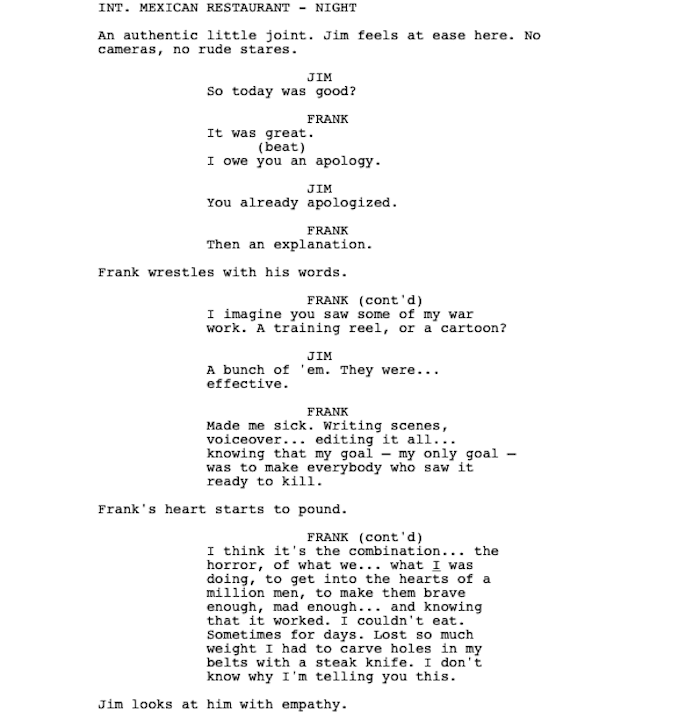
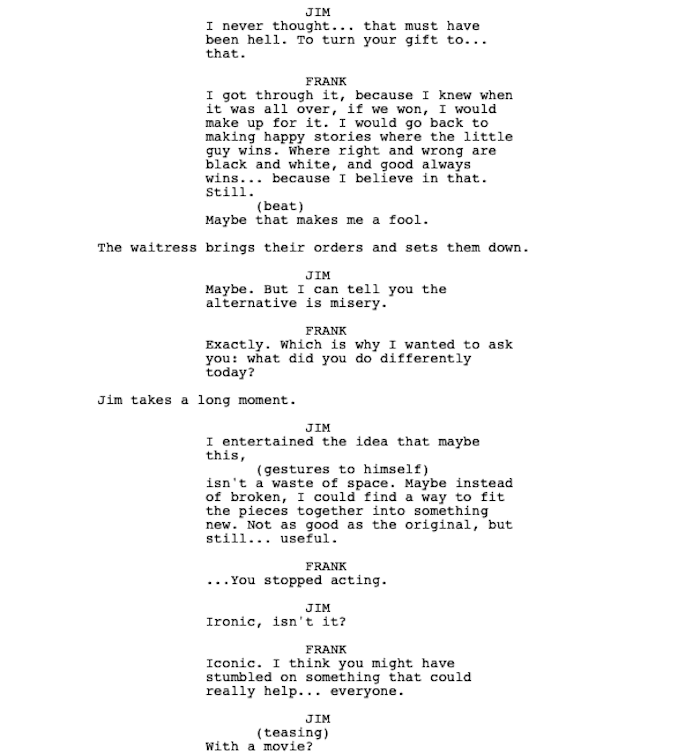
Scott: When you think about It’s a Wonderful Life, it’s such an interesting story because this guy, George Bailey, has a powerful rage inside. He’s so angry that his life has passed him by, which is why Clarence the angel has to go, “That’s it. You’ve never been born.” Get to see that George actually did make a difference in people’s lives.
There’s a little subplot in the house, that little ball on the stair thing. The third time, he kicks over his table with his bridge, the little section of the house where he’s got his bridges. Jimmy Stewart, when you read the script, you realize that Jimmy Stewart via your story brings that inner frustration, anger, and rage to bear in his acting moments.
I thought that was very effective, how you did that. By the way, I want to ask you, how did you choose these scenes? Because these are the scenes you chose from It’s a Wonderful Life to show. After the dance, “You want the moon?” George, for the first time with Clarence, “That’s right. He’s never been born.” George interrogates Uncle Billy after he’s lost the $8,000. George seeing Mary as an old maid. George on the bridge asking Clarence to come back, the telephone scene…
Lexie: I know.
Scott: Then, “Hello, Bedford Falls!” Were you thinking, because it’s not necessarily in chronological order, some of it is, but how did you pick those scenes?
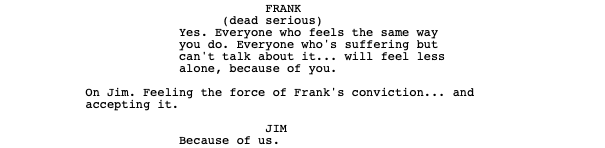
Lexie: Every one relates to what I need to show Jim experiencing in that moment. I choose some of the hokier scenes, some of the clunkier ones for the beginning of the shoot, where he’s not yet connected to his emotions.
Then later, when he’s fully channeling his real self, you get the chasing-Mary-in-front-of-the- library scene, and the incredible kiss. That’s when he’s channeled the rage. At that point, in embracing his darkness, he also frees up the lightness.
That’s when he’s able to bring the lightness of “Yay, Hello Bedford Falls!” I think I wrote it that Frank tells him “These people have been watching you get beat down by life for two hours, and they are afraid you’ll never feel joy again, and therefore neither will they in their own lives. You have to give it to them. It doesn’t matter if it’s ridiculous, just give them joy.”
Jim’s voice shoots up octaves, and he’s absolutely ridiculous. Hands in the air, his voice cracks but it accomplishes what it needs to accomplish.
Scott: Was it a challenge for you writing dialogue for Frank Capra and Jimmy Stewart?
Lexie: No, not at all. No. Stewart is super easy. Is there any actor with a more known cadence than Jimmy Stewart? Everyone’s parodied at some point or other. The way Capra speaks in his own autobiography, it’s 100% the 1920s bootlegger drawl that you expect from that era.
My choices for dialogue are usually based on what the characters are feeling. If someone’s nervous, I make them a bit more chatty. There’s more “ums.” There’s superfluous words. If someone’s angry, it’s short, choppy.
With these two, I just heard them. I had watched a number of interviews with Capra so I could hear him speaking, a very soft voice, light voice. Stewart, I’ve seen so many of his movies and I didn’t even realize. One of my favorite movies growing up when I was little was An American Tale: Fievel Goes West.” It was an animated movie.
Jimmy Stewart, in one of his last roles, voices the old west shootout dog. I’ve heard that voice in my head for 30 years and didn’t realize that it was him.
Scott: You’re right. The movie did flop. If you even quote Daily Variety’s headline, “It’s a wonderful flop” the day after it premiered. Like The Shawshank Redemption, which didn’t do very well. TV brought those two movies back to where people began to love them and they became these classic films.
At the end of all this journey of you writing this script, you said it took a year for you to crack it, you’d make the 2022 Black List. Could you maybe describe were you tracking that at all on the second Monday of December?
Lexie: I don’t think anyone can track the Black List. We took the script out in October, so two months before.
Scott: That’s a good time to take it out.
Lexie: It’s always a good time to take it out. I know that almost all the reps in town remind everybody, “Hey, you read the script this year and you liked it,” but no one can ever influence the vote. From what I understand, my manager called me immediately after I found out.
The way I found out, by the way, I’m a big Twitter user. I tweeted congrats to all the Black List ’22 members before it came out. Then people were tagging me all of a sudden and I saw my name, and I was like, “Oh, shit, I didn’t know.” I had no idea.
Anybody who’s tried writing in the last 15 years has dreamed of making the Black List. It means something. Even without the success of now produced Black List films, it’s a very nice…What’s the word I’m looking for? It’s a good feeling to know that, “OK, this script resonated with people.”
That’s more than anything else; that it resonated with people. Regardless of what happens to it, enough people liked it and remembered that they wanted to vote for it. That’s all I ever want to do.
Scott: Congratulations, it’s a wonderful script called It’s a Wonderful Story and about It’s a Wonderful Life. I have some craft questions for you. OK?
Lexie: Yeah, please.
Scott: How do you come up with story ideas, things you want to write?
Lexie: I’m a big fan of combining opposites. It’s inherently dynamic. It usually produces my best results. I actually have a daily practice that I do, and there are several that I do. I’m a big believer in a little practice every day. Five minutes every day beats one hour once a month.
One of the things I do is concept generation, and I do it for 30 minutes every day. I literally sit there, and I come up with opposites in pairs.
Love and hate, mother-in-law and daughter-in-law, whatever opposites that I can think of. I try to come up with a logline that somehow makes the two relational. That’s how I end up developing a lot of stuff, believe it or not.
Scott: What do you think is the inherent power of opposites in terms of storytelling?
Lexie: Initially, it promises change and conflict. If you can get it clear in a log line, it suggests the movie and the change that will take place. Think prostitute and a high-society woman. You get “Pretty Woman,” it’s about a prostitute who falls in love and becomes a high-society woman, but how does she do that?
The “how” is what you end up developing hopefully into the idea. The conflict is always what drives a high-concept idea. For me, the more opposite, the better.
Scott: I’m glad to hear you say this. I drive this point home with my students all the time that you got to come at this stuff with the strongest story concept possible. Especially nowadays, you probably agree because Hollywood is so addicted to pre-existing content, prequels and sequels and threequels, remakes and reboots, and franchises.
In order to get original content, you got to have something that’s really strong. How important do you think that story concept is to the success of a spec script?
Lexie: Incredibly. If talking success in terms of a sale, concept is the single most important thing, even more than execution. If we’re talking in terms of selling the writer, then as long as you can continue to generate similar high-concept ideas, it’s tremendous in selling yourself as a writer of potentially big box office movies.
Look, Violent Night came out a little while ago. A Universal movie, totally original, and I haven’t seen it, but the logline is: Santa saves a family from terrorists in their own home on Christmas Eve. Santa is cuddly, nonviolent, peaceful, but you combine it with the opposite, he’s a violent ass-kicker, you get this high-concept movie.
Tomorrow in Part 6, Lexie provides advice to aspiring screenwriters.
For Part 1, go here.
Part 2, here.
Part 3, here.
Part 4, here.
Lexie is repped by Agency for the Performing Arts (APA) and Bellevue Productions.
Twitter: @LexWojTran
For my interviews with dozens of other Black List writers, go here.