Interview (Part 5): Kristen Tepper
My interview with 2022 Black List writer for her script Better Luck Next Time.
My interview with 2022 Black List writer for her script Better Luck Next Time.

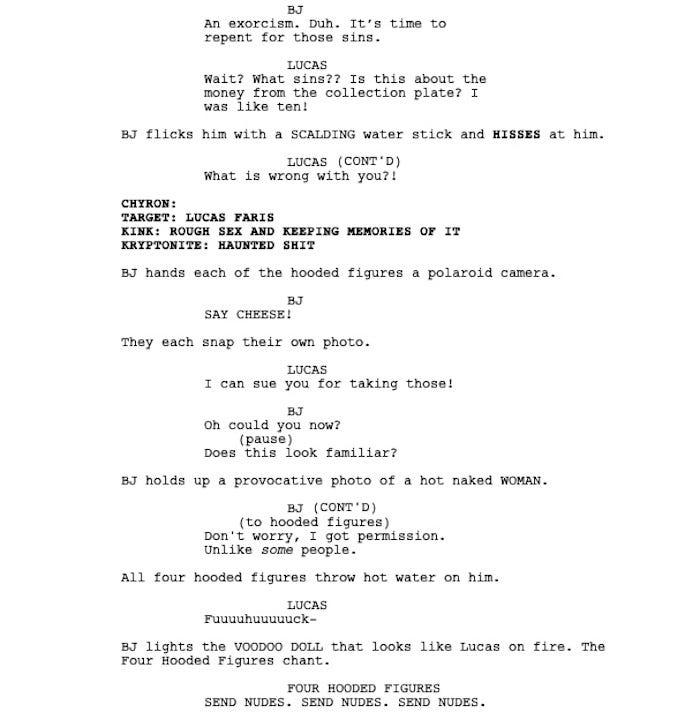
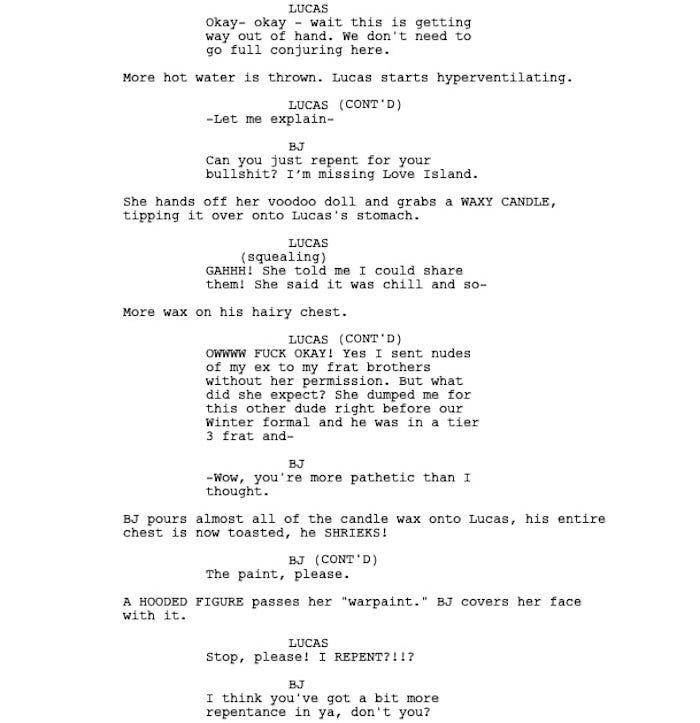
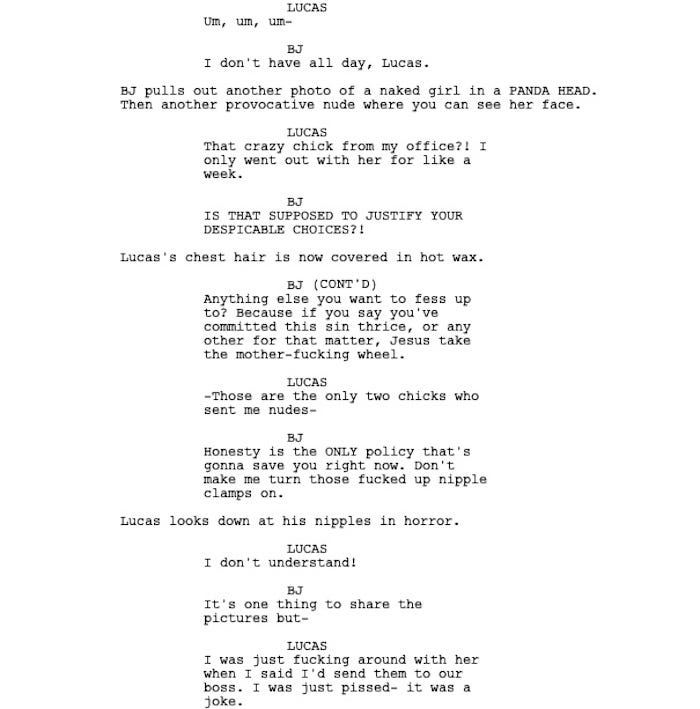
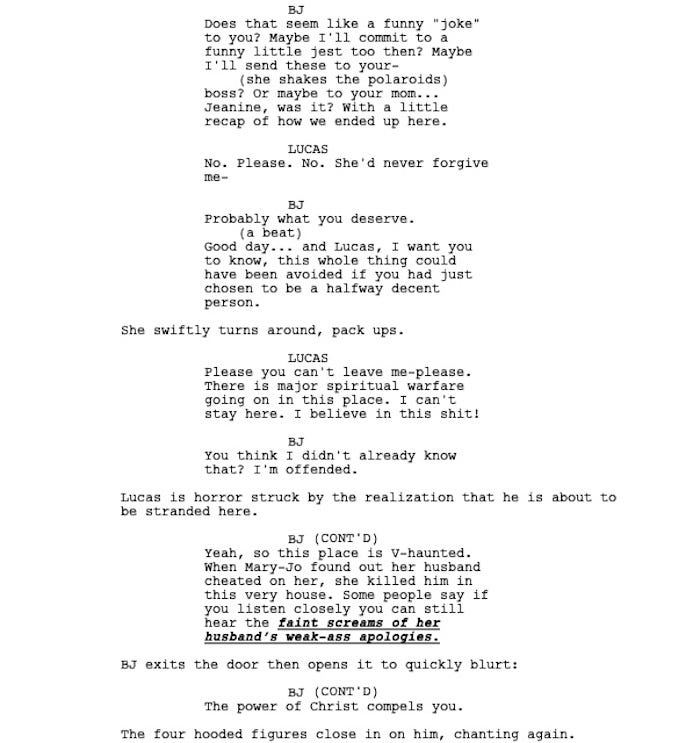

Kristen Tepper wrote the screenplay Better Luck Next Time which landed on the 2022 Black List. Remarkably, Kristen’s script made the Black List before she had signed with a manager.
I had the opportunity to chat with Kristen about her creative background, writing a Black List script, and the craft of screenwriting.
Today in Part 5 of a 6-part series to run each day through Sunday, Kristen shares what it was like to learn that her script made the 2022 Black List.
Scott: You got a lot of dramatic irony in this story. Certain people know things that other people don’t like, Jesse doesn’t know the truth about Annie and the sting people. People getting stung, don’t know about what BJ and Annie are doing.
They don’t know that Ben is, at first. They don’t know what’s going on with Dennis and Cassondra. All along the way, you’re planning these things so that we, the reader, know these things. Maybe you could talk to about dramatic irony. What do you see as the value, as a writer, of working with things like that, where you’re setting up the dramatic irony in play in the narrative?
Kristen: I guess I go two ways when I watch something and this might be a personal preference of…I saw “Scream 5” and I love Scream and I love that you have no idea who this killer could be until they come out at the very end and they explain some absurd reason for why they’re the killer.
I have always had a lot more fun as an audience member, knowing that things are going to go wrong and being like but how. How is it going to go wrong and when is it going to go wrong? Who’s going to find out that it’s wrong?
Are these people going to put it together and I think the knives…I’m not as smart as Rian Johnson, but I love his like “I have dropped things here and here for you, and then I will go back and explain more of it.” I don’t think I’m that skilled yet.
This is my version of that being like, “You’re going to know everything that’s happening and we’re going to see if these characters can figure it out or if they don’t or how bad it gets.” It’s a viewer’s preference for me, what I like to watch.
Scott: That’s interesting because within the story, it’s like a ticking bomb because each one of these things you never know. At some point you know Jesse’s going to find out about Annie, but it plays out underneath everything. Every scene is emotional subtext.
Plus, it puts pressure on the people who are telling the lies not to screw up. That both of those things are in play in your story. Richard is the guy that they’re going to…That’s the big thing.
Kristen: He’s my Hardy Boys man.
Scott: I don’t want to get into the complexity of the plot because it’s a lot of fun, but I would like to talk about your narrative voice. That’s why I say to my students, the genre and your style needs to match up. Whatever you’re doing in terms of scene description, it’s got to have some personality.
You’ve read a lot of scripts, you know this language. You’ve been around online. You know about bold sluglines can start a flame war online. What’s your attitude about that in terms of the freedom to provide that personality and scene description?
Kristen: I used to struggle. You learn the rules and then you break them. I was very previous on any practicing’s, just rigid about this. Then as I was going back into my script, I was like, “This is boring me, it’s boring me and I’m the writer.” What I want to say is, this guy’s an idiot and I want the reader to have fun with that, because reading a script is tough.
The people in this industry have to read 10s, 20s, 30s, 100s a week. You do want it to be this adventure for them to flip the page and want to know what’s happening next. This was definitely throughout all of these iterations.
I was like, “Do I care about being exactly what a book told me to do?” Or “Am I going to put what I think in this and so people know the point of view that I’m going for?” I don’t think every page is worth that, you scatter them throughout.
I also will say, what you were saying is accurate, knowing what you’re writing, because my pilots are almost all very dark thriller mysteries and that is a very different tone. When I was sending out to managers after Black List, everyone is, she’s not wrecked, come, I want to see your stuff.
I appreciated the managers who were like, I…Because I would send better luck next time and I would send a pilot and be like, “Hey, I’m doing two different things. I know some people are adamant about staying in your own lane, but that’s not me, so if you can’t do that for me, this isn’t it.”
A lot of managers responded and they were like, “I love that you can melt into a different voice because that means you can get picked up on a show.” A showrunner will know that you can match their tone and their voice. Knowing to what you said, the genre you’re in and the world you’re in, and what can be given away in comedy, is a little more.
It’s very structured and you could stay the same difference in all of that, but in those little lines, I was like, “This is worth it to me. This is making me laugh, it’s making my friend laugh, it’s staying.”
Scott: That scene where Annie and BJ go at it, they light into each other. Of course, it’s on the heels of a disaster in terms of…I won’t get into the specifics of it.
What was that like writing that? Did you always know that there was that moment?
Kristen: Yeah. It was always there. It was one. At one point it was way longer and at one point it was way shorter, and it’s always been there because when you have friends like that and you’re going in opposite directions, it’s scary.
At least for me, my scared reaction, which I should work on with a therapist is like, I get angry. When someone scares me or jumps from behind, my thing is anger, that’s how I respond. Both of them are in this fight or flight response and it’s the last straw on the camel’s back.
This is the all‑out thing that I’ve been festering on this for months, year, it’s time to say everything I was thinking about you and what else is there to say. It was so fun to write. It was very cathartic because I was like, you’re with these characters for a while, and I’m like, “This is what you want to say to this person.” [laughs]
Scott: It’s great because it’s like, they finally say the truth. Stuff that’s been festering there and it is cathartic and it’s timed perfectly because right after they get done, boom, there’s Dennis and it’s like, “Okay, now we’re into the Final Struggle.”
Scott: What has happened subsequent to the Black List. You’ve been sending it out to managers, agents, and whatnot. What’s been going on that front?
Kristen: It’s been fun. Basically what had happened was I obviously didn’t have anyone. There was no contact information for me on the list. Franklin’s [Leonard] good about, if people were asked, I was still a new writer. I was very scared because there ended up being a Google drive of all the scripts.
I was scared to have mine on there because I was scared of the Reddit people and the screenwriting Twitter. This isn’t a normal Black List script. This is a very silly out there bonkers like‑girl comedy.
The Black List leans a lot of the biopics and the cool concepts and this wasn’t breaking any mold. I was like, “Oh, I don’t want people to shade me.” It wasn’t out in a lot of places. I had people just DM, a lot of Instagram DMs, a lot of Twitter messages. I was like, “Oh, OK. I’ll send it to you people. You’re telling me which company you work at or why you want to read it.”
Then from there, it was just the emails of different production companies and different studios and like, “You’re the one of the only repped people on the list. I want to meet with you before break.” That was really fun.
Over break, a lot of people were reading all the material from the Black List. When I got back, it was the meetings to managers and agents. That was a lot of time. I’m really lucky that the producers I work for, they are really big partners with the management company called Grandview Management.
I have a mentor. His name’s Josh. He’s a partner. He reps only really bigwigs, so that would not be my guy to go with. He’s really great about giving me advice and who I should meet with and who I should talk to.
I got all these meetings, and I was like, “Are these all the ones I should go on?” He was “You always take a meeting. You always take a meeting.”
Scott: Always.
Kristen: “You’re going to learn something from someone, and it’s worth it.” He’s like “You never know. Someone with no social media presence and nothing else is going to be your best friend or know someone that wants to make your film. Don’t dismiss anyone.”
I went to all these meetings, and I signed with managers. Agents, to me, are a little bit more on the business side. Go them, they really know it. I definitely wanted someone ensuring that my career path that I envision for myself is the route that they’re taking with meetings and everything like that.
Since then, there’s a lot more meetings. There’s a lot of meetings, general meetings where people check your vibe. They’re like, “Do I want to work with you? Do I like this person?”
I don’t know his last name, Barrington? I can’t remember. He was in an article, quoted, where it was the water bottle meeting. It’s like, “They tell you how much they loved your script, but not enough to make it. They do love you, and they might have an open writing assignment,” which is something I’m excited about.
Another company was like, “We do a lot of script. We get the rights to a lot of books. If you want to write the script version, we can figure that out.” I’m a big reader, so that excites me a lot. It’s very fun, very new.
Scott: General meetings. They’ll say, “I like your script.” Then the next question is, “What else you got?”
Kristen: Always. Oh, my Gosh.
Scott: Who did you sign with, what management company?
Kristen: Artists First. It’s Maggie Haskins and Haley Jones. I really loved them from the get‑go. They were emailing, following up, and they were like, “Hey, just wanted to check on how you’re doing.”
I was like, “If you’re chasing me this hard after a meeting that we had, I feel like that’s the kind of attitude you go in with for everything else,” so I am very happy.
Scott: It’s great you get two women, right?
Kristen: Yes, and Maggie’s from Chicago.
Scott: There you go. Beautiful. Well, congratulations.
Kristen: Thank you.
Tomorrow in Part 6, Kristen answers some craft questions and offers advice to aspiring screenwriters.
For Part 1 of the interview, go here.
For Part 2, go here.
For Part 3, go here.
For Part 4, go here.
Kristen is repped by Agents First.
- Instagram @Kristentepper — https://www.instagram.com/kristentepper/
- Twitter: @kristentepper — https://twitter.com/kristentepper
- Tiktok: @teppertoks — https://www.tiktok.com/@teppertoks?_t=8dWXLH7ZkIU
Note: Kristen has 18.7K followers on Tiktok and 1M+ likes.
For my interviews with dozens of other Black List writers, go here.