Interview (Part 5): Kayla Sun
My interview with the 2023 Nicholl Fellowships in Screenwriting winner.
My interview with the 2023 Nicholl Fellowships in Screenwriting winner.
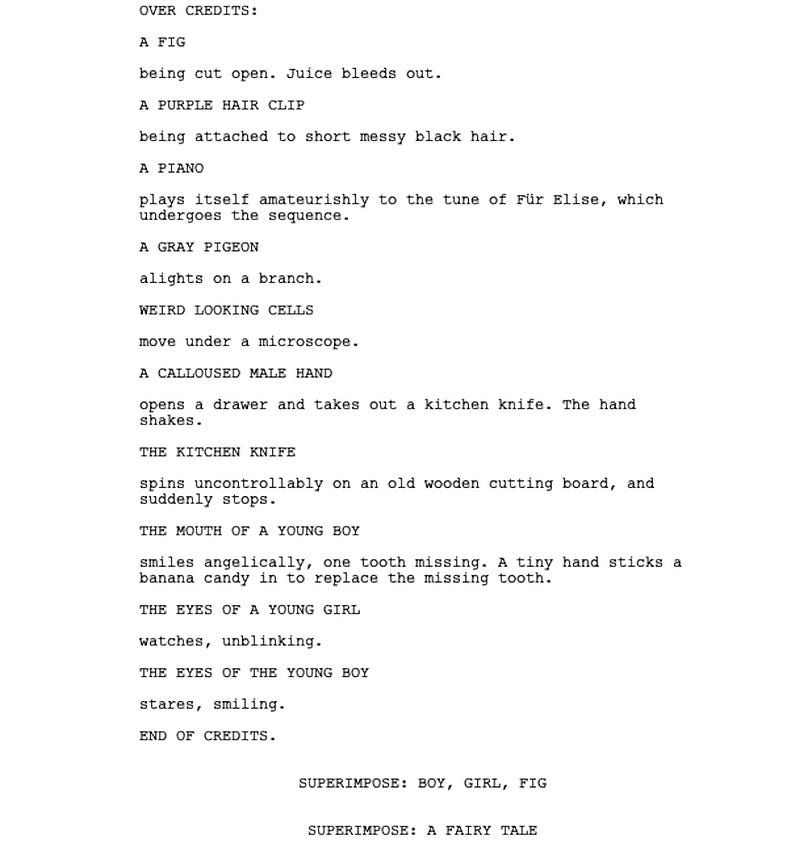
Kayla Sun wrote the original screenplay “Boy, Girl, Fig” which won a 2023 Nicholl Fellowship in Screenwriting. Recently, I had the opportunity to chat with Kayla about her creative background, her award-winning script, the craft of screenwriting, and what winning the Nicholl Award has meant to her.
Today in Part 5 of a 6-part series to run each day through Saturday, Kayla shares what it was like to win the Nicholl and experience the award recipient week in Hollywood.
Scott: What about the Nicholl experience? Walk me through the whole thing. How you get selected for this and then you’re a semifinalist. So what was that all like?
Kayla: Yeah. They told us that there was some problem with the eligibility with our scripts and wanted to do a zoom call to clarify and we were all just afraid that we were going to be disqualified but when we got onto a zoom they were just like, hi, meet each other, you’re this year’s finalist.
We were just very, very surprised because I really thought there was something wrong with my script. The whole Nicholl committee, they really care about writers and they organize many events for us to get to know each other, to know past fellows, to promote the scripts. They made sure that we had the best experience. I attended all the events that were designed for us and really enjoyed every minute of it. We got to meet the Nicholl fellows who are all very experienced writers now and a lot of the recent writers and connect with each other. It felt more like we were welcomed into a big family rather than winning an award.
So that was the best part of it. And simply the recognition of Nicholl got me contacts from managers reps and I got repped very soon.
Scott: And you’re with Bellevue?
Kayla: Yeah.
Scott: That’s always good to hear when the people get represented off that and Bellevue is terrific. I mean, I’ve interviewed quite a few of their clients, so, good for you.
Kayla: Thank you.
Scott: Well, again, congratulations and thanks on letting me read the script. I really enjoyed that. Let’s ask a few craft questions, if you don’t mind. I’m not sure how you’re going to answer this. How do you come up with story ideas? Maybe they’re just floating around in there.
Kayla: Yeah, it’s hard to say. “Boy, Girl, Fig” just evolved around the character I had in mind, but I have many other ideas that were based on dreams of mine. I often wake up and remember what I just saw in the dream, and when I thought the character and what they were trying to do were interesting, I would write them down. And they were usually very complicated dreams, with many scenes and plots. Some time later, I look at what I wrote down and think, OK, that’s an entire story on its own.
Scott: Well, a lot of writers think that the best writing is subconscious writing, right? I remember reading an article with a writer, Robert Rodriguez, who said he started doing this thing where he wrote first thing in the morning. When he would wake up, he’d get his computer out and start writing. So he wanted to have that fuzzy state you are in for the first 5 or 10 minutes. He wanted to be in that place still.
That brings me to your breaking story, as they say in Hollywood or prep writing, you’re talking about, well, I guess maybe you don’t use cards and maybe there’s some sort of outlining. Is there a specific approach that you use or is it just you’re feeling your way through this and you’re just thinking about these stories and do you have a specific process for breaking stories or is it just organic?
Kayla: I think they come out organically. I do develop a lot of stories at the same time, but then each story is developed for a long time.
I often describe like I have 10 drawers in my head and each is a different story. When I’m living my life, when I get inspirations, I will know which drawer to put the inspiration into, like which story it belongs to. Then the drawers will slowly get filled. And then five years later, I would think, OK, drawer number six is ready. Then I’m ready to write it.
When I get inspired, I will develop a part of one of the stories. I don’t push myself to just focus on one thing for a short period of time. I just let them live for a really long time because sometimes you can’t force the inspirations to come. And a lot of the plots just really come out of nowhere.
I especially come up with ideas when I’m driving or I’m waiting for an airplane, just when I have nothing to do, I will think about stories. Then some of the plots will come together themselves. I think the most important thing for me is I don’t write a story before I know they’re really ready. But when I know they’re ready, they already have 90 percent of the flesh and meat in there.
Tomorrow in Part 6, Kayla shares advice for writers attempting to break into the Hollywood screenwriter profession.
For Part 1, go here.
Part 2, here.
Part 3, here.
Part 4, here.
Kayla is repped by Bellevue Productions.
For my interviews with every Nicholl Fellowships in Screenwriting winner since 2012, go here.