Interview (Part 5): Greg Roque
My interview with 2022 Black List writer for his script Jerry!
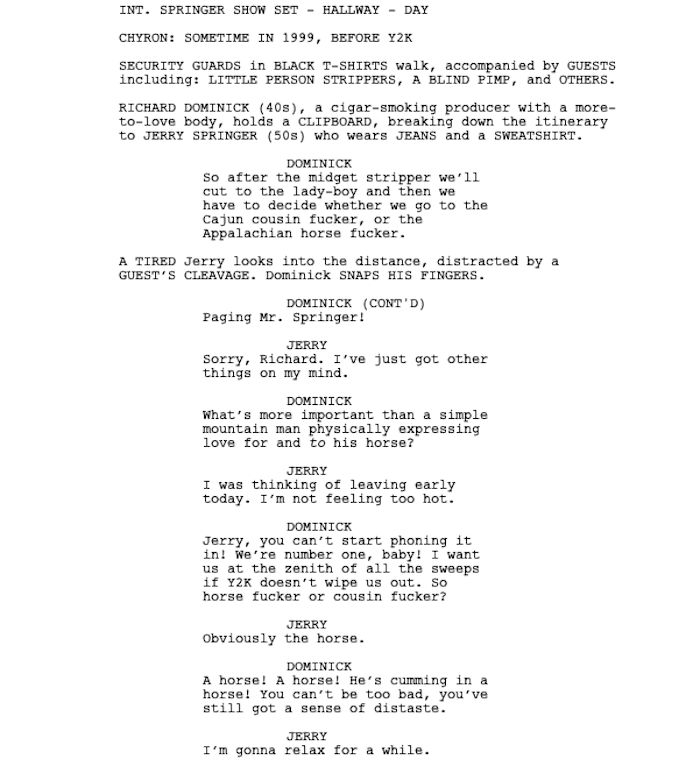
My interview with 2022 Black List writer for his script Jerry!
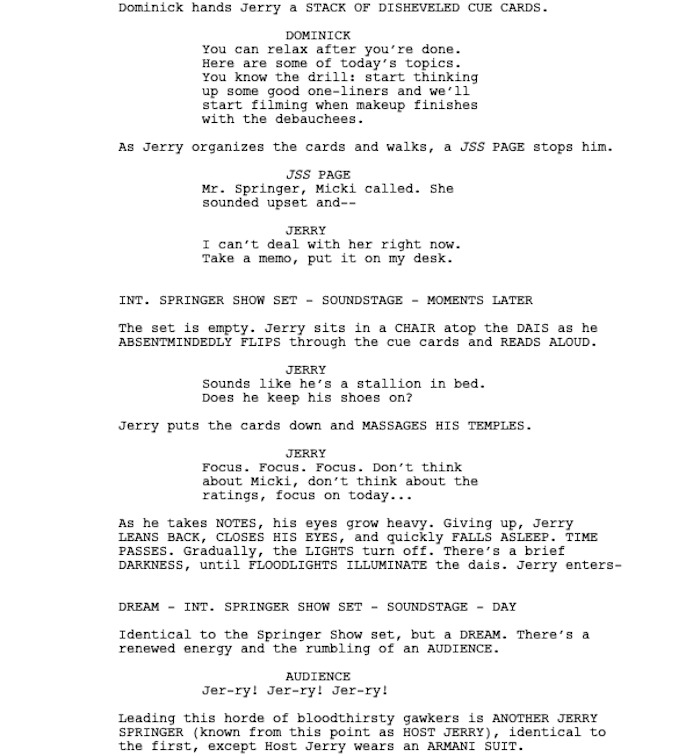
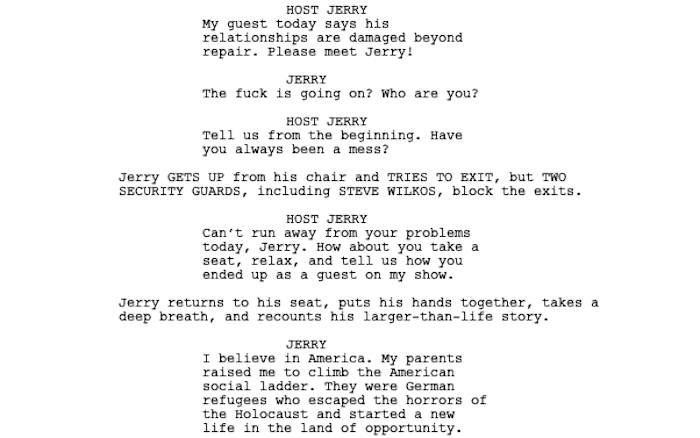
Greg Roque wrote the original screenplay Jerry! which landed on the 2022 Black List. I had the opportunity to chat with Greg about his creative background, writing a Black List script, and the craft of screenwriting.
Today in Part 5 of a 6-part series to run each day through Sunday, Greg shares what it was like to make the 2022 Black List.
Scott: Congratulations again. Let’s talk about making the 2022 Black List. On December 12, when it was rolling out, were you at all tracking it?
Greg: Yeah, so it’s funny. I was having lunch. I believe it was that Saturday before they announced it, with my friend, Barbara. She asked me, “Are you excited for the Black List?” I asked, “Aren’t they announcing it in January or February?” She said, “No. They’re announcing it this Monday.”
Again, this is bad, and I don’t recommend writers do this, but I don’t follow the trades. I’m a very simple man. I just want to write, watch movies, and talk about movies all day.
Once she told me that, I really didn’t sleep that weekend because my anxiety started kicking in. I woke up around 6 and watched thee hours of YouTube or something, waiting for them to announce it at 9:00 or whatever.
It was cool when I saw my name and the script posted. I was like, “All right, cool. Now I can sleep for a couple hours.”
Scott: I would imagine, didn’t your phone blow up and emails…
Greg: Oh, yeah. Honestly, it felt like almost as soon as they announced it, I started giggling. I was in bed. I was giggling, and then my wife was like, “Why are you giggling?”
I show her my phone, and she’s like, “Oh, congratulations.” It’s like, “Yeah, OK, well, I’ll see you in an hour.” Then from there, that’s when I started looking at my phone and all the messages.
Scott: Making the Black List, have you gotten more general meetings out of it and that sort of thing?
Greg: There are meetings in the works. Some big names are interested in reading it. People have reached out to me about other stuff, too. Here’s hoping, fingers crossed, something good happens with this. I mean, at the end of the day, man, I’m just a writer. I’m just a prostitute looking for their next trick. I just want to write somewhere. [laughs]
Scott: You’re still doing the stand‑up comedy, right?
Greg: Yeah.
Scott: You tend to balance both of those things, the writing, and the comedy?
Greg: It varies because there are some times when I love stand‑up more than screenwriting, and I love screenwriting more than stand‑up. For obvious reasons, right now [laughs] I like screenwriting more than stand‑up, but at the end of the day, they’re both joys.
I don’t know about balance. If it’s the case that screenwriting’s where I get all my bread and butter and how I pay the bills, then that’s what I’m going to devote myself to.
It doesn’t hurt to drive one or two nights to a local comedy club and do 15 minutes of material, so I don’t think I’ll ever abandon that because stand‑up comedy’s too much fun. I’ll go wherever the money is.
Scott: I will have to make a confession. Back in 1985 to early ’87, right before I sold a spec script and broke in as a screenwriter, I was doing what I guess could charitably be called stand‑up comedy. That’s how I was making my money.
Two things I took away from that. One, whenever I was in meetings with development executives or producers and they went, “Is this line funny? Is this scene funny?” You could always just say, “You know what? I’ve done stand‑up comedy, so you’re going to have to trust me on that.” There was that.
The other thing is, the courage is get up on stage. I find that you could do that when you go on for pitch meetings. That’s the same thing where you put that mask on. Have you found some benefits from your stand‑up in terms of your own writing experience?
Greg: Yeah. Like you said, it’s a double‑edged sword where there is some hubris because, like you said, when you write a line and someone asks, “Is this funny?” I think to myself, “I know a little thing or two about comedy, dear”, especially with friends who focus primarily on drama.
They read the script and they’re like, “I don’t know if that line is funny.” Then I’m biting my tongue like, “It’s pretty fucking funny.” It does give me a sense of what’s conversationally funny. There are the larger jokes and gags, but standard comedy helps with that naturalistic dialogue.
For me, the guys I want my character to sound like land somewhere between a David Mamet character and a George Carlin rant.
Scott: Let’s jump into a few craft questions. How do you come up with story ideas?
Greg: I don’t know. It’s whatever comes to interest me. The one thing I’ve gotten from me is, I’m a curious person and I’ll admit when I don’t have ideas and then I’ll start reading stuff for inspiration. I have to use tracing paper in order to build an idea. I’ll watch a movie, think of something, and say, “That’s interesting. I wonder if anyone’s done that.”
Then I do some research on the topic and then from there it becomes an obsession where that’s all I want to read about until I’m ready to commit the idea to paper. I’m very much a scavenger in that sense.
Scott: Let’s talk about that part of the process. You’re doing some research. What is your basic approach to breaking story or prep writing? Do you brainstorming character development, plotting, outlining? What’s your process?
Greg: I would say using the analogy of tracing. Once I find the subject or the topic I want to write about, it’s trying to find things that have already been made and existed and modifying them. Like I said with Jerry Springer, I re‑watched Private Parts four or five times so I could get into that headspace.
Then I watched A Face in the Crowd and The People vs. Larry Flynt, and Bob Fosse’s Lenny. It’s taking pieces from disparate sources and then reading more. I was reading some books on Jewish American contributions to Civil Rights movement in order to better understand Jerry’s upbringing.
It’s a melting pot, or cosmic gumbo, where you take from as many things as you can until all smelts into your own.
Scott: Do you shape it into an outline or do you just start writing?
Greg: No. I’m an outliner. I tried to be cool and write without outlining. Then by the time you get the first act, you’re like, “OK, where do I go from here?” You have to have the skeleton, then you put some meat on them bones. The bones are the money.
Scott: I heard you talk about with this movie, this version of the American Dream. It’s like a central theme in a way. Do you have to have that theme, that key theme in place before you start writing?
Greg: It comes on maybe after a couple of days of sitting on the idea. For me, I have this predisposition to those stories because Martin Scorsese and Paul Schrader are some of my favorite filmmakers, if not my favorite filmmakers.
You think of the Goodfellas, or you think of The Wolf of Wall Street. Then from there, it’s trying to steal from the larger-than-life characters. It’s stealing from the people that you admire and stealing from who they stole from.
Scorsese and Schrader obviously love Orson Welles and Kazan, so it’s like, “OK, let me watch these, and then from there we’ll be watching the Josef von Sternberg movies.”
In a way, I guess, while it’s a biopic, to me it was almost a crime story because Jerry himself has said, “I’m such a lucky guy. I don’t know what I did to deserve this luck”. I felt like Jerry Springer pulled off one of the biggest heists in American culture. I want to have that framework in mind.
Tomorrow in Part 6, Greg offers advice to aspiring screenwriters.
For Part 1, go here.
Part 2, here.
Part 3, here.
Part 4, here.
Greg is repped by Bellevue Productions.
Twitter and Instagram: @gregroqueislame.
Website: gregroqu.com.
For my interviews with dozens of other Black List writers, go here.