Interview (Part 5): Elad Ziv
My interview with 2022 Black List writer for his script Court 17.
My interview with 2022 Black List writer for his script Court 17.
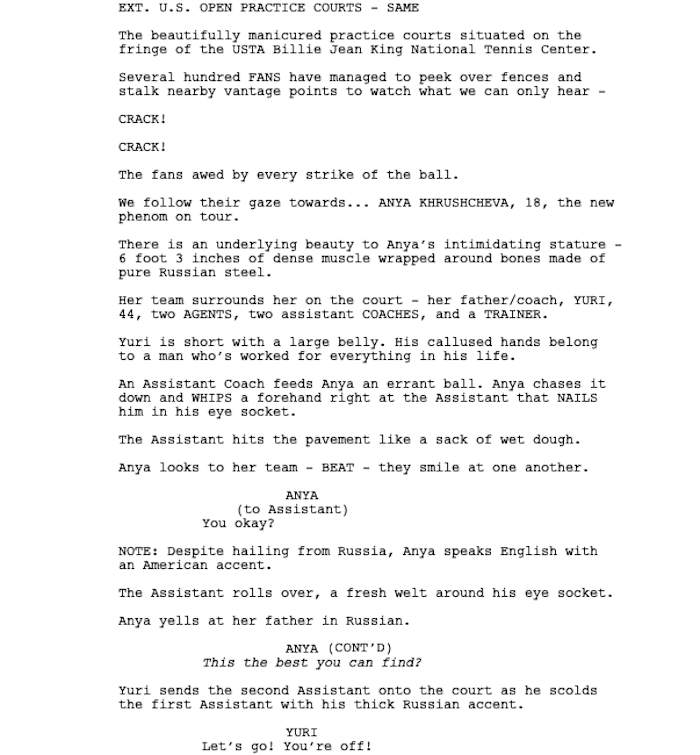
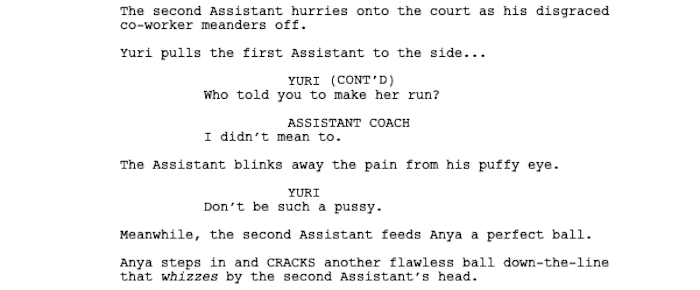
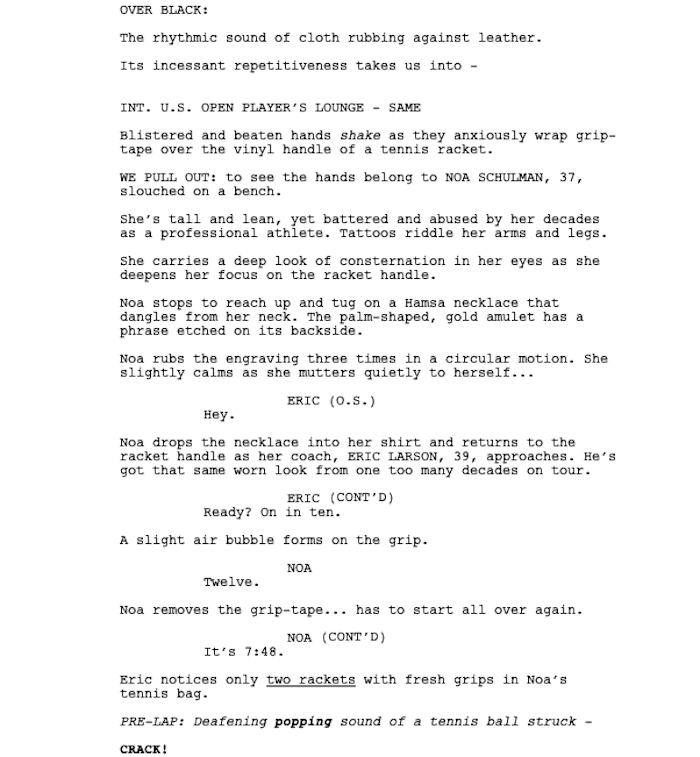
Elad Ziv wrote the screenplay Court 17 which landed on the 2022 Black List. I had the opportunity to chat with Elad about his creative background, writing a Black List script, and the craft of screenwriting.
Today in Part 5 of a 6-part series to run each day through Sunday, Elad shares what making the annual Black List in 2022 has meant to him professionally as a screenwriter and Court 17 as a movie project.
Scott: It’s a terrific script and well worth getting on the Black List. Let’s talk a bit about that second Monday in December when the annual Black List was revealed. What was that experience like during that day, and subsequently?
Elad: I’ve been writing for 14 years, and I’ve been hearing nothing but nos for 14 years. I’ve never had a rep before this year. I’ve never won a screenplay competition before last year. It was a long journey, and I’ve worked really hard. I’ve written every single day as if I was a professional screenwriter.
I’ve dedicated myself to this craft, and I love this craft. I went to the gym that morning. My manager had warned me like a month before that it was going to be today. I knew that I was going to have a few votes, but I didn’t know that I would have enough votes to actually be on the Black List.
I went to the gym, I always turn my phone off. Then when I turned it on at the end, I saw a Twitter notification. It said Black List, and it said my name, and it had a little caricature of COURT 17, but that’s all it said. I was like, “What is this?” Because I also paid for Black List services a couple…
When I was first writing this, I would pay for the notes on stuff. I was writing on the black, I got notes. I didn’t know which Black List it was. I called my manager, John at Bellevue and he said, “Dude, it means you’re on the fucking Black List.” It’s hard to describe the feeling of all those years.
It sounds so stupid to say this, and I’m kind of going back onto everything I said with COURT 17 and the moral of it about how it shouldn’t be about awards and all that stuff, but to get that validation, and honestly, I don’t even know if it’s my happiest day because the day I signed with John Zaozirny [manager, Bellevue Productions] was definitely one of the happiest days of my career as well. That was unbelievable validation because I have friends who are so much farther along than me in their career that he did not sign. I know how picky he is.
That was honestly one of the best days of my professional career as a writer, but then the Black List, it was an amazing experience. I didn’t expect it. To be honest with you going into it, I didn’t think I cared about it. Maybe I was protecting myself in case I didn’t get on it. When I found out I got on it, it was unbelievable.
Then a couple hours later, the Deadline article came out with the rankings and I saw myself at number two, and I was like, “What?” I knew COURT 17 was special, and I really believed in it, but I had no idea. Honestly, I was so humbled by everything and excited, man.
Compared to other writers and even when I see other Black List writers and stuff, it took me a long time to get here compared to most writers who are around…my peers or what have you. I appreciate it. I really appreciate it.
Scott: I would hope that’s translating into a bunch of general meetings.
Elad: Before the Black List, we sent it out to a bunch of producers to try to get a producer on it. We had an unbelievable response to it, so many people reached out. I’ve had a lot of generals and stuff like that with great production companies that I respect, and I love their work and excited to potentially work with one day.
The Black List thing was exciting as well. It definitely has amped it up a little more, and now I have some more meetings coming up as well. Hopefully it helps with getting it made as well.
Scott: Congratulations again. I’d like to ask you a few craft questions if I could. Of those scripts that you’ve written like 12, 13, 14, are there any in a specific genre? I’m curious. Were you testing out different genres?
Elad: Testing out different genres. I would say, the biggest thread of all of them, it’s write what you know. I wrote a pilot about my grandparents, a true story about my grandparents living in Poland in the 1930s, leading up to the Second World War and what life was like for Jews in Poland in the ’30s before the Nazis invaded. I thought that was a very interesting time.
I’ve written biblical epics, I’ve written horror films, thrillers. I’ve written sci fi, near future, futuristic sci fi. I love so many different movies, and I’ve dabbled in so many different kind of things.
The thing I’m working on with John now is like a dark character study as well. It’s similar to COURT 17, but also kind of different. I like so many different kinds of movies. I’d say the only movie I really haven’t written is a comedy. That’s really the only thing that I don’t do. Yeah, a lot of different things interest me in this world.
Scott: Would you recommend to writers who are just trying to learn the craft that they write a lot of different genres? Or would you recommend they find one and focus on that?
Elad: I think it depends on where you are. For me, I was just figuring out who I was. If you know who you are, then lean into it and write that over and over and over again. I think I was discovering my voice and discovering who I was. I started at 24. At 18, I didn’t go to film school and study writing. Everyone has their different journey.
Once you discover your voice, lean into it. Honestly, the biggest thing I can say, I’m so happy of the path that I took, but I think it took a lot longer because I was very hesitant about the idea of concept. I was always obsessed with execution, which is very important. I was obsessed with the readability of my scripts more than I was with concept.
I really do think it’s 50/50. I really do think it’s important that you get something that people want to read, so that they, as I mentioned earlier, even give you a chance to read your scripts.
Now, that being said, COURT 17 is by far the best script I’ve ever written. Even if I did something higher‑concept six years ago, maybe the concept would have been cool, but maybe the script wouldn’t have been that strong, and someone would have rewritten it or something like that. It really depends.
I had to have a lot of patience. I don’t recommend what I did to most people because it took 14 years. I don’t know that a lot of people want the 14‑year plan of how to finally start getting traction with things.
I’m happy that my path was learn how to write without anyone seeing what you’re writing. Then when you’re ready to go out there, you’ve written enough where you can execute something that is on a professional level.
Scott: That’s a good philosophy to have. Maybe, like you said, you may have come up with a high concept six years ago, but you might not have been the writer that you needed to be to sell that.
Elad: I definitely was not. I know for a fact, I was not, because I read my scripts from time to time just to be curious about where I was and where I am now. I definitely was not the writer that I am today.
Scott: Based of the success of COURT 17 which does have a high concept to it or a strong, central conceit, has that shifted the way that you approach coming up with story ideas, or at least assessing them in terms of what you maybe wanting to write?
Elad: Absolutely. I think that’s the amazing thing about having John and working with Bellevue is that he’s very hands on in development of new projects. He doesn’t just tell you to go write something, and then you come back to him in six months. You know what I mean?
He wants to make sure that whatever I’m spending my time on is worth my time. He understands the market place, and what’s going on better than I do. I really, really appreciate his mentorship in that. I say that because he checks me a lot. I sent him 40 concepts and he’s like, “No, this is not going to do it.”
Because I still hang on to that old stubbornness thing of, “Oh, maybe I can make something for myself now. Screw what everyone else thinks,” but it’s a dance. Everything is a dance. You’re not selling out, but then you’re also making movies for people to watch, not for you and your family to sit in a theater by yourself to watch.
It’s that dance of figuring out how I take my love for script writing, my love for storytelling, and how do I turn that into a wider thing that people are interested in reading. Which I did with COURT 17, and which John and I believe we’re doing with my next thing now.
Tomorrow in Part 6, Elad gives some advice for aspiring screenwriters.
For Part 1 of the interview, go here.
For Part 2, here.
For Part 3, here.
For Part 4, here.
Elad is repped by Bellevue Productions.
Twitter and Instagram: @eladziv
For my interviews with dozens of other Black List writers, go here.