Interview (Part 5): Callie Bloem and Christopher Ewing
My interview with the 2022 Nicholl Fellowships in Screenwriting winners.
My interview with the 2022 Nicholl Fellowships in Screenwriting winners.
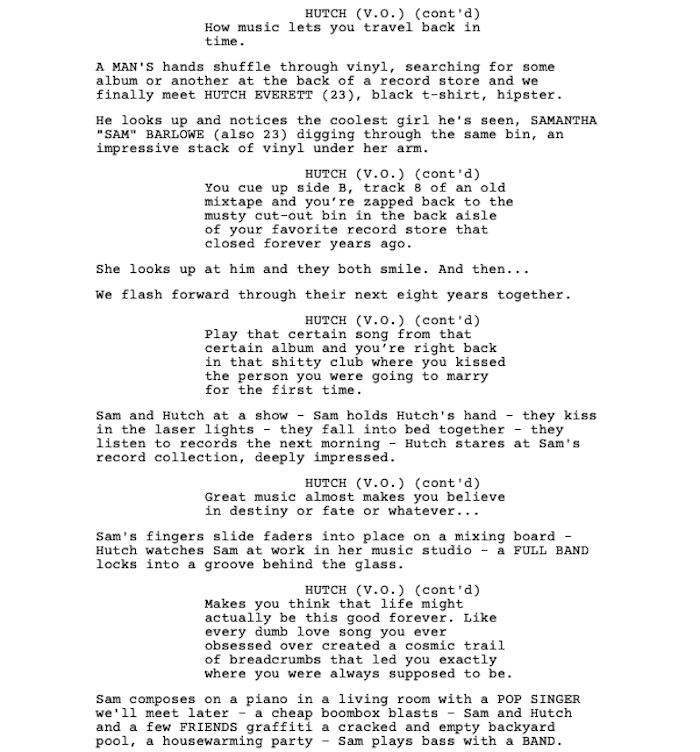
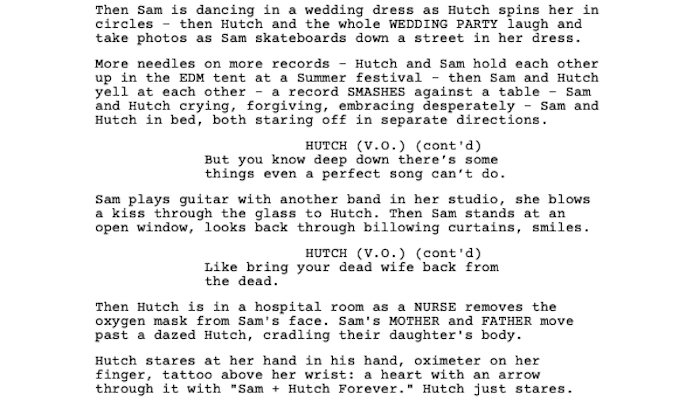
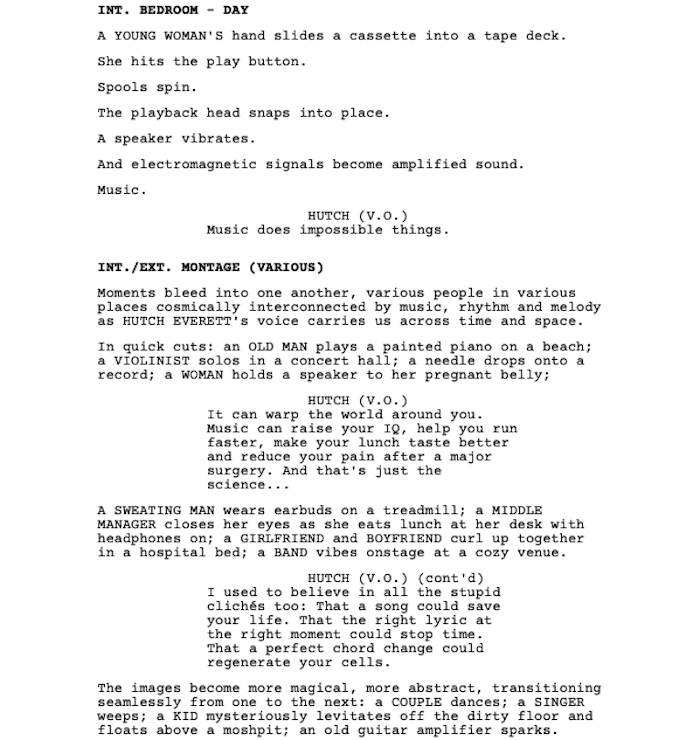
Callie Bloem and Christopher Ewing wrote the original screenplay “Tape 22” which won a 2022 Nicholl Fellowship in Screenwriting. Recently, I had the opportunity to chat with the couple about their creative backgrounds, their award-winning script, the craft of screenwriting, and what winning the Nicholl Award has meant to them.
Today in Part 5 of a 6-part series to run each day through Saturday, Callie and Chris share what it was like winning the Nicholl Fellowship in Screenwriting.
Scott: I don’t want to give away the ending. I’m going through the thing and of course, I’m feeling stuff because they’re talking about a guy grieving and other people who’ve got their own tragedies. The ending is so bittersweet, but emotionally resonant. You know what I’m talking about? These little moments with individual characters.
I found myself getting emotionally moved more. The entire script I’m reading, but there I was like, “Wow, God, this is really powerful stuff.” I’m just curious what it was like when you were writing that the first time? Was anybody weeping when…?
Callie: That is music to my ears, because nothing makes me happier than making other people feel sad or emotional.
Christopher: That’s your business card. Nothing makes me feel happier than you feeling sad.
[laughter]
Callie: There definitely were some scenes that were hard to write, and I’m also a big feeler. There were some where I had tears. I felt like I was Sam or I was Hutch. I feel like Chris doesn’t actively cry, but I like to think inside he’s maybe crying a little bit while we’re writing this.
Christopher: What was so special about the back end was we, very early on, knew that Clementine…Because Hutch is the only person that can see Sam, we knew that Clementine was probably not going to have a lot of interaction with Sam.
We designed a scene to work toward that would be a way for her to have a moment with her mom. That became our guidepost to work toward as we were building the spine of the movie. That was a really early idea for a scene in the last act that we wanted to earn and get to.
Having those kinds of moments with big, emotional resonance allowed us to formulate what else there was going to be before it.
Also, knowing where we were going to end up was informative in terms of how hard we could push on certain elements in the early goings. Also, how much comedy we could have it get into, because we never wanted it to be funny at the sake of being dramatic and pull at the heartstrings.
It is a movie about grief, and it’s about healing. Those are the kinds of things that aren’t always the funniest. Hopefully, you’re a little disarmed by the humor and the magical realism of it that, when those emotions creep up on you, hopefully, they hit a little harder.
Scott: That’s probably right. It’s like you’re disarmed, and then all of a sudden, boom. Now, you’re realizing, “OK, this is where this is going. This is going to be quite emotional.
Speaking of emotional moments, what about winning the Nicholl? What was that like?
Christopher: It was very surreal.
Callie: It was insane.
Christopher: We had no expectations for the Nicholl Fellowship. When we got quarter‑final and semi‑final, we’re like, “That’s wonderful. That’s so nice.” We’ll wait for our rejection letter eventually, but this is lovely that they like it enough. Then, when we got the call that we were finalists, that’s when things firmed up and got real.
Callie: We still had zero expectation of winning because in general, I feel like our work is a little out there. I didn’t think we’d win. As soon as we got the finalist, we’re like, “We need to hustle so hard before anyone finds out that we lost. Maybe we can find a manager. We need to try to find meetings because we’ve only got a couple of weeks and then we’ll be losers.” Then it was actually a much shorter time period than expected.
Christopher: Absolutely. We didn’t capitalize on that. We are very lucky that we won for so many reasons. It was very surreal also when we found out that we won because we were in production on a short film. We basically had that long epic Zoom where we were waiting to find out if we had won or not.
Then we had to go right to a tech scout, and then we spent the next three days filming a short film about post‑apocalyptic Los Angeles. We didn’t have enough time to catch our breath for a little while. It was a slow dawning of how much our life and career were going to be affected by this.
Scott: The Nicholl week, did you participate in that?
Christopher: It’s incredible.
Callie: It was amazing. It was the most special, fantastic week. We met wonderful people. We love our fellow Fellows. The whole alumni group is amazing as well. The people we got to talk to on Zoom or in person, it feels like that was enough award in its own. It was just a magical experience.
Christopher: We had gotten a handful of reads on Tape 22 in the year prior, and then to have Eric Heisserer, who wrote Arrival, which is one of our favorite movies, email us and be like, “Oh, we were talking about you guys at a meeting.”
Callie: It’s truly life changing, and that’s not even exaggerating in the slightest. There’s life pre‑Nicholl and life post and…
Christopher: I wish there was a better word than life changing because it’s like…
Callie: Chris likes to say that it’s like “Candy Land.” You’re going like one, two spots at a time maybe, and the exposure you get becoming a Nicholl Fellow is that slide that takes you a whole bunch of spots closer to the end.
Christopher: It’s like pulling that card that sends you all the way to Choco Canyon or whatever is up at the top. Lollipop Lane.
Scott: Spoken like true parents of a five‑year‑old.
[laughter]
Scott: You mentioned management. Did you get management or representation out of this?
Christopher: Yes, we did. Right when the Nicholl was announced, this is probably true for everybody, you get a rush of emails and contacts. What we did was we held off on sending Tape 22 to anybody except for managers. We met with about seven management companies.
We took that first two, three weeks just to build a team around us and then come up with a strategy for getting Tape 22 out in the world.
Scott: It’s Grandview…
Christopher: Yes. We signed with Sam Warren and Joe Cavalier.
Callie: They’re wonderful.
Christopher: They were at LBI for about two weeks with us and then moved over to Grandview, so we are now at Grandview.
Scott: All right. Congratulations. I enjoyed the script a lot as I said. Let’s end with a few craft questions here. How do you come up with story ideas?
Christopher: Gosh, we literally stand in a room going, “Let’s come up with some story ideas.” Then we just talk until we get tired and need to nap. Then we write those down. We’re actually in that process now where we’re figuring the next thing.
Callie: Where it starts to get almost addictive, like throwing out crazy ideas. Chris’s family lives in Palm Springs, and we’re driving home and we’re in the HOV lane. I’m like, “Maybe we should write a script about people driving in the carpool lane.” It’s like you almost get desperate trying to think of anything could be a story.
Christopher: You’re unbuckling the child from the car seat and you’re like, “Maybe it’s a haunted car seat. Maybe that’s what it is.” It feels like now that we’ve started that process, it’s a waterfall of terrible ideas with a good one once in a while.
Scott: I’m glad to hear that because story ideation, that process is really important. There are people who drift along and something will pop. I do think that Linus Pauling, the Nobel Prize winner, he said, “The best way to come up with a good idea is to have a lot of ideas.” I’m sorry. Go ahead, Chris.
Christopher: I was going to say, one thing we actively do, is we watch a lot of movies, we read a lot of articles. We’re constantly listening to podcasts that aren’t about movies, that are about other things. Anything that sort of…
Callie: Sparks ideas.
Christopher: Yeah.
Scott: How important do you think the story concept is to the viability, commercial viability of the script?
Callie: Definitely, it’s extremely important. The reality is Chris and I both worked in marketing before.
Christopher: I’ve had to make trailers for things that were very character-focused and didn’t have any story to hook into. It’s hard. You see people glass over.
Callie: It’s a craft, but it’s also a business, and we want people to see our movies.
Scott: Did you see the trailer that dropped yesterday for 65? The new Beck and Woods movie?
Christopher: Yeah, we did watch it.
Scott: Talk about a strong story concept.
Christopher: I love the idea of like, “OK, it’s people lost in space, but then they land in prehistoric earth.” Great, boom.
Scott: Got it.
Christopher: One thing I liked about that trailer is that it literally says, “The future plus dinosaurs.” It literally says the pitch in the words of the trailer.
Scott: That’s what I was saying earlier is that the successful movies live on the shoulders of these previous movies. You get Aliens and Jurassic Park.
Christopher: Yeah.
Tomorrow in Part 6, Callie and Chris share some screenwriting advice.
For Part 1 of the interview, go here.
For Part 2, go here.
For Part 3, go here.
For Part 4, go here.
Callie and Chris are repped by Grandview.
For my interviews with every Nicholl Fellowships in Screenwriting winner since 2012, go here.
For my interviews with Black List writers, go here.