Interview (Part 4): Wenonah Wilms
My interview with the 2018w Nicholl Fellowships in Screenwriting winner.
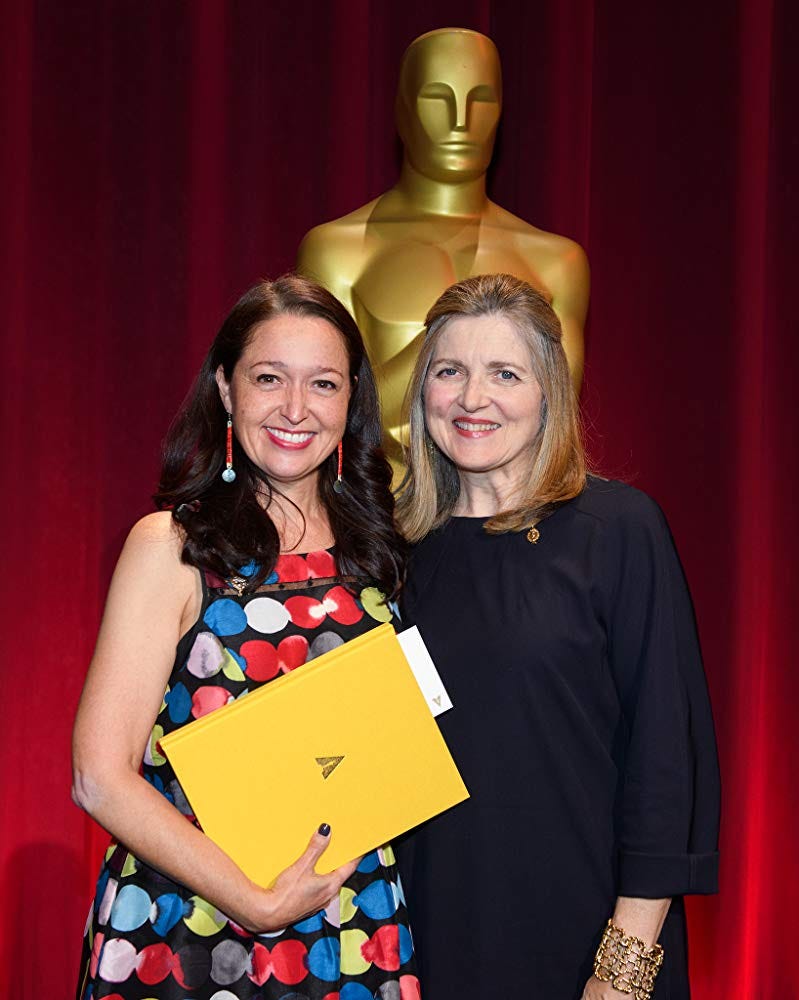
My interview with the 2018 Nicholl Fellowships in Screenwriting winner.
Wenonah Wilms wrote the original screenplay “Horsehead Girls” which won a 2018 Nicholl Fellowship in Screenwriting. Recently, I had the opportunity to chat with Wenonah about her background, her award-winning script, the craft of screenwriting, and what winning the Nicholl has meant to her.
Today in Part 4 of a 6 part series to run each day through Saturday, Wenonah and I discuss the use of setups and payoffs in “Horsehead Girls” and a comparison to the movie The Silence of the Lambs.
Scott: Let’s talk about that laundromat scene, which is one of the best scenes in the movie in your script. I said movie because I saw it in my mind. I actually see it playing out. Her boyfriend, Randy, shows up. He’s pissed off because…Maybe you can explain why he’s pissed off.
Wenonah: She has intimated her black eye and her being roughed up was from him because she did not want to give away where she really was and who she was with. Everyone believes it, because he’s a piece of shit. She didn’t completely throw him under the bus but she’s not denying it either. He’s heard the rumors around town that she’s saying he beat her up.
Scott: He got beat up himself.
Wenonah: He did. His brother’s in the police department. People are standing up for her.
Scott: There’s a fight in the laundromat. At the end of it, this is how you described the culmination of that event. After she fights back and her son sprays him with mace, she walks up to him and kicks him in the balls, dropping him to the floor like a bullet to the spine.
He cries and vomits on the floor. She says, “Don’t ever touch me again, Randy. You understand? I’m not afraid of you or anyone anymore. I’ve had enough.” That’s basically in the middle of the script, and it feels almost like a transition.
She’s now made this definitive turn. She’s killed the Tattooed Guy, but this is personal. This is someone that she’s wavered around Randy for many years. In fact, her girlfriend tells her, “You don’t let the guy…You got to stand up.” Now, she is. Does it feel like a transition for you at that point?
Wenonah: Absolutely. She’s found her strength. She has seen what she’s capable of. This is definitely a point where she is over it. She’s deciding to not be a victim anymore. Again, one of her children is there. She just does not want this to go on anymore. That is definitely a turning point for her.
Scott: You mentioned mama bear. In fact, there’s even a line of dialogue later on. Right? Mama bear. A big, big turn is Brylee, her daughter, gets kidnapped. As you said, she’s already seen what happened to Sarah.
Sarah in some ways is the Ghost of Christmas Future. “If I don’t do something, that could happen to Sarah.” Moreover, she has her own experience, and that could happen to Brylee as well.
You’ve got this interesting dynamic in play where she is off to try and find Brylee. Meanwhile, the FBI agents were trying to find her. That must’ve been interesting for you to try and balance out those two different storylines, I imagine.
Wenonah: Yeah. If I was going to watch this movie, how would this all play out? We’ve got the ticking clock. We’re literally racing across state lines.
We don’t know what’s going to happen to Brylee, who I wanted to set up as a fighter like, “I’ve seen what you’ve gone through, mom, and I’ll never fall to that.” While Keya has raised a strong girl, she might be afraid that she’s going to start fighting back. She means to get to her before that happens. You see what happens when someone starts fighting back. They’re going to get hurt. Brylee doesn’t know what Keya knows.
Scott: It recalls a bit not specifically but the feel of The Silence of the Lambs. A protagonist attempting to save a young girl from a criminal element as the FBI is on the case. Did you ever draw any inspiration for that or that movie or…?
Wenonah: I love that movie. I do love things that are dark. I love crime and mystery. Definitely, yeah. That’s a very big compliment. Thank you.
Scott: You have lots of really nice setups and payoffs. I don’t know about you but I love to see those in scripts. I love to write them. Especially using flashbacks, for example, at one point, we see Keya digging a hole in the ground. You don’t see what’s in there. That creates some mystery.
Later on, she returns to that spot. That’s where she retrieves the 38 caliber pistol she used to kill the tattooed man. How much fun is it for you to do those setups with payoffs?
Wenonah: I love it. All writers must go back when they see an opportunity for something that you can go back and put back in. That’s my favorite part of going through a script and saying, “Where can I place my setups and payoffs and foreshadowing?”
That’s my favorite part of screenwriting, because you just slip them in there. It’s great. I wish I had more.
Scott: I was just talking about this the other day. We call it reverse engineering. It’s like, “Oh, I got a great beat here. Now, I gotta go back and set it up.”
Wenonah: I love that.
Scott: There is a secondary character. I look for these little grace notes, this character, Faris, one of the FBI agents. She’s a female. It’s a subtle thing, but I’m thinking you were intentional about this.
As they’re tracking Keya’s actions, they’re picking up clues. Faris is developing a healthy respect for her. When she learns that Keya’s going to go after Brylee and one of the…Lonnie or somebody says she’s going to do whatever she has to do to save her daughter Faris says this, “It’s about fucking time someone did.”
The subtext to me is that this is beyond about Brylee. This is about misogyny in general or the way that women have been mistreated. Now, it’s time for women to fight back. Is that a fair reading of that?
Wenonah: Absolutely. They were talking earlier like, “Why hasn’t anybody stopped these people? How do they keep getting away with it, and why aren’t you doing anything?” It’s not that easy if you do it by the book. To watch someone throw that all away and go for it in a vigilante way, one woman to another is like, “Go girl. Yes, do it. Let’s do it.”
She is bound by the law to not do that. But as women and as mothers, we got our backs definitely. She’s pretty pleased about that.
Scott: I want to pick up on that, too. It was a really compelling moment in the script right toward the very end, basically the final struggle. As part of the Horsehead Girls rules, they’re told not to know each other’s names.
You probably made that up or maybe it is real, but I’m guessing that’s to keep them from humanizing each other. Just make them feel more like objects unless they would connect with you. Is that right?
Wenonah: Finding out who they are and where they belong. To me, this actually goes back to my grandmother’s boarding school experiences. The first thing they do is they strip them off their identity, their names, their language, and their culture.
To me, that one act alone of removing who you are to just make you nameless, faceless, and then nothing is so horrible.
For someone to be like, “That’s gone. No more. We’re not using that every again.” So much is wrapped up in your identity. I guess it was just a call back for me to all of the atrocities for Native Americans. Taking away their names was right at the top of the list.
Scott: Their identity. That scene that I was talking about, there’s a group of these girls. They’re surrounding this stranger guy. She tells them her name and elicits them to share each of their names.
When I read those pages, for some reason I thought of you typing it the first time that scene. Do you remember what your feelings were as you typed it as each of those girls were saying their names or what feelings you’re having?
Wenonah: Yeah. It gave them back their faces, their names. I felt like I was doing that for each of these characters. For anybody that’s been in any situation like this, you give them back their humanity and you give them hope like, “We’re getting out of this.” It was very cathartic to write that. It’s a big scene that I would actually love to watch.
Tomorrow in Part 5, Wenonah shares what the experience has been after winning the Nicholl Award and answers some writing craft questions.
For Part 1 of the interview, go here.
Part 2, here.
Part 3, here.
You can learn more about Wenonah at her website here.
Wenonah is repped by UTA.
For my interviews with every Nicholl Fellowships in Screenwriting winner since 2012, go here.
For my interviews with 53 Black List writers, go here.