Interview (Part 4): Vigil Chime (2017 Nicholl Winner)
My 6-part talk with the writer of the script “Bring Back Girl”.
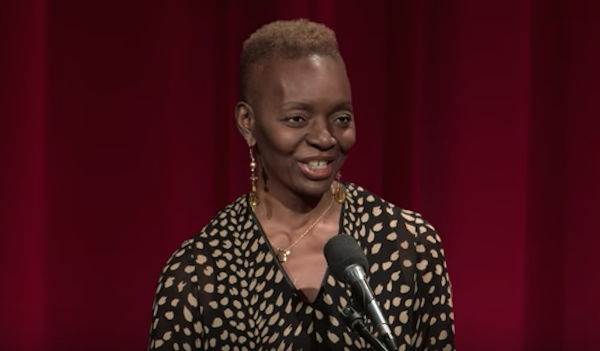
My 6-part talk with the writer of the script “Bring Back Girl”.
Today in Part 4, Vigil and I continue our conversation about her movie script “Bring Back Girls”:
Scott: It’s quite dramatic. It certainly raises the stakes. The third act is incredibly intense. You say, “I don’t like to outline. I like to just start writing.” Did you know, going into this project, it was going to be heavy with action?
Vigil: Very good question. I love action. The thing is I love action films, myself. [laughs] I really do. I wanted it to be an action film. I had that in mind. It’s drama, sure. It’s family, sure, but I want it to be where every time you turn the page, there’s movement.
I don’t want to sit still too long. I don’t really want that. I wanted from page one with Boko Haram until the end. That, to me, is an amazing scene where the father literally jumps over his daughter to get to those who are trying to kill her. [laughs]
From the beginning of the movie to the end, I wanted it to be constant jumping, running, firing, ducking. In my mind, it was just movement. I don’t want us to sit still. That was some of the things that I wanted to achieve in the film. I don’t want to sit still too long. That was why I made it moving as I did.
Scott: I’m sure you’ve been following the news here in United States, the [Harvey] Weinstein, #MeToo movement, putting a spotlight on men assaulting women and sometimes other men. Is there kind of a parallel here in a way to your story?
Vigil: I wasn’t thinking of any of that. I guess you can say what is happening in Hollywood now is just the western version of what one can say happens in these African villages. You can say that this is just the Western world’s version of men in power, sexuality, and all that.
What’s the difference? You can say, “Oh, yeah, but our Western men are not buying and selling children.” Aren’t they? I’m like, “Really?” What is Roy Moore? Isn’t it several 14‑year‑olds he’s accused of touching?
The other day, I saw there was yet another political figure who was caught in some motel with some boy. Are the African men really that different from the westernized, powerful men? I go to work in America. They give us a sexual harassment doscuments..Everybody has to sign off on it every year. I wonder what is going on. Evidently, we’ve been wasting paper this whole time.
Scott: There were some comments at the Nicholl award ceremony where a speaker talked about the courage of the writer to follow whatever story they’re passionate about in the face of conventional wisdom. She was talking about you. What did you think about her words in that regard?
Vigil: I don’t know what she was talking about. Vigil and courage, what is that? OK, that’s nice. [laughs] I’ll say this about my work over the years. The thing is this. It doesn’t really take a village to write a story. It shouldn’t. In Hollywood, I have seen situations where people come. Everybody touches your story. Everybody touches it. They give you notes. Everybody’s telling you stuff. Sometimes, they contradict the choices you made. To me, this is a very subjective thing that we do. It’s very, very subjective. You have had people who contradict each other.
These are wonderful people trying to help you, but this one just said the opposite of what this other one just said. Now, what do you do? For me, one thing I can say about my approach to my work when the idea is mine. If somebody says to me, “Write something for me,” that’s different.
But if the idea came from me, I am so protective of the vision that I wrote. I don’t need a village. I don’t write with a village. This is the first draft, by the way.
Scott: Really?
Vigil: Mm‑hmm, because I wasn’t supposed to submit it. I thought I was going to go shoot it. There’s nothing for me to redo. There’s nothing to redo. This is the first draft, in essence.
People will come and say things like, “Well, it was the beginning. You know, it wasn’t about Boko Haram, so why don’t you get rid of the beginning?” I’ve heard that. Start it in the village, when Khalilah is there already. I listen to that. I thank them politely, but I keep the front. I call the whole Boko Haram abduction the front. I keep the front.
It doesn’t ultimately matter what people say if it contradicts what I’m trying to do. It doesn’t really resonate with me, actually. I’ve had readers say, “Oh, the character of Dia died. Is there any way you can keep Dia alive? He was so good.” I said, pardon my French, “Shit happens to good people all the time.” I said, “Look, he could have marched that girl out of the compound upon learning that she was not an orphan.”
This girl was kidnapped, essentially. He could have just waited until everybody went to sleep and said to Khalilah, “Come on, girl. You’re getting out of here. They’re not going to kill me. I’m family, you know,” but he didn’t.
I just think that that choice of not doing that, he got this own comeuppance. As difficult as it was what happened to him, but this can easily be real life. Sometimes, good people die. Sometimes, good people live. In this story, this is what happened to Dia.
More importantly ‑‑ and this is the selfish person in me ‑‑ the scene where Dia’s wife carries her dead son out of that house, that image…Remember when in “The Ten Commandments” Yul Brynner’s character carried his dead son because of Moses?
Scott: Yes.
Vigil: [laughs] That was the scene I was going for. Like, “Oh, this is my Yul Brynner Ramses moment. The way he was walking, carrying this dead…” This is the image I have for Dia’s wife.
I was like, “No, no, no, no, no, no. If I keep Dia alive, then I’m not going to have that scene.” He would obviously be alive, and nothing would have happened to his son, then there would be no need for him to go after Khalilah.
The only way he would live is he didn’t go after Khalilah. The only way he would not have gone after Khalilah is because his son was quite OK, but I decided that I cannot wait to shoot the scene where a mother carries her dead kid downstairs. I love it so much. I said, “No, no, no. Dia must die for that!” This is the selfish person, the dramatist in me. [laughs]
Scott: In your acceptance speech, you mentioned the women screenwriters over 40 writers lab. Was that the one that Meryl Streep started, or is that…?
Vigil: Right, that is the one. That’s the one.
Scott: What was your experience like there?
Vigil: Well, it was kind of weird. It was all timing. For example, my story was at finalist level with the Nicholl. We did not know if “Bring Back Girl” had actually won, but she was at finalist level the weekend that we had the retreat.
Meryl Streep’s The Writers Lab is a workshop. The mentors work the script, and they were workshopping my script, trying to make it better. I was like, “Well, hold on a second. Let’s not touch it. Let’s not touch it. It’s doing so well somewhere else.” [laughs]
It was a weird situation. They said they hadn’t really had that happen before where I came for a workshop and yet the very thing we’re workshopping is finalist at the Nicholl. I just said, “Well, let me have your notes anyway.” They gave me notes, but I was not inclined to change anything in my script because the script was doing so well at the Nicholl.
Scott: Let’s talk about the Nicholl.
Vigil: You know, man, it is the best thing that has ever happened to me. I have not won anything in my life. It was just so bizarre. It was like a whirlwind, really. What happened was this. Because I couldn’t raise the money to go shoot “Bring Back Girl” myself, I decided at the last minute…It was so weird. At the last minute, I went on the Nicholl website. I was actually just looking for competitions to submit the story to.
I thought, “Let it just not be sit here on my hard-drive. Let me send it out.” These things cost money, writing competitions. These entrance fees are no joke. They add up after a while. I looked for a list of competitions that are renowned. Of course, the Nicholl is at the top. What I did was I just submitted the story to seven. I hit about $300 with the seven, and I stopped. I said, “That’s it.” That’s my budget. [laughs]
I know when we do this as screenwriters…I don’t know about the others, but for me, when I submit things, which is very rare that I do, I know I’m going to lose. When I give you $300, I know I’m just giving money away. I say, “Well, I bite the bullet.” I said, “$300 is my budget. That’s it. We’re not going to do any more than that,” because I’m giving people money. I just understand that rejection is coming. The rejections are coming.
Then another thing that I do, and I don’t know about other writers, once I enter them, because I know it’s going to be rejected, I don’t think about the story anymore. I don’t think about it anymore. What’s the point? What am I agonizing over for? When are they going to call me and tell me I failed? “You didn’t get in. Thank you for sending it, but it didn’t…” No. I don’t even think about that anymore.
I sent the story, and promptly threw it out of my spirit, and moved on. I was getting ready to do God knows what. Then, I think it was in August, the first notification came that said “Bring Back Girl had made quarter finals.”
Now, I tried to understand how I felt when I got that. I looked at that statement. Then I forgot about it again. I forgot about it because this is the first place it’ll get to before it’s rejected for the other levels.
When I got that, it has gotten to quarter finals, I just shrugged and then threw it away, didn’t think about it again. I did pay attention to the story when they told me it got to the semifinals. That was the next notification.
“Bring Back Girl” had gotten to semifinal. Then I remember my entire world stopped. I actually stopped moving. When I first got the first one, I thought, “Yeah, yeah, yeah, whatever. The next notification will be rejection.”
When I got that she had gotten into semifinal, I stopped what I was doing to contemplate that. “Is that what? Semifinal?” I was like, “Wait a minute. Really?” That got me invested. Then I started worrying about final list. Once I got to semifinal, I began to worry.
At that time, I heard from Meryl Streep and the Writers Lab that they liked the story too. I was just flummoxed. I was flabbergasted. I was stunned. I was astonished, all those words. “What?” Meanwhile, the other five ‑‑ remember, I submitted to seven ‑‑ had rejected the story. They’re like, “OK, it’s no good. It’s no good.”
Scott: [laughs] Oh, wow.
Vigil: Once I had semifinal, then I couldn’t sleep. See, this is the problem. I couldn’t sleep after that. It takes a month from semifinal to final. It was a month of me not sleeping because now I’m worried.
Did she make it? I started looking at all the numbers. I said, “Is it possible?” Meanwhile, I already felt like I’m winning because at semifinal, I was hearing from producers. I was hearing from production companies.
At that level, I already felt like I was a winner because people were requesting the script from me. I was sending it to them. I knew I had broken through something for them to now notice. I knew something good would come. Even if I did not go any further, I felt so happy to get to semifinals because there were people who were asking me to read the script.
Scott: It has had an impact on your career.
Vigil: I don’t know if I have a career, but I love what is happening at this time. I have a manager because of it, a woman that very much believes in the story and thinks we would be able to raise the money to shoot it in Africa next year, but the pessimist in me doesn’t really believe anything until it actually happens. That is just me.
Tomorrow in Part 5, I ask Vigil some questions about the writing craft
For Part 1 of the interview, go here.
Part 2, here.
Part 3, here.
Vigil is repped by Elevate Entertainment.
For my interviews with 27 other Nicholl Fellowships in Screenwriting writers, go here.
For my interviews with 53 Black List writers, go here.