Interview (Part 4): Tim Ware-Hill
My interview with the 2022 Nicholl Fellowships in Screenwriting winner.
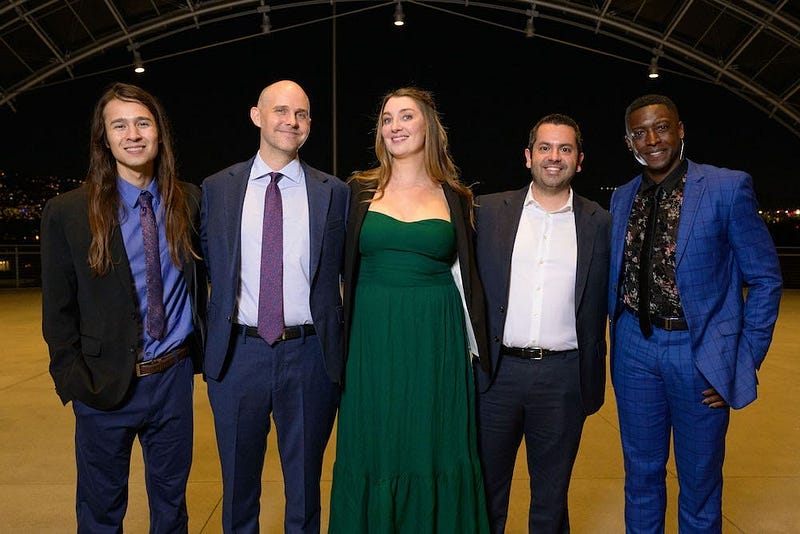
My interview with the 2022 Nicholl Fellowships in Screenwriting winner.
Tim Ware-Hill wrote the original screenplay “Tyrone and The Looking Glass” which won a 2022 Nicholl Fellowship in Screenwriting. I had the opportunity to chat with Tim about his creative background, his award-winning script, the craft of screenwriting, and what winning the Nicholl Award has meant to him.
Today in Part 4 of a 6-part series to run each day through Saturday, Tim shares how a childhood memory of collecting RC Cola caps spawned a magical aspect of his screenplay.
Scott: Later on in the script, Maxine says, “Raising a Black son in this world is a scary thing. Being a Black woman is just as scary. Sometimes I don’t know if I can do both, but I do. Being brave don’t mean you ain’t scared. Looking at what we scared of in the eyes, that’s what makes us brave.
“You have to hope to face it.” She’s talking to her son. “Hope is a treasure you shouldn’t trade for nothing in the world.” She has her own arc in this, right?
Tim: She has her own arc. She has to come to that moment. She really has to come to that moment. When we meet her, she’s not there. That’s not where she is at the beginning.
She is just trying to make it day to day and not break down in front of her son while trying to mourn her husband. That’s her arc. She has to come to that realization, not just for her son’s sake but for her own sake so that she can survive.
Scott: You’re talking about it being at the beginning. When we first meet him, he’s got these RC Cola bottle caps, which he is putting in front of the windowsills and the door before he goes to sleep. Of course, he’s got this one special one that has some significance to him.
He is afraid. As we find out, it is a mystery. We don’t learn about what happened to his father until much later. There’s a mystery element there. That unlocks a lot of what that fear is about.
First of all, where did the RC Cola come from? Is that from your youth or is this just from your imagination?
Tim: No, it’s from my parent’s youth. My parents, when they were growing up, they would collect RC Cola bottle caps. For every six, you could see a Saturday matinee at the movie theater. When my mom told me that, it instantly became this magical element for my story, as a way to tell the story because the bottle caps were admission into the theater.
They act as admission into Tyrone’s journey. The bottle cap unlocks each door to the treasures that he has to grab in order to fulfill his task, which is to defeat this dragon.
The “Alice in Wonderland” element of into the looking glass, I was like, “Well, what if the looking glass is an actual glass that you can look into and it is the only thing that allows us to see this invisible, three‑headed albino dragon?”
The RC Cola bottle came out of my parent’s childhood. Then the RC, instead of Royal Cola, it became Real Change…
Scott: I don’t know how much you may have studied Joseph Campbell’s the Hero’s Journey. It’s become part of the nomenclature for screenwriting due to George Lucas, Star Wars, and all that.
Campbell literally talks about slaying the dragon. Were you cognizant of that at all? Or was that just you’re going to do a magical adventure and weren’t even thinking necessarily about that Hero’s Journey symbolism?
Tim: I wasn’t necessarily thinking of the Hero’s Journey. Like I said, just from life and the love of cinema and the love of plays, there are just certain things that through observation and osmosis, [laughs] we take on and maybe not always understand the root of certain structures or certain tropes.
They take shape through our own lens but they’re still connected to the root of where it came from.
Scott: I wanted to ask about the girl, Carol. Could you just talk a bit about her, how she came into being, and the function of her in terms of the story? This is a friend of Tyrone’s.
Tim: Carol Robinson is based on a real girl. She was one of the four little girls that was killed in the bombing of 16th Street Baptist Church.
Scott: September 1963.
Tim: Yep. There were actually five girls in that explosion. There were many other injuries, but there was a fifth girl that survived. I forget which girl she’s related to. She ended up losing her eye. She didn’t lose her life, she lost her eye.
It’s a fictional take on Carol. It’s not based on real life for her as far as relationship with Tyrone. Tyrone does not exist in the real world. I don’t know if she ever had a friend named Tyrone. It’s possible that she had a friend named Tyrone.
I wanted to honor her and those four little girls, who continued to ignite the movement for civil rights, voting rights, and freedom. The way I wrote her, I wanted her to be one that represented a person who had courage, who wasn’t afraid to fight. Who saw the world, not as a scary place, but a place of possibilities just a posed to Tyrone, who was afraid of it all.
Who Carol is who Tyrone becomes in the end. I wanted to write this fearless little Black girl who wasn’t afraid of anything. Who not only stood up for her people but stood up for herself? You got to stand up for yourself first. You can’t stand up for everybody else till you find the courage to stand up for yourself.
I think that was the lesson that Carol left, of Tyrone and The Looking Glass. I think that’s the lesson that she left for her friend, Tyrone.
Tomorrow in Part 5, Tim reveals what winning the Nicholl has meant to him.
For Part 1 of the interview, go here.
For Part 2, go here.
For Part 3, go here.
Tim is repped by The Gotham Group.
For my interviews with every Nicholl Fellowships in Screenwriting winner since 2012, go here.